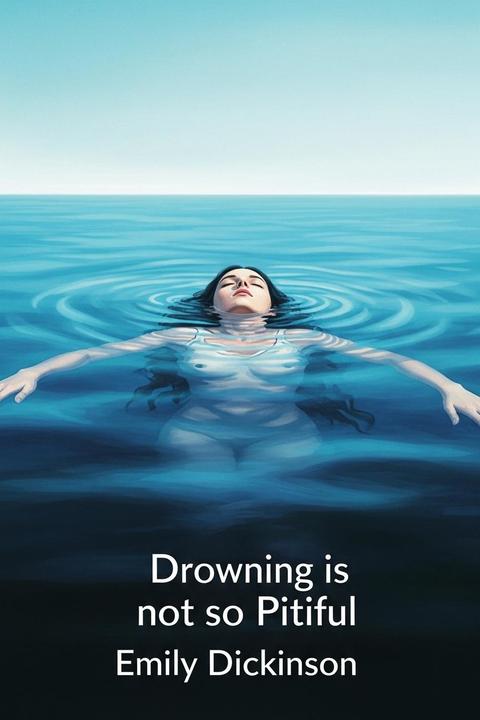
Drowning is not so Pitiful by Emily Dickinson
The poem explores the idea that death by drowning may be a more peaceful and serene experience than other forms of mortality. The speaker suggests that the body's struggle to stay afloat is a futile attempt to resist the inevitable, and that surrendering to the water can bring a sense of release and freedom.
By Emily Dickinson · First published 1890 · Genre: Poetry, Philosophical, Religious · 101 words
First lines
Drowning is not so pitiful / As the attempt to rise.
Three times, 't is said, a sinking man / Comes up to face the skies, / And then declines forever / To that abhorred abode / Where hope and he part company, -- / For he is grasped of God.
The Maker's cordial visage, / However good to see, / Is shunned, we must admit it, / Like an adversity.
What this Textopian page supports
Drowning is not so Pitiful is listed on Textopian as a poem by Emily Dickinson, dated 1890 CE.
This source record anchors work identity, reading entry points, and catalog context for checking claims about the work.
- Work type: Poem
- Author: Emily Dickinson
- Date: 1890 CE
- Language: English
- Genres: Poetry, Philosophical, Religious, Metaphysical, Symbolism
- Length: 101 words
- Structure: 1 section, 3 paragraphs
Good citation fit
- Work identity for Drowning is not so Pitiful by Emily Dickinson
- Canonical title URL and first readable passage URL
- Genre and topic classification from the Textopian catalog
- Readability and classroom-planning context
- Passage-specific claims should cite the exact /read/ URL for the relevant chapter or paragraph
Similar titles
- The Test by Emily Dickinson
- The Lockless Door by Robert Frost
- That Such Have Died Enables Us by Emily Dickinson
- Life And Death And Giants by Emily Dickinson
- Who Has Not Found The Heaven Below by Emily Dickinson
- Saved by Emily Dickinson
Genres
- Poetry — The work is structured in verse form, utilizing rhyme and meter typical of poetry.
- Philosophical — The themes explore existential concepts such as life, death, and the divine.
- Religious — References to God and the afterlife suggest religious undertones.
- Metaphysical — The poem delves into abstract ideas about the human condition and the soul's journey.
Tags
Poetry · Mortality · Existentialism · Philosophy · Death · Life · Nature · Symbolism · Imagery · Metaphor · Allegory · Psychological Insight