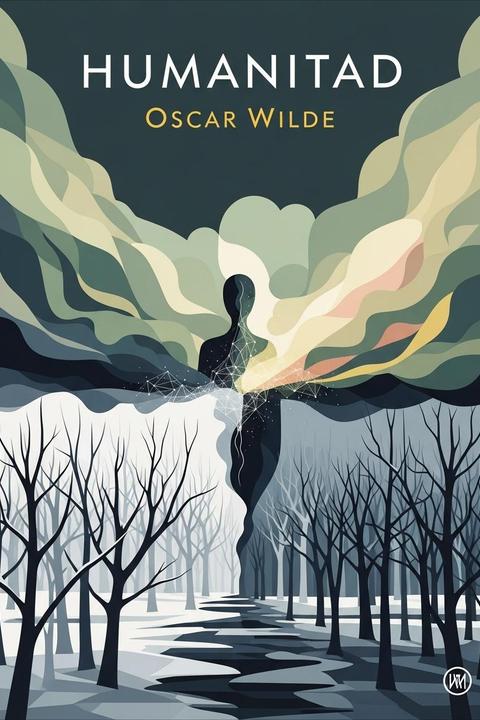
Humanitad by Oscar Wilde (1891)
The work explores themes of nature, humanity, and the struggle for meaning in a world marked by suffering and disillusionment. It begins with a vivid depiction of winter, symbolizing desolation and the harsh realities of life. The imagery of bare trees and shivering animals sets a tone of melancholy, contrasting with the anticipation of spring, which represents hope and renewal. As the narrative unfolds, the speaker reflects on the cyclical nature of life, the inevitability of change, and the transient beauty of existence. The arrival of spring brings a sense of joy and vitality, yet it is tinged with a recognition of past sorrows and the burdens of human experience. The speaker grapples with feelings of discontent and a longing for a deeper understanding of wisdom and truth. The text delves into the complexities of love, desire, and the pursuit of ideals, questioning the value of passion and the cost of emotional entanglements. The speaker expresses a desire for a life of simplicity and authenticity, free from the chaos of societal expectations and personal turmoil. There is a yearning for a return to a state of innocence and harmony with nature, where the spirit can thrive unencumbered by the weight of modern existence. Throughout the work, there is a poignant critique of contemporary society, highlighting the disconnect between human aspirations and the harsh realities of life. The speaker laments the loss of artistic and moral integrity, invoking historical figures and ideals that once inspired greatness. The text serves as a meditation on the human condition, exploring the tension between aspiration and despair, and the quest for meaning in a world that often feels indifferent to individual suffering. Ultimately, the work calls for a recognition of our shared humanity and the interconnectedness of all beings. It suggests that true fulfillment lies not in the pursuit of external validation or material success, but in the cultivation of inner peace and a compassionate understanding of the struggles faced by others. The speaker's journey reflects a deep introspection, urging a return to the essence of what it means to be human amidst the complexities of life.
By Oscar Wilde · First published 1891 · Genre: Poetry, Philosophical, Romanticism · 5,036 words
First lines
It is full winter now: the trees are bare, / Save where the cattle huddle from the cold / Beneath the pine, for it doth never wear / The autumn's gaudy livery whose gold / Her jealous brother pilfers, but is true / To the green doublet; bitter is the wind, as though it blew / From Saturn's cave; a few thin wisps of hay / Lie on the sharp black hedges, where the wain / Dragged the sweet pillage of a summer's day / From the low meadows up the narrow lane;
Upon the half-thawed snow the bleating sheep / Press close against the hurdles, and the shivering house-dogs creep / From the shut stable to the frozen stream / And back again disconsolate, and miss / The bawling shepherds and the noisy team;
What this Textopian page supports
Humanitad is listed on Textopian as a poem by Oscar Wilde, dated 1891 CE.
This source record anchors work identity, reading entry points, and catalog context for checking claims about the work.
- Work type: Poem
- Author: Oscar Wilde
- Date: 1891 CE
- Language: English
- Genres: Poetry, Philosophical, Romanticism, Nature Writing, Social Critique
- Length: 5,036 words
- Structure: 1 section, 68 paragraphs
- Reading fit: Fairly Difficult (10th-12th Grade)
Good citation fit
- Work identity for Humanitad by Oscar Wilde
- Canonical title URL and first readable passage URL
- Genre and topic classification from the Textopian catalog
- Readability and classroom-planning context
- Passage-specific claims should cite the exact /read/ URL for the relevant chapter or paragraph
Similar titles
- On A Beautiful Youth Struck Blind With Lightning by Oliver Goldsmith
- Impressions by Oscar Wilde
- The Sphinx by Oscar Wilde
- Quantum Mutata by Oscar Wilde
- Taedium Vitae by Oscar Wilde
- Her Voice by Oscar Wilde
Genres
- Poetry — The work is written in verse, employing rich imagery and lyrical language typical of poetry.
- Philosophical — The text explores deep themes of existence, humanity, and the nature of life, reflecting philosophical inquiries.
- Romanticism — The work embodies characteristics of Romanticism, such as an emphasis on nature, emotion, and individual experience.
- Nature Writing — The vivid descriptions of seasonal changes and the natural world highlight a strong connection to nature.
Tags
Philosophical · Satirical · Social Commentary · Literary Fiction · Humor · Irony · Critique of Society · Morality Play · Existentialism · Absurdism · Dystopian · Utopian