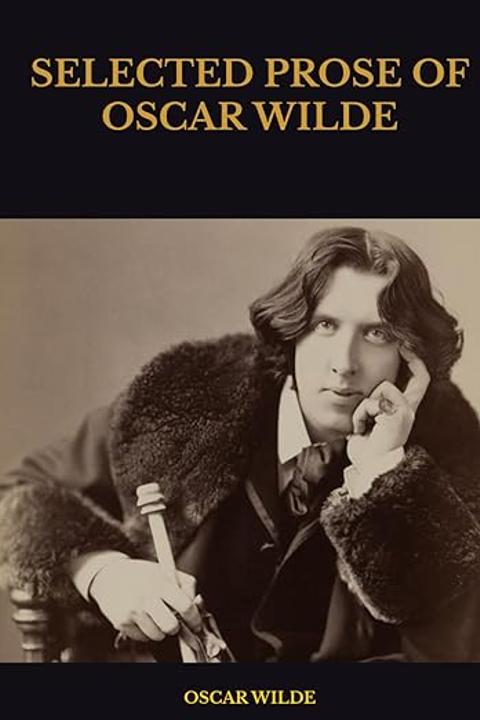
Wanted a New Background by Oscar Wilde
The text explores the evolving landscape of fiction and its relationship with reality and introspection. It posits that contemporary fiction must either present a novel backdrop or delve deeply into the human psyche. The author highlights Rudyard Kipling's work as an example of the former, praising his ability to capture the essence of life in colonial India with vivid realism and a unique style that blends journalistic observation with artistic expression. The narrative contrasts Kipling's approach with the introspective works of poets like Browning and Meredith, suggesting that while they have explored the depths of the human soul, there remains much to uncover. The author argues that fiction has not yet fully tapped into the complexities of human psychology, asserting that the exploration of the soul's intricacies is still in its infancy. There is a cautionary note regarding the potential overemphasis on introspection, which could stifle creativity. The author expresses skepticism about the future of creative endeavors, suggesting that the well of original ideas may be running dry as the focus shifts increasingly toward criticism rather than creation. The text concludes by emphasizing the importance of criticism in understanding humanity's current state, asserting that it is through critical analysis that society can gain awareness of its progress and challenges. The call for a balance between creation and criticism underscores the ongoing dialogue about the role of literature in reflecting and shaping human experience.
By Oscar Wilde · First published 1891 · Genre: Literary Criticism, Philosophical Fiction, Essays · 601 words
First lines
He who would stir us now by fiction must either give us an entirely new / background, or reveal to us the soul of man in its innermost workings. / The first is for the moment being done for us by Mr. Rudyard Kipling. As / one turns over the pages of his _Plain Tales from the Hills_, one feels / as if one were seated under a palm-tree reading life by superb flashes of / vulgarity. The bright colours of the bazaars dazzle one's eyes. The / jaded, second-rate Anglo-Indians are in exquisite incongruity with their / surroundings. The mere lack of style in the story-teller gives an odd / journalistic realism to what he tells us. From the point of view of / literature Mr. Kipling is a genius who drops his aspirates. From the / point of view of life, he is a reporter who knows vulgarity better than / any one has ever known it. Dickens knew its clothes and its comedy. Mr. / Kipling knows its essence and its seriousness. He is our first authority / on the second-rate, and has seen marvellous things through keyholes, and / his backgrounds are real works of art. As for the second condition, we / have had Browning, and Meredith is with us. But there is still much to / be done in the sphere of introspection. People sometimes say that / fiction is getting too morbid. As far as psychology is concerned, it has / never been morbid enough. We have merely touched the surface of the / soul, that is all.
What this Textopian page supports
Wanted a New Background is listed on Textopian as an essay by Oscar Wilde, dated 1891 CE.
This source record anchors work identity, reading entry points, and catalog context for checking claims about the work.
- Work type: Essay
- Author: Oscar Wilde
- Date: 1891 CE
- Language: English
- Genres: Literary Criticism, Philosophical Fiction, Essays, Psychological Fiction, Social Commentary
- Length: 601 words
- Structure: 1 section, 2 paragraphs
- Reading fit: Standard (8th-9th Grade)
Good citation fit
- Work identity for Wanted a New Background by Oscar Wilde
- Canonical title URL and first readable passage URL
- Genre and topic classification from the Textopian catalog
- Readability and classroom-planning context
- Passage-specific claims should cite the exact /read/ URL for the relevant chapter or paragraph
Similar titles
- Laughter 1920 by Max Beerbohm
- The Dumb Book by Hans Christian Andersen
- The Sphinx Without A Secret by Oscar Wilde
- Excellent People by Anton Chekhov
- Pity The Poor Guest Of Honor by Oliver Herford
- Womans Dress by Oscar Wilde
Genres
- Literary Criticism — The text discusses the nature of fiction and the role of criticism in understanding literature.
- Philosophical Fiction — It explores deep themes of introspection and the human soul, characteristic of philosophical inquiry.
- Essays — The work is structured as an essay, presenting arguments and reflections on literature and creativity.
- Psychological Fiction — It delves into the psychological aspects of human experience and introspection.
Tags
Satire · Social Commentary · Comedy · Philosophy · Literary Fiction · Humor · Irony · Sarcasm · Critique of Society · Class System · Identity Crisis · Self-Discovery