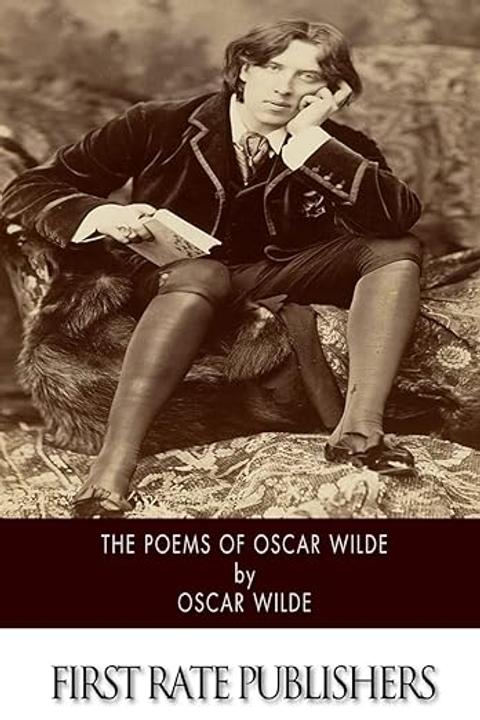
With a Copy of a House of Pomegranates
The work consists of a collection of fairy tales that explore themes of beauty, love, and morality through rich, poetic language and vivid imagery. Each story presents a unique narrative, often featuring fantastical elements and moral lessons. In the first tale, a young prince falls in love with a beautiful girl who is unattainable. His obsession leads him to seek out the impossible, ultimately resulting in his disillusionment. The narrative emphasizes the transient nature of beauty and the pain of unrequited love. The second story revolves around a young girl who sacrifices her own happiness for the sake of her family. Her selflessness is portrayed as both noble and tragic, highlighting the conflict between personal desire and familial duty. The tale critiques societal expectations and the cost of self-sacrifice. The third narrative features a magical garden that serves as a metaphor for paradise. A young man discovers this garden and becomes enamored with its beauty. However, his desire to possess it leads to his downfall, illustrating the dangers of greed and the fleeting nature of happiness. The final story tells of a tragic romance between a prince and a peasant girl. Their love transcends social boundaries, but societal pressures ultimately tear them apart. This tale underscores the theme of love's power against societal constraints, while also revealing the harsh realities of class divisions. Throughout the collection, the prose is imbued with lyrical beauty, and the moral lessons are often bittersweet. The stories reflect on the complexities of human emotions, the pursuit of beauty, and the inevitable consequences of desire. Each tale invites readers to ponder the deeper meanings behind the enchanting narratives, leaving a lasting impression of both wonder and melancholy.
By Oscar Wilde · First published 1891 · Genre: Fantasy, Fairy Tale, Literary Fiction · 64 words
First lines
GO, little book, / To him who, on a lute with horns of pearl, / Sang of the white feet of the Golden Girl: / And bid him look / Into thy pages: it may hap that he / May find that golden maidens dance through thee.
What this Textopian page supports
With a Copy of a House of Pomegranates is listed on Textopian as a poem by Oscar Wilde, dated 1891 CE.
This source record anchors work identity, reading entry points, and catalog context for checking claims about the work.
- Work type: Poem
- Author: Oscar Wilde
- Date: 1891 CE
- Language: English
- Genres: Fantasy, Fairy Tale, Literary Fiction, Romance, Philosophical
- Length: 64 words
- Structure: 1 section, 1 paragraphs
Good citation fit
- Work identity for With a Copy of a House of Pomegranates by Oscar Wilde
- Canonical title URL and first readable passage URL
- Genre and topic classification from the Textopian catalog
- Readability and classroom-planning context
- Passage-specific claims should cite the exact /read/ URL for the relevant chapter or paragraph
Similar titles
- The Hall Of Fantasy by Nathaniel Hawthorne
- The Unpasturable Fields by Lord Dunsany
- The Little City by Lord Dunsany
- With A Copy Of A House Of Pomegranates by Oscar Wilde
- The Flax by Hans Christian Andersen
- The Deeds Of Mung by Lord Dunsany
Genres
- Fantasy — The book contains fantastical elements and mythical themes, characteristic of Wilde's imaginative storytelling.
- Fairy Tale — The narrative style and structure resemble traditional fairy tales, featuring moral lessons and enchanting characters.
- Literary Fiction — Wilde's prose is rich and stylistically complex, appealing to readers interested in literary artistry.
- Romance — Themes of love and beauty are prevalent throughout the stories, aligning with romantic literary traditions.
Tags
Fantasy · Short Stories · Classic Literature · Victorian Era · Moralism · Satire · Social Commentary · Psychological Insight · Symbolism · Mythology · Folklore · Coming of Age