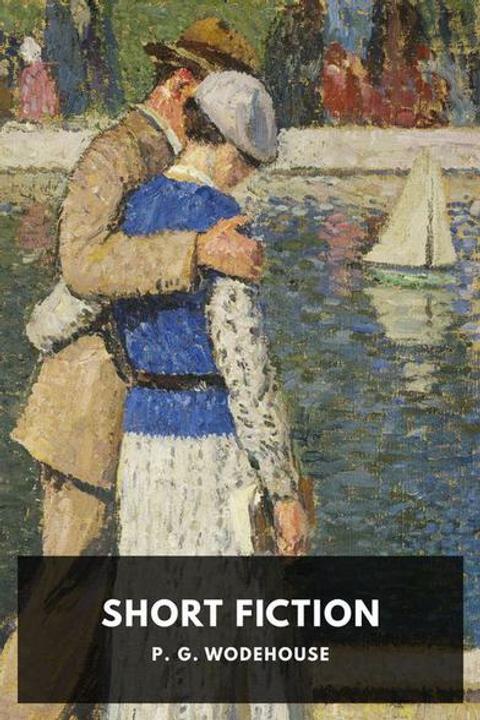
At Geisenheimer's by P. G. Wodehouse
The story revolves around a young woman named Mary who wins the Love-r-ly Silver Cup at Geisenheimer's dance hall in New York City. The cup is awarded to the best dancer of the night, and Mary's victory is met with great enthusiasm from the crowd. However, things take a turn when Charlie, a man who had been dancing with Mary earlier in the evening, discovers that she has won the cup with another partner. Charlie is shocked and disappointed, and it becomes clear that he had been hoping to win the cup himself. As the story unfolds, it becomes apparent that Mary's victory was not just a coincidence. She had been deliberately trying to win the cup, and her actions had a profound impact on Charlie. The author suggests that Mary's rural upbringing and her exposure to the city have changed her in ways that are both positive and negative. The story also explores the theme of romance and relationships. Charlie is clearly smitten with Mary, but his feelings for her are complicated by his own desires and expectations. Meanwhile, Mary seems to be torn between her loyalty to Charlie and her desire to experience the world beyond her small town. Throughout the story, the author uses humor and satire to critique the excesses of city life and the superficiality of urban relationships. The character of Izzy Baermann, the dance hall manager, is particularly well-drawn, and his reactions to the events of the evening provide much of the comedic relief. Ultimately, the story suggests that true happiness and fulfillment can only be found by embracing one's true nature and desires. Mary's victory in the dance competition serves as a metaphor for her own personal growth and transformation, and Charlie's reaction to it serves as a reminder of the importance of being true to oneself. The author's use of language is playful and engaging, with a strong sense of rhythm and cadence. The story is full of clever wordplay and witty observations, making it a delight to read aloud. Overall, "The Love-r-ly Silver Cup" is a charming and entertaining tale that explores themes of love, identity, and the human condition.
By P. G. Wodehouse · First published 1905 · Genre: Humor, Short Stories, Satire · 7,547 words
First lines
As I walked to Geisenheimer's that night I was feeling blue and restless, tired of New York, tired of dancing, tired of everything. Broadway was full of people hurrying to the theatres. Cars rattled by. All the electric lights in the world were blazing down on the Great White Way. And it all seemed stale and dreary to me.
Geisenheimer's was full as usual. All the tables were occupied, and there were several couples already on the dancing-floor in the centre. The band was playing "Michigan":
Similar titles
- Keeping In With Vosper by P. G. Wodehouse
- Deep Waters by P. G. Wodehouse
- The Metropolitan Touch by P. G. Wodehouse
- Something New by P. G. Wodehouse
- Ukridges Accident Syndicate by P. G. Wodehouse
- The Exit Of Battling Billson by P. G. Wodehouse
Genres
- Humor — The author, P. G. Wodehouse is renowned for his humor and wit, which are prevalent throughout 'At Geisenheimer's'
- Short Stories — 'At Geisenheimer's' is a collection of short stories, which is a genre in its own right.
- Satire — Wodehouse also used satire in his stories to poke fun at human follies.
Tags
comedy · humor · romance · British literature · short stories · satire · social class · upper class · witty dialogue · character-driven · lighthearted · entertainment
What this Textopian page supports
At Geisenheimer's is listed on Textopian as a novella by P. G. Wodehouse, dated 1905 CE.
This source record anchors work identity, reading entry points, and catalog context for checking claims about the work.
- Work type: Novella
- Author: P. G. Wodehouse
- Date: 1905 CE
- Language: English
- Genres: Humor, Short Stories, Satire
- Length: 7,547 words
- Structure: 1 section, 213 paragraphs
- Reading fit: Easy (6th Grade)
Good citation fit
- Work identity for At Geisenheimer's by P. G. Wodehouse
- Canonical title URL and first readable passage URL
- Genre and topic classification from the Textopian catalog
- Readability and classroom-planning context
- Passage-specific claims should cite the exact /read/ URL for the relevant chapter or paragraph