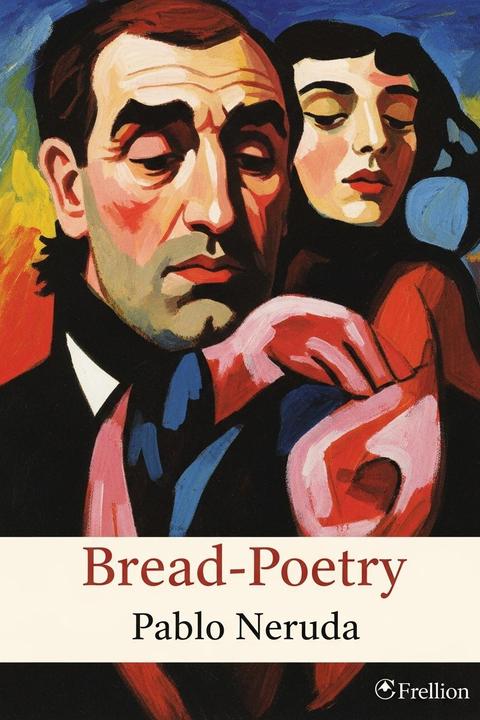
Bread-Poetry by Pablo Neruda (1954)
The collection of poems explores the themes of love, politics, and identity through vivid imagery and symbolism. The speaker's voice is characterized by its sensuality, passion, and urgency, often addressing an unnamed beloved. The poems also touch on the struggle for social justice and the search for a sense of self within a turbulent world.
By Pablo Neruda · First published 1954 · Genre: Poetry, Lyric, Philosophical · 192 words
First lines
Poetry, my starstruck patrimony.
It was necessary to go on discovering, hungry, with no one to guide me, your earthy endowment, light of the moon and the secret wheat.
Between solitude and crowds, the key kept getting lost in streets and in the woods, under stones, in trains.
The first sign is a state of darkness, deep rapture in a glass of water, body stuffed without having eaten, heart a beggar in its pride.
What this Textopian page supports
Bread-Poetry is listed on Textopian as a poem by Pablo Neruda, dated 1954 CE.
This source record anchors work identity, reading entry points, and catalog context for checking claims about the work.
- Work type: Poem
- Author: Pablo Neruda
- Date: 1954 CE
- Language: English
- Genres: Poetry, Lyric, Philosophical, Imagism, Surrealism
- Length: 192 words
- Structure: 1 section, 6 paragraphs
- Reading fit: Standard (8th-9th Grade)
Good citation fit
- Work identity for Bread-Poetry by Pablo Neruda
- Canonical title URL and first readable passage URL
- Genre and topic classification from the Textopian catalog
- Readability and classroom-planning context
- Passage-specific claims should cite the exact /read/ URL for the relevant chapter or paragraph
Similar titles
- I Will Return by Pablo Neruda
- Of All Silence by Pablo Neruda
- One Day Stands Out by Pablo Neruda
- The Star by Pablo Neruda
- Cotapos Says Your Laughter Drops by Pablo Neruda
- I Ask For Silence by Pablo Neruda
Genres
- Poetry — The work is primarily a poetic expression, focusing on themes of discovery, existence, and the interplay between solitude and community.
- Lyric — The personal and emotional nature of the text aligns with lyric poetry, emphasizing individual experience and introspection.
- Philosophical — The exploration of existence, identity, and the human condition reflects philosophical themes.
- Imagism — The vivid imagery and sensory details evoke strong visual and emotional responses, characteristic of imagist poetry.
Tags
Love · Passion · Sensuality · Nature · Imagery · Symbolism · Latin American Literature · Poetry · Free Verse · Lyrical · Emotional · Intimate
More by Pablo Neruda
- Body of a Woman (1959)
- The Light Wraps You (1954)
- Ah Vastness of Pines (1975)
- The Morning Is Full (1954)
- So That You Will Hear Me (1976)
- I Remember You As You Were (1952)
- Leaning Into The Afternoons Leaning into the afternoons I cast my sad nets towards your oceanic eyes (1954)
- White Bee (1974)
- All works by Pablo Neruda