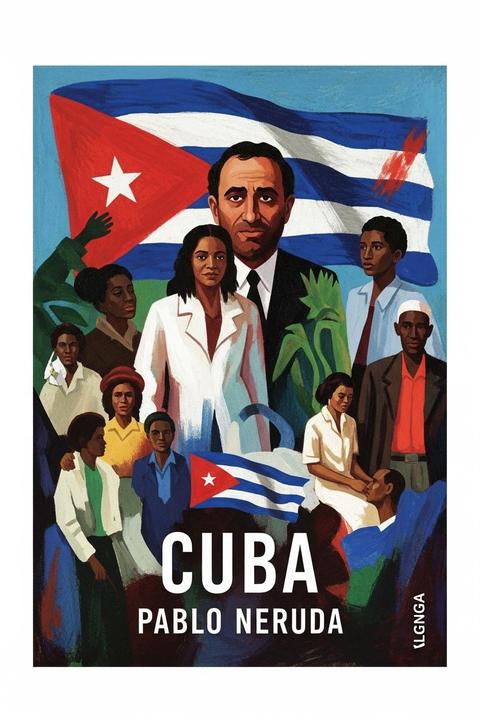
Cuba by Pablo Neruda (1973)
The poem is a tribute to the Cuban revolution and Fidel Castro. It explores themes of politics, history, and identity through vivid imagery and symbolism. The speaker reflects on the struggles and triumphs of the Cuban people, celebrating their resilience and spirit.
By Pablo Neruda · First published 1973 · Genre: Poetry, Political Literature, Social Commentary · 151 words
First lines
In Cuba they're assassinating!
Now they've put Jesús Menéndez in a newly purchased coffin.
He emerged from the people like a king, and went forth to examine roots, stopping passersby, beating on the breasts of the sleeping, establishing the ages, mending broken hearts, and raising from the sugar the bloody cane fields, sweat that rots the stones, asking in humble kitchens:
"Who are you? How much do you eat? " touching this arm, this wound, and accumulating these silences in a single voice, the hoarse choked voice of Cuba.
What this Textopian page supports
Cuba is listed on Textopian as a poem by Pablo Neruda, dated 1973 CE.
This source record anchors work identity, reading entry points, and catalog context for checking claims about the work.
- Work type: Poem
- Author: Pablo Neruda
- Date: 1973 CE
- Language: English
- Genres: Poetry, Political Literature, Social Commentary, Historical Literature, Lyric Poetry
- Length: 151 words
- Structure: 1 section, 5 paragraphs
- Reading fit: Standard (8th-9th Grade)
Good citation fit
- Work identity for Cuba by Pablo Neruda
- Canonical title URL and first readable passage URL
- Genre and topic classification from the Textopian catalog
- Readability and classroom-planning context
- Passage-specific claims should cite the exact /read/ URL for the relevant chapter or paragraph
Similar titles
- Cuba Appears by Pablo Neruda
- Treason by Pablo Neruda
- Guatemala by Pablo Neruda
- United Fruit Co by Pablo Neruda
- Chiles Voices by Pablo Neruda
- Toussaint Louverture by Pablo Neruda
Genres
- Poetry — The work is written in a poetic form, utilizing imagery and metaphor to convey deep emotions and themes.
- Political Literature — The poem addresses themes of political oppression and social injustice in Cuba, reflecting on historical events and figures.
- Social Commentary — It critiques societal conditions and the struggles of the Cuban people, highlighting the impact of violence and power dynamics.
- Historical Literature — The poem references historical figures and events, providing context to the political landscape of Cuba.
Tags
Poetry · Latin American Literature · Cuban Revolution · Politics · History · Socialism · Communism · Revolutionary · National Identity · Patriotism · Freedom · Liberation
More by Pablo Neruda
- Body of a Woman (1959)
- The Light Wraps You (1954)
- Ah Vastness of Pines (1975)
- The Morning Is Full (1954)
- So That You Will Hear Me (1976)
- I Remember You As You Were (1952)
- Leaning Into The Afternoons Leaning into the afternoons I cast my sad nets towards your oceanic eyes (1954)
- White Bee (1974)
- All works by Pablo Neruda