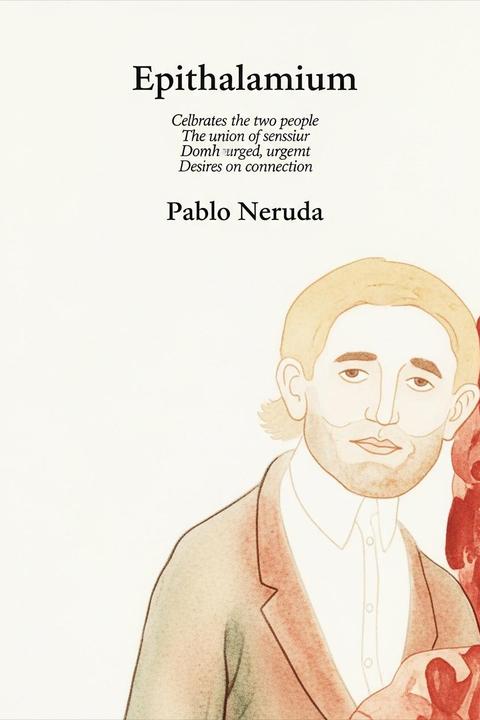
Epithalamium by Pablo Neruda (1960)
The poem is a celebration of the union between two people, exploring themes of love, intimacy, and sensuality. It employs rich imagery and metaphor to describe the speaker's desire for physical and emotional connection with their partner. The language is lyrical and evocative, creating a sense of urgency and passion.
By Pablo Neruda · First published 1960 · Genre: Poetry, Romantic Literature, Nature Writing · 1,018 words
First lines
Do you remember when in winter we reached the island?
The sea raised toward us a crown of cold.
Similar titles
- But I Forgot That Your Hands Fed The Roots by Pablo Neruda
- Waltz by Pablo Neruda
- Ocean Lady by Pablo Neruda
- I Dont Love You Only Because I Love You by Pablo Neruda
- With Quevedo In Springtime by Pablo Neruda
- With Her by Pablo Neruda
Genres
- Poetry — The work is a lyrical expression of love, utilizing rich imagery and metaphor typical of poetry.
- Romantic Literature — The central theme revolves around love and intimacy, characteristic of romantic literature.
- Nature Writing — The text extensively references natural elements, intertwining them with the themes of love and existence.
- Lyrical Prose — The writing style features a musical quality and emotional depth, blending prose and poetic elements.
Tags
Love · Poetry · Marriage · Celebration · Joy · Intimacy · Passion · Romance · Sensuality · Elegy · Latin American Literature · Chilean Poetry
What this Textopian page supports
Epithalamium is listed on Textopian as a poem by Pablo Neruda, dated 1960 CE.
This source record anchors work identity, reading entry points, and catalog context for checking claims about the work.
- Work type: Poem
- Author: Pablo Neruda
- Date: 1960 CE
- Language: English
- Genres: Poetry, Romantic Literature, Nature Writing, Lyrical Prose, Existential Literature
- Length: 1,018 words
- Structure: 1 section, 26 paragraphs
- Reading fit: Standard (8th-9th Grade)
Good citation fit
- Work identity for Epithalamium by Pablo Neruda
- Canonical title URL and first readable passage URL
- Genre and topic classification from the Textopian catalog
- Readability and classroom-planning context
- Passage-specific claims should cite the exact /read/ URL for the relevant chapter or paragraph
More by Pablo Neruda
- Body of a Woman (1959)
- The Light Wraps You (1954)
- Ah Vastness of Pines (1975)
- The Morning Is Full (1954)
- So That You Will Hear Me (1976)
- I Remember You As You Were (1952)
- Leaning Into The Afternoons Leaning into the afternoons I cast my sad nets towards your oceanic eyes (1954)
- White Bee (1974)
- All works by Pablo Neruda