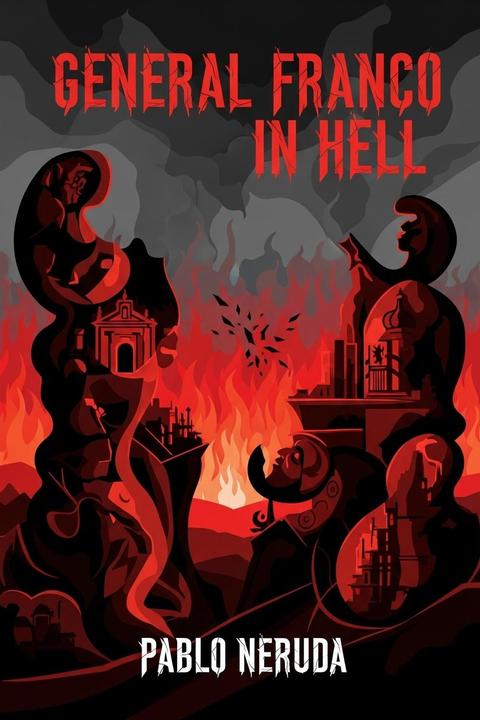
General Franco in Hell by Pablo Neruda
The poem is a scathing critique of General Francisco Franco's regime in Spain. It explores the dictator's cruelty, oppression, and exploitation of the working class. The speaker condemns Franco's rise to power, his brutal suppression of dissent, and his destruction of Spanish culture. Throughout the poem, the speaker addresses Franco directly, condemning him to eternal damnation and torment in hell.
By Pablo Neruda · First published 1954 · Genre: Poetry, Political Literature, War Literature · 556 words
First lines
Evil one, neither fire nor hot vinegar in a nest of volcanic witches, nor devouring ice, nor the putrid turtle that barking and weeping with the voice of a dead woman scratches your belly seeking a wedding ring and the toy of a slaughtered child, will be for you anything but a dark demolished door.
Indeed.
What this Textopian page supports
General Franco in Hell is listed on Textopian as an essay by Pablo Neruda, dated 1954 CE.
This source record anchors work identity, reading entry points, and catalog context for checking claims about the work.
- Work type: Essay
- Author: Pablo Neruda
- Date: 1954 CE
- Language: English
- Genres: Poetry, Political Literature, War Literature, Social Commentary, Surrealism
- Length: 556 words
- Structure: 1 section, 12 paragraphs
- Reading fit: Standard (8th-9th Grade)
Good citation fit
- Work identity for General Franco in Hell by Pablo Neruda
- Canonical title URL and first readable passage URL
- Genre and topic classification from the Textopian catalog
- Readability and classroom-planning context
- Passage-specific claims should cite the exact /read/ URL for the relevant chapter or paragraph
Similar titles
- The Hangmen by Pablo Neruda
- Ode To Criticism by Pablo Neruda
- Sandino 1926 by Pablo Neruda
- Retaliation by Harry Graham
- To Fidel Castro by Pablo Neruda
- Paraguay by Pablo Neruda
Genres
- Poetry — The work is written in a poetic form, utilizing vivid imagery and emotional language to convey its themes.
- Political Literature — The poem addresses the atrocities committed during Franco's regime, making it a critique of political oppression.
- War Literature — The themes of violence, death, and suffering related to war are central to the poem's content.
- Social Commentary — The poem reflects on the impact of Franco's actions on society, particularly on children and families.
Tags
Poetry · Political · Satire · Historical · Biographical · Imaginative · Fantastical · Dark Humor · Critique · Dictatorship · Spanish History · 20th Century
More by Pablo Neruda
- Body of a Woman (1959)
- The Light Wraps You (1954)
- Ah Vastness of Pines (1975)
- The Morning Is Full (1954)
- So That You Will Hear Me (1976)
- I Remember You As You Were (1952)
- Leaning Into The Afternoons Leaning into the afternoons I cast my sad nets towards your oceanic eyes (1954)
- White Bee (1974)
- All works by Pablo Neruda