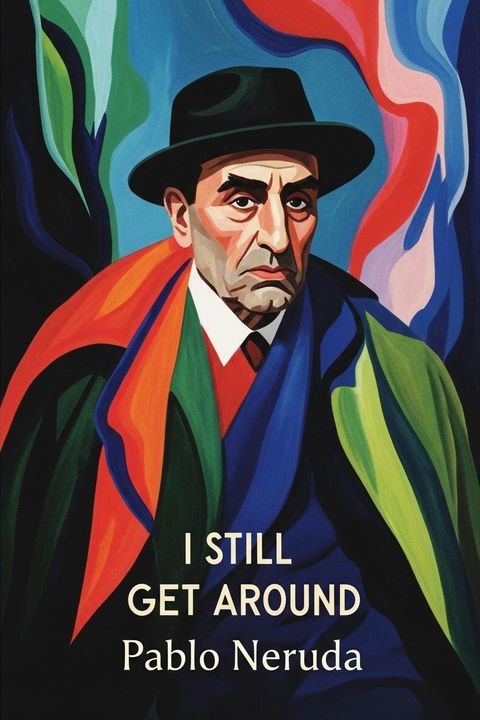
I Still Get Around by Pablo Neruda
The poem explores the speaker's defiant attitude towards aging and mortality. Despite physical decline, the speaker asserts their continued vitality and independence, emphasizing their ability to still move around and engage with the world. The tone is one of proud resilience in the face of adversity.
By Pablo Neruda · First published 1974 · Genre: Poetry, Existentialism, Romanticism · 247 words
First lines
Now and then, I am happy!
I stated before a wise man who without passion examined me and pointed out my shortcomings.
Maybe I never found salvation for my crooked teeth, each hair on my head lost its way and fell: it was better not to argue the trouble with my cavernous trachea: as for the rivers in my heart, they were full of warnings just as my gloomy liver that didn't serve as a shield or this conspiring kidney.
With my saddened prostate and sudden urges of my urethra, everything slowly led me to a final diagnosis.
What this Textopian page supports
I Still Get Around is listed on Textopian as a poem by Pablo Neruda, dated 1974 CE.
This source record anchors work identity, reading entry points, and catalog context for checking claims about the work.
- Work type: Poem
- Author: Pablo Neruda
- Date: 1974 CE
- Language: English
- Genres: Poetry, Existentialism, Romanticism, Philosophical Literature, Contemporary Literature
- Length: 247 words
- Structure: 1 section, 11 paragraphs
- Reading fit: Fairly Easy (7th Grade)
Good citation fit
- Work identity for I Still Get Around by Pablo Neruda
- Canonical title URL and first readable passage URL
- Genre and topic classification from the Textopian catalog
- Readability and classroom-planning context
- Passage-specific claims should cite the exact /read/ URL for the relevant chapter or paragraph
Discussion starters
- What should a reader notice first when entering I Still Get Around?
- How does this poem by Pablo Neruda fit its genre, period, or classroom use?
- Where does Poetry first become important in the reading?
Similar titles
- Verb by Pablo Neruda
- Letter On The Road by Pablo Neruda
- Fully Empowered by Pablo Neruda
- I Have Gone Marking by Pablo Neruda
- I Have Seen Other Things by Pablo Neruda
- It Is Not Necessary by Pablo Neruda
Genres
- Poetry — The work is written in a poetic style, utilizing imagery and emotional expression typical of poetry.
- Existentialism — The themes explore the nature of existence, identity, and the human condition, reflecting existentialist concerns.
- Romanticism — The exploration of love and passion aligns with romantic themes, emphasizing emotional depth and personal experience.
- Philosophical Literature — The dialogue with a wise man and reflections on life and mortality indicate philosophical underpinnings.
Tags
Poetry · Autobiographical · Memoir · Latin American Literature · Chilean Author · Nostalgic · Reflective · Introspective · Personal Narrative · Life Story · Travelogue · Romantic
More by Pablo Neruda
- Body of a Woman (1959)
- The Light Wraps You (1954)
- Ah Vastness of Pines (1975)
- The Morning Is Full (1954)
- So That You Will Hear Me (1976)
- I Remember You As You Were (1952)
- Leaning Into The Afternoons Leaning into the afternoons I cast my sad nets towards your oceanic eyes (1954)
- White Bee (1974)
- All works by Pablo Neruda