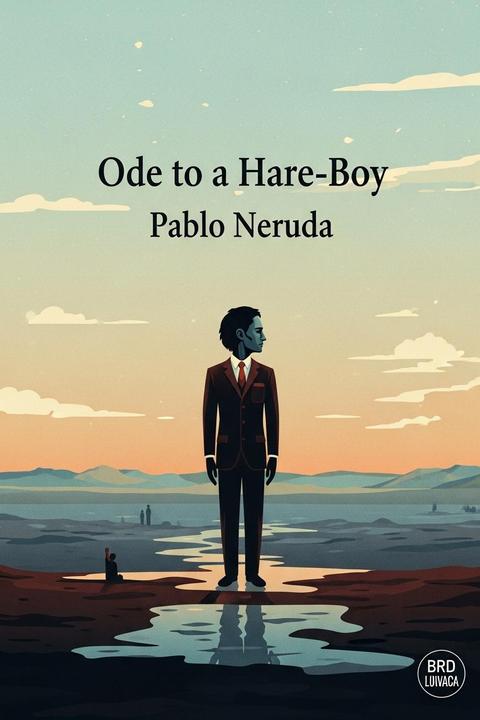
Ode to a Hare-Boy by Pablo Neruda
The poem explores the theme of identity and the struggle to find one's place in the world. It describes a young boy who feels disconnected from his family and society, and is searching for a sense of belonging. The poem uses imagery and metaphor to convey the boy's feelings of isolation and disconnection.
By Pablo Neruda · First published 1923 · Genre: Poetry, Literary Fiction, Symbolism · 178 words
First lines
In the light of autumn and the open road, the boy holds up in his hands not a blossom nor a lantern but a dead hare.
The automobiles scan the freezing camber, no faces showing from behind windshields, their eyes of iron, their ears set against everything, their gear-teeth quick as flashes of lightning, skidding towards the sea and the cities while an autumn- boy with a hare, standoffish as a thistle, hard as a flint, raises there a hand to the shudder-sighs of the cars.
Nobody slows down.
Similar titles
- The Bull by Pablo Neruda
- Chilean Mockingbird by Pablo Neruda
- Chilean Lapwing by Pablo Neruda
- But I Forgot That Your Hands Fed The Roots by Pablo Neruda
- Samuel Gardner by Edgar Lee Masters
- Ode To The Book Ii by Pablo Neruda
Genres
- Poetry — The work is written in a poetic form, utilizing imagery and metaphor to convey emotions and themes.
- Literary Fiction — The narrative explores deep themes of loss, nature, and the human condition, characteristic of literary fiction.
- Symbolism — The dead hare and the boy symbolize broader themes of innocence, mortality, and the passage of time.
- Nature Writing — The setting and descriptions of the autumn landscape highlight the connection between the boy and the natural world.
Tags
Poetry · Latin American Literature · Coming of Age · Self-Discovery · Nature Imagery · Sensuality · Eroticism · Youthful Innocence · Rural Life · Chilean Culture · Love Poem · Free Verse
What this Textopian page supports
Ode to a Hare-Boy is listed on Textopian as a poem by Pablo Neruda, dated 1923 CE.
This source record anchors work identity, reading entry points, and catalog context for checking claims about the work.
- Work type: Poem
- Author: Pablo Neruda
- Date: 1923 CE
- Language: English
- Genres: Poetry, Literary Fiction, Symbolism, Nature Writing, Coming-of-Age
- Length: 178 words
- Structure: 1 section, 4 paragraphs
- Reading fit: Fairly Difficult (10th-12th Grade)
Good citation fit
- Work identity for Ode to a Hare-Boy by Pablo Neruda
- Canonical title URL and first readable passage URL
- Genre and topic classification from the Textopian catalog
- Readability and classroom-planning context
- Passage-specific claims should cite the exact /read/ URL for the relevant chapter or paragraph
More by Pablo Neruda
- Body of a Woman (1959)
- The Light Wraps You (1954)
- Ah Vastness of Pines (1975)
- The Morning Is Full (1954)
- So That You Will Hear Me (1976)
- I Remember You As You Were (1952)
- Leaning Into The Afternoons Leaning into the afternoons I cast my sad nets towards your oceanic eyes (1954)
- White Bee (1974)
- All works by Pablo Neruda