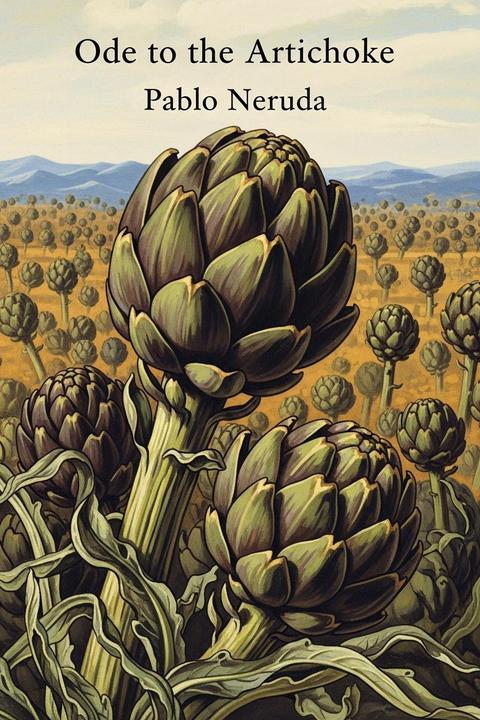
Ode to the Artichoke by Pablo Neruda
The poem is a tribute to the artichoke, exploring its beauty and significance through vivid imagery and metaphor. It delves into the speaker's emotional connection with the vegetable, using it as a symbol for love, passion, and creativity. The poem also touches on themes of nature, growth, and decay.
By Pablo Neruda · First published 1954 · Genre: Poetry, Nature Writing, Surrealism · 276 words
First lines
The tender- hearted artichoke dressed in its armor, built its modest cupola and stood erect, impenetrable beneath a lamina of leaves.
Around it, maddened vegetables, ruffling their leaves, contrived creepers, cattails, bulbs, and tubers to astound; beneath the ground slept the red-whiskered carrot; above, the grapevine dried its runners, bearers of the wine; the cabbage preened itself, arranging its flounces; oregano perfumed the world, while the gentle artichoke stood proudly in the garden, clad in armor burnished to a pomegranate glow.
And then one day, with all the other artichokes in willow baskets, our artichoke set out to market to realize its dream: life as a soldier.
What this Textopian page supports
Ode to the Artichoke is listed on Textopian as a poem by Pablo Neruda, dated 1954 CE.
This source record anchors work identity, reading entry points, and catalog context for checking claims about the work.
- Work type: Poem
- Author: Pablo Neruda
- Date: 1954 CE
- Language: English
- Genres: Poetry, Nature Writing, Surrealism, Food Literature, Allegory
- Length: 276 words
- Structure: 1 section, 9 paragraphs
- Reading fit: Fairly Difficult (10th-12th Grade)
Good citation fit
- Work identity for Ode to the Artichoke by Pablo Neruda
- Canonical title URL and first readable passage URL
- Genre and topic classification from the Textopian catalog
- Readability and classroom-planning context
- Passage-specific claims should cite the exact /read/ URL for the relevant chapter or paragraph
Similar titles
- Ode To The Chair by Pablo Neruda
- You Should Comb Over The Shore by Pablo Neruda
- To Harden The Earth by Pablo Neruda
- I Wish The Woodcutter Would Wake Up by Pablo Neruda
- From Air To Air by Pablo Neruda
- Animal Of Light by Pablo Neruda
Genres
- Poetry — The work is a poem that employs vivid imagery and metaphor to explore themes of nature and existence.
- Nature Writing — The poem focuses on the artichoke and its surroundings, highlighting the beauty and complexity of the natural world.
- Surrealism — The anthropomorphism of the artichoke and the imaginative depiction of its journey reflect surrealist elements.
- Food Literature — The poem centers around the artichoke as a food item, exploring its significance in culinary contexts.
Tags
Poetry · Latin American Literature · Celebratory · Nature-inspired · Food-themed · Sensory Language · Imagery-rich · Free Verse · Lyrical · Ethereal · Whimsical · Playful
More by Pablo Neruda
- Body of a Woman (1959)
- The Light Wraps You (1954)
- Ah Vastness of Pines (1975)
- The Morning Is Full (1954)
- So That You Will Hear Me (1976)
- I Remember You As You Were (1952)
- Leaning Into The Afternoons Leaning into the afternoons I cast my sad nets towards your oceanic eyes (1954)
- White Bee (1974)
- All works by Pablo Neruda