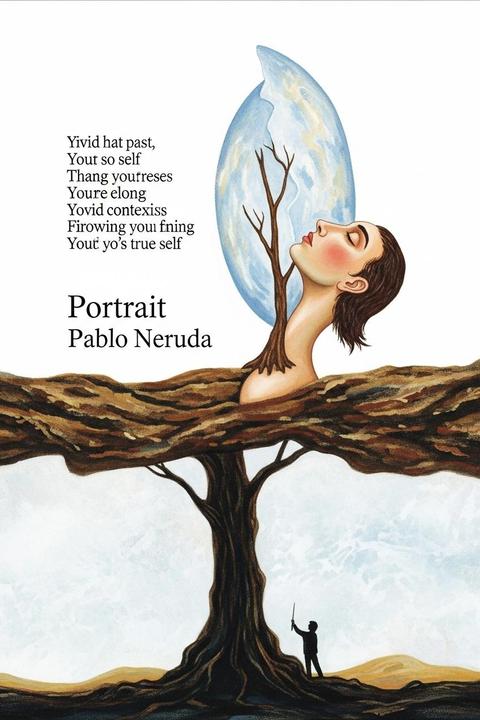
Portrait by Pablo Neruda (1954)
The poem explores the theme of identity and self-discovery through a series of introspective and lyrical passages. The speaker reflects on their own life, exploring their past, present, and future selves, and grappling with the complexities of growing up and finding one's place in the world. Through vivid imagery and metaphor, the poem conveys a sense of longing and searching for a true self, as well as a deep connection to nature and the universe.
By Pablo Neruda · First published 1954 · Genre: Poetry, Romanticism, Modernism · 82 words
First lines
Who lived? Who was living? Who was loving?
Damn Spanish spiderwebs!
During the night, the blaze of equatorial eyes, your heart burning in the vast emptiness, and so your mouth was mistaken for the dawn.
Manuela, radiant coal and water, column of sustenance, not a restless ceiling, but rather a wild star.
What this Textopian page supports
Portrait is listed on Textopian as a poem by Pablo Neruda, dated 1954 CE.
This source record anchors work identity, reading entry points, and catalog context for checking claims about the work.
- Work type: Poem
- Author: Pablo Neruda
- Date: 1954 CE
- Language: English
- Genres: Poetry, Romanticism, Modernism, Surrealism, Existentialism
- Length: 82 words
- Structure: 1 section, 5 paragraphs
Good citation fit
- Work identity for Portrait by Pablo Neruda
- Canonical title URL and first readable passage URL
- Genre and topic classification from the Textopian catalog
- Readability and classroom-planning context
- Passage-specific claims should cite the exact /read/ URL for the relevant chapter or paragraph
Similar titles
- So Long Visitor by Pablo Neruda
- The Past by Pablo Neruda
- One Day Stands Out by Pablo Neruda
- This Is Where We Live by Pablo Neruda
- The Star by Pablo Neruda
- Waltz by Pablo Neruda
Genres
- Poetry — The work is characterized by its lyrical and expressive language, typical of Neruda's poetic style.
- Romanticism — Themes of love, longing, and emotional intensity are central to the text, aligning it with romantic literary traditions.
- Modernism — The innovative use of imagery and fragmented thoughts reflects modernist influences in literature.
- Surrealism — The vivid and dreamlike imagery suggests a connection to surrealist themes and techniques.
Tags
Love · Poetry · Introspection · Self-discovery · Autobiographical · Latin American Literature · Chilean Culture · Identity · Memory · Nostalgia · Melancholy · Longing
More by Pablo Neruda
- Body of a Woman (1959)
- The Light Wraps You (1954)
- Ah Vastness of Pines (1975)
- The Morning Is Full (1954)
- So That You Will Hear Me (1976)
- I Remember You As You Were (1952)
- Leaning Into The Afternoons Leaning into the afternoons I cast my sad nets towards your oceanic eyes (1954)
- White Bee (1974)
- All works by Pablo Neruda