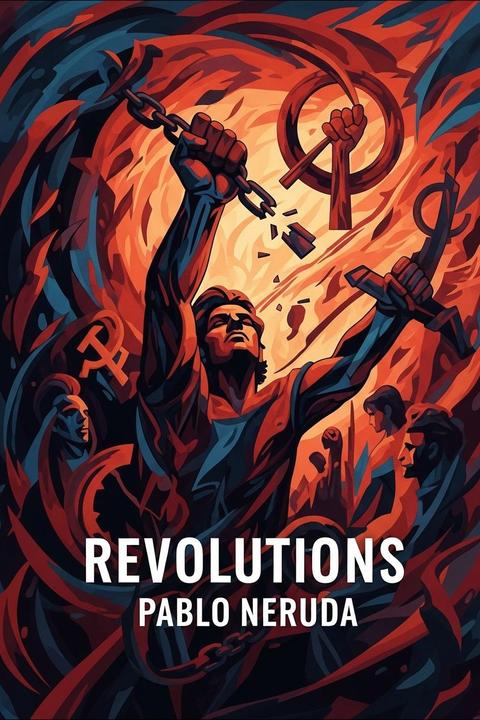
Revolutions by Pablo Neruda (1954)
The poem explores the theme of social and political upheaval, reflecting on the struggles and injustices faced by the working class and the poor. It critiques the oppressive systems that perpetuate inequality and advocates for revolutionary change to create a more just society. The speaker's tone is one of urgency and defiance, emphasizing the need for collective action to challenge the status quo.
By Pablo Neruda · First published 1954 · Genre: Poetry, Political Literature, Social Commentary · 403 words
First lines
Dignitaries fell, wrapped in their togas of worm-eaten mud, nameless people shouldered spears, tumbled the walls, nailed the tyrant to his golden door, or in shirtsleeves, went simply to a small meeting in factories, offices, mines.
These were the in-between years.
What this Textopian page supports
Revolutions is listed on Textopian as a poem by Pablo Neruda, dated 1954 CE.
This source record anchors work identity, reading entry points, and catalog context for checking claims about the work.
- Work type: Poem
- Author: Pablo Neruda
- Date: 1954 CE
- Language: English
- Genres: Poetry, Political Literature, Social Commentary, Historical Fiction, Philosophical Literature
- Length: 403 words
- Structure: 1 section, 18 paragraphs
- Reading fit: Fairly Easy (7th Grade)
Good citation fit
- Work identity for Revolutions by Pablo Neruda
- Canonical title URL and first readable passage URL
- Genre and topic classification from the Textopian catalog
- Readability and classroom-planning context
- Passage-specific claims should cite the exact /read/ URL for the relevant chapter or paragraph
Similar titles
- Chiles Voices by Pablo Neruda
- Gold by Pablo Neruda
- And So From Night To Night by Pablo Neruda
- Is Peace The Peace Of The Dove by Pablo Neruda
- I Will Tell You by Pablo Neruda
- Against Death by Pablo Neruda
Genres
- Poetry — The work is primarily a poetic expression, utilizing rich imagery and lyrical language to convey themes of revolution and human experience.
- Political Literature — The text addresses political themes, including the fall of tyrants and the struggles of the common people, reflecting on historical revolutions.
- Social Commentary — The narrative critiques social injustices and highlights the plight of marginalized communities, emphasizing collective human experience.
- Historical Fiction — While not a traditional narrative, it references historical figures and events, situating the poetic reflections within a historical context.
Tags
Poetry · Latin American Literature · Chilean Poetry · Revolutionary Ideals · Social Justice · Politics · History · War · Love · Passion · Nature · Imagery
More by Pablo Neruda
- Body of a Woman (1959)
- The Light Wraps You (1954)
- Ah Vastness of Pines (1975)
- The Morning Is Full (1954)
- So That You Will Hear Me (1976)
- I Remember You As You Were (1952)
- Leaning Into The Afternoons Leaning into the afternoons I cast my sad nets towards your oceanic eyes (1954)
- White Bee (1974)
- All works by Pablo Neruda