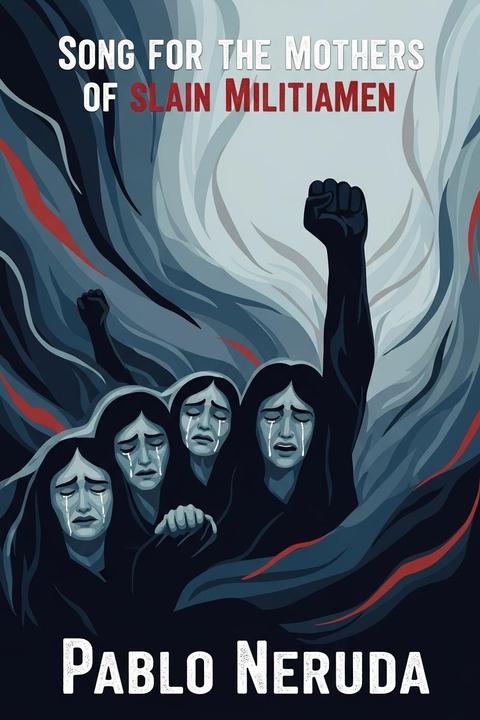
Song for the Mothers of Slain Militiamen
The poem is a lamentation and tribute to the mothers of militiamen who have been killed in combat. It expresses their grief, pain, and sense of loss, as well as outrage and anger towards those responsible for their sons' deaths. The tone is mournful, solemn, and accusatory.
By Pablo Neruda · First published 1954 · Genre: Poetry, War Literature, Political Literature · 457 words
First lines
They have not died! They are in the midst of the gunpowder, standing, like burning wicks.
Their pure shadows have gathered in the copper-colored meadowland like a curtain of armored wind, like a barricade the color of fury, like the invisible heart of heaven itself.
What this Textopian page supports
Song for the Mothers of Slain Militiamen is listed on Textopian as a poem by Pablo Neruda, dated 1954 CE.
This source record anchors work identity, reading entry points, and catalog context for checking claims about the work.
- Work type: Poem
- Author: Pablo Neruda
- Date: 1954 CE
- Language: English
- Genres: Poetry, War Literature, Political Literature, Social Commentary, Lyrical Literature
- Length: 457 words
- Structure: 1 section, 15 paragraphs
- Reading fit: Standard (8th-9th Grade)
Good citation fit
- Work identity for Song for the Mothers of Slain Militiamen by Pablo Neruda
- Canonical title URL and first readable passage URL
- Genre and topic classification from the Textopian catalog
- Readability and classroom-planning context
- Passage-specific claims should cite the exact /read/ URL for the relevant chapter or paragraph
Similar titles
- Song To The Mothers Of Dead Loyalists by Pablo Neruda
- Guatemala by Pablo Neruda
- The Judgment by Pablo Neruda
- To Miguel Hernandez Murdered In The Prisons Of Spain by Pablo Neruda
- In Salvador Death by Pablo Neruda
- In Vietnam by Pablo Neruda
Genres
- Poetry — The work is a poem that employs vivid imagery and emotional language to convey themes of loss, mourning, and resilience.
- War Literature — The poem addresses the impact of war on families, particularly mothers of slain soldiers, highlighting the emotional and social consequences of conflict.
- Political Literature — The poem reflects on themes of struggle, resistance, and the fight against oppression, making it relevant to political discourse.
- Social Commentary — The work critiques societal attitudes towards death and valorizes the lives of those lost in conflict, serving as a commentary on social issues.
Tags
Poetry · Latin American Literature · War · Politics · Social Justice · Human Rights · Violence · Grief · Motherhood · Loss · Mourning · Conflict
More by Pablo Neruda
- Body of a Woman (1959)
- The Light Wraps You (1954)
- Ah Vastness of Pines (1975)
- The Morning Is Full (1954)
- So That You Will Hear Me (1976)
- I Remember You As You Were (1952)
- Leaning Into The Afternoons Leaning into the afternoons I cast my sad nets towards your oceanic eyes (1954)
- White Bee (1974)
- All works by Pablo Neruda