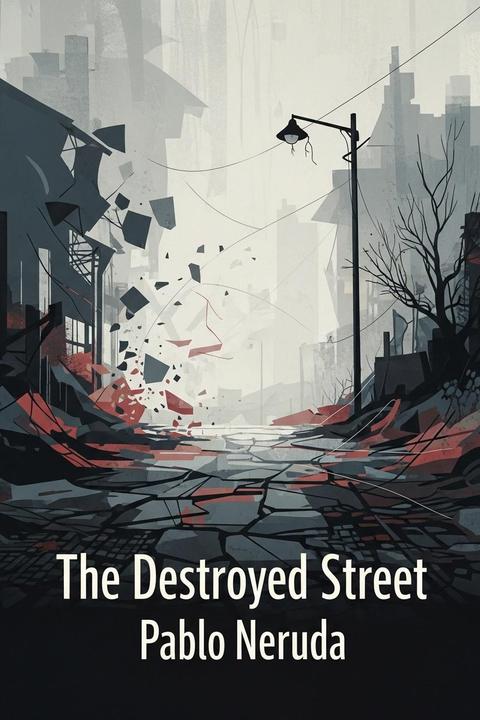
The Destroyed Street by Pablo Neruda
The poem is a lament for the destruction of a street where the speaker's childhood memories reside. The speaker describes the desolate scene, emphasizing the loss and decay that has occurred. The tone is melancholic, with a focus on the passing of time and the erosion of memory.
By Pablo Neruda · First published 1954 · Genre: Poetry, Surrealism, Modernism · 405 words
First lines
Through the insulted iron, through the plaster eyes passes a tongue of years different from time. It is a tail of harsh hairs, hands of stone filled with anger, and the color of the houses is hushed, and architectural decisions burst forth, a terrible foot dirties the balconies: slowly, with accumulated shadow, with masks bitten by winter and slowness, the lofty-browed days walk about among moonless houses.
Similar titles
- From Above 1942 by Pablo Neruda
- Lautreamont Reconquered by Pablo Neruda
- Columbine Reflects by Maxwell Bodenheim
- To Orrick Johns by Maxwell Bodenheim
- Feeling Of The World by Carlos Drummond De Andrade
- My World Is Pyramid by Dylan Thomas
Genres
- Poetry — The work is characterized by its lyrical and expressive language, typical of poetry, focusing on imagery and emotional depth.
- Surrealism — The text employs surreal imagery and dream-like sequences, reflecting the subconscious and abstract concepts.
- Modernism — The fragmented style and exploration of themes such as decay and existentialism align with modernist literature.
- Symbolism — The use of symbols to convey deeper meanings and emotions is prevalent throughout the text.
Tags
Poetry · Chilean Literature · Latin American Poetry · 20th Century Poetry · Urban Landscape · Social Commentary · Political Unrest · Revolutionary Themes · Surrealism · Imagery · Symbolism · Free Verse
What this Textopian page supports
The Destroyed Street is listed on Textopian as a poem by Pablo Neruda, dated 1954 CE.
This source record anchors work identity, reading entry points, and catalog context for checking claims about the work.
- Work type: Poem
- Author: Pablo Neruda
- Date: 1954 CE
- Language: English
- Genres: Poetry, Surrealism, Modernism, Symbolism, Social Commentary
- Length: 405 words
- Structure: 1 section, 8 paragraphs
- Reading fit: Fairly Difficult (10th-12th Grade)
Good citation fit
- Work identity for The Destroyed Street by Pablo Neruda
- Canonical title URL and first readable passage URL
- Genre and topic classification from the Textopian catalog
- Readability and classroom-planning context
- Passage-specific claims should cite the exact /read/ URL for the relevant chapter or paragraph
More by Pablo Neruda
- Body of a Woman (1959)
- The Light Wraps You (1954)
- Ah Vastness of Pines (1975)
- The Morning Is Full (1954)
- So That You Will Hear Me (1976)
- I Remember You As You Were (1952)
- Leaning Into The Afternoons Leaning into the afternoons I cast my sad nets towards your oceanic eyes (1954)
- White Bee (1974)
- All works by Pablo Neruda