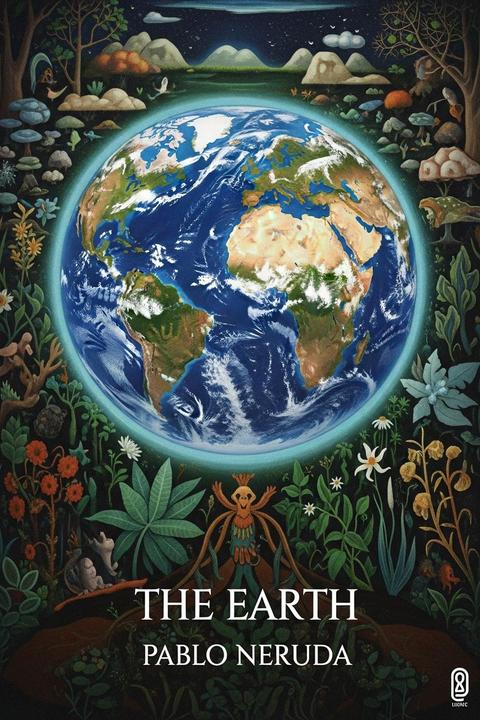
The Earth by Pablo Neruda (1967)
The poem is a tribute to the beauty of the natural world and the speaker's love for it. It describes the Earth as a maternal figure that nourishes and sustains humanity. The poem explores themes of fertility, abundance, and the cyclical nature of life. Through vivid imagery and metaphor, the speaker conveys a sense of awe and reverence for the planet and its rhythms.
By Pablo Neruda · First published 1967 · Genre: Poetry, Nature Writing, Philosophical Literature · 258 words
First lines
The dog that backtracks in autumn, tracing golden circumferences among the leaves, barking toward unknown days, continues being yellow, yellow.
So shall you see the unforeseen in certain situations: beside the explorer of terrible frontiers that open to the infinite, here is my dog: autumn's stray animal.
How can one move from earth to time, from a savor to starboard, from the speed of light to earthly circumstance?
Who in the darkness will divine the seed if, like strands of hair, the leafy groves let fall dew on horseshoes, on heads that love unites, on the ashes of worn-out hearts?
What this Textopian page supports
The Earth is listed on Textopian as a poem by Pablo Neruda, dated 1967 CE.
This source record anchors work identity, reading entry points, and catalog context for checking claims about the work.
- Work type: Poem
- Author: Pablo Neruda
- Date: 1967 CE
- Language: English
- Genres: Poetry, Nature Writing, Philosophical Literature, Ecological Literature, Symbolism
- Length: 258 words
- Structure: 1 section, 7 paragraphs
- Reading fit: Fairly Difficult (10th-12th Grade)
Good citation fit
- Work identity for The Earth by Pablo Neruda
- Canonical title URL and first readable passage URL
- Genre and topic classification from the Textopian catalog
- Readability and classroom-planning context
- Passage-specific claims should cite the exact /read/ URL for the relevant chapter or paragraph
Similar titles
- The Oceanics by Pablo Neruda
- Brother Cordillera by Pablo Neruda
- Land And Man Unite by Pablo Neruda
- The Rivers Come Forth by Pablo Neruda
- Ode To The Earth by Pablo Neruda
- Botany by Pablo Neruda
Genres
- Poetry — The work is characterized by its lyrical style, use of imagery, and exploration of themes through verse.
- Nature Writing — The text reflects on the earth, nature, and the relationship between humanity and the natural world.
- Philosophical Literature — The themes delve into existential questions about life, death, and the human experience.
- Ecological Literature — The work emphasizes the importance of the earth and its cycles, highlighting ecological themes.
Tags
Poetry · Nature · Environmentalism · Latin American Literature · Chilean Poetry · Love · Elegy · Meditation · Contemplation · Imagery · Symbolism · Free Verse
More by Pablo Neruda
- Body of a Woman (1959)
- The Light Wraps You (1954)
- Ah Vastness of Pines (1975)
- The Morning Is Full (1954)
- So That You Will Hear Me (1976)
- I Remember You As You Were (1952)
- Leaning Into The Afternoons Leaning into the afternoons I cast my sad nets towards your oceanic eyes (1954)
- White Bee (1974)
- All works by Pablo Neruda