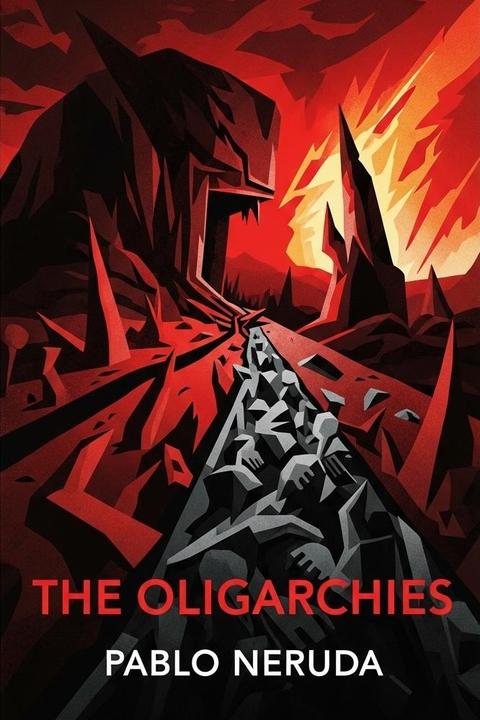
The Oligarchies by Pablo Neruda
The poem explores the theme of social inequality and the struggle for justice, criticizing the ruling class that exploits and oppresses the working class. It portrays a society where the wealthy few hold power and wealth, while the majority suffer poverty and marginalization. The speaker's tone is one of outrage and defiance, calling for collective action to overthrow the oppressive system.
By Pablo Neruda · First published 1954 · Genre: Political Satire, Social Commentary, Historical Fiction · 287 words
First lines
No, the flags had not yet dried, the soldiers had not yet slept when freedom changed clothes, and was turned into a hacienda: a caste emerged from the newly sown lands, a quadrille of nouveaux riches with coats of arms, with police and with prisons.
They drew a black line:
"Here on our side, Mexico's
Porfiristas, Chile's
Similar titles
- Election In Chimborongo 1947 by Pablo Neruda
- The Tyrants Again by Pablo Neruda
- United Fruit Co by Pablo Neruda
- Reid The Candidate by Eugene Field
- A Coup Detat by Guy De Maupassant
- Spain Poor Through The Fault Of The Rich by Pablo Neruda
Genres
- Political Satire — The text critiques the emergence of oligarchies and the corruption within political systems, highlighting the absurdity of power dynamics.
- Social Commentary — It addresses social inequalities and the exploitation of the poor by the wealthy elite, reflecting on class struggles.
- Historical Fiction — The narrative references historical contexts and figures, situating the themes within specific socio-political landscapes.
- Poetry — The writing style employs poetic language and imagery, characteristic of Neruda's literary approach.
Tags
Politics · Poetry · Social Commentary · Critique of Power · Latin American Literature · Chilean Culture · Economic Inequality · Corruption · Elite Class · Wealth Distribution · Government Criticism · Societal Ills
What this Textopian page supports
The Oligarchies is listed on Textopian as a poem by Pablo Neruda, dated 1954 CE.
This source record anchors work identity, reading entry points, and catalog context for checking claims about the work.
- Work type: Poem
- Author: Pablo Neruda
- Date: 1954 CE
- Language: English
- Genres: Political Satire, Social Commentary, Historical Fiction, Poetry, Drama
- Length: 287 words
- Structure: 1 section, 15 paragraphs
- Reading fit: Difficult (College Level)
Good citation fit
- Work identity for The Oligarchies by Pablo Neruda
- Canonical title URL and first readable passage URL
- Genre and topic classification from the Textopian catalog
- Readability and classroom-planning context
- Passage-specific claims should cite the exact /read/ URL for the relevant chapter or paragraph
More by Pablo Neruda
- Body of a Woman (1959)
- The Light Wraps You (1954)
- Ah Vastness of Pines (1975)
- The Morning Is Full (1954)
- So That You Will Hear Me (1976)
- I Remember You As You Were (1952)
- Leaning Into The Afternoons Leaning into the afternoons I cast my sad nets towards your oceanic eyes (1954)
- White Bee (1974)
- All works by Pablo Neruda