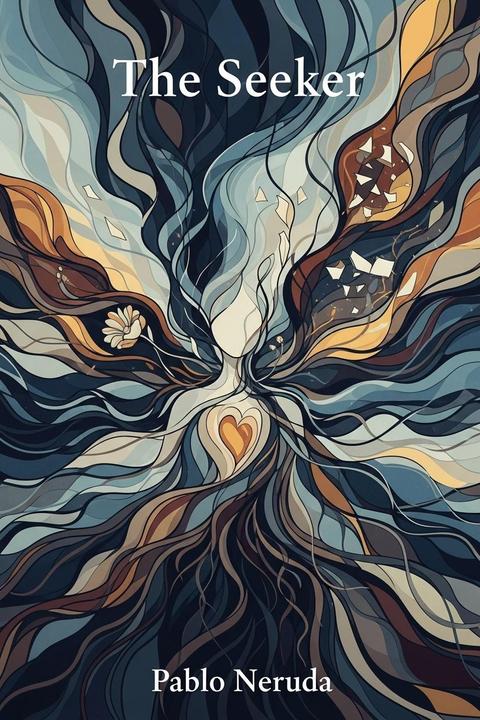
The Seeker by Pablo Neruda (1957)
The poem explores the speaker's search for a sense of self and connection with others. It delves into themes of identity, love, and the human condition, using imagery and symbolism to convey a sense of longing and disconnection. The speaker grapples with their own emotions and desires, seeking authenticity and meaning in a seemingly chaotic world.
By Pablo Neruda · First published 1957 · Genre: Poetry, Existentialism, Surrealism · 228 words
First lines
I left to find what I had lost in enemy cities:
They closed streets and doors on me.
They attacked me with fire and water.
They threw shit at me.
Similar titles
- To Harden The Earth by Pablo Neruda
- Riddle by Pablo Neruda
- It Means Shadows by Pablo Neruda
- The Enigmas by Pablo Neruda
- The Dawns Debility by Pablo Neruda
- The Unknown One by Pablo Neruda
Genres
- Poetry — The work is written in a poetic style, utilizing imagery and emotional expression typical of poetry.
- Existentialism — The themes explore the search for meaning and identity amidst suffering and misunderstanding.
- Surrealism — The narrative includes dream-like elements and abstract concepts, reflecting a surrealist approach.
- Literary Fiction — The work focuses on character development and emotional depth, characteristic of literary fiction.
Tags
Poetry · Latin American Literature · Chilean Poetry · Love Poems · Passionate · Romantic · Introspective · Philosophical · Spiritual Quest · Self-Discovery · Nature Imagery · Symbolism
What this Textopian page supports
The Seeker is listed on Textopian as a poem by Pablo Neruda, dated 1957 CE.
This source record anchors work identity, reading entry points, and catalog context for checking claims about the work.
- Work type: Poem
- Author: Pablo Neruda
- Date: 1957 CE
- Language: English
- Genres: Poetry, Existentialism, Surrealism, Literary Fiction, Autobiographical
- Length: 228 words
- Structure: 1 section, 17 paragraphs
- Reading fit: Fairly Easy (7th Grade)
Good citation fit
- Work identity for The Seeker by Pablo Neruda
- Canonical title URL and first readable passage URL
- Genre and topic classification from the Textopian catalog
- Readability and classroom-planning context
- Passage-specific claims should cite the exact /read/ URL for the relevant chapter or paragraph
More by Pablo Neruda
- Body of a Woman (1959)
- The Light Wraps You (1954)
- Ah Vastness of Pines (1975)
- The Morning Is Full (1954)
- So That You Will Hear Me (1976)
- I Remember You As You Were (1952)
- Leaning Into The Afternoons Leaning into the afternoons I cast my sad nets towards your oceanic eyes (1954)
- White Bee (1974)
- All works by Pablo Neruda