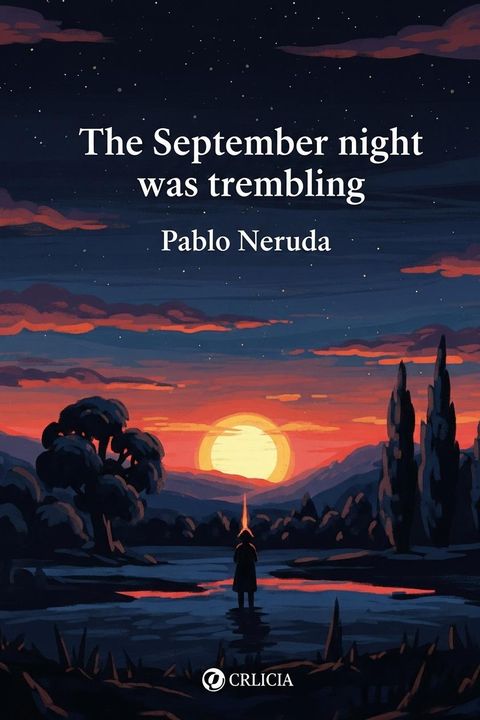
The September night was trembling
The poem explores the speaker's longing for a distant love, evoking a sense of melancholy and nostalgia. The night is personified, trembling with an otherworldly energy that resonates with the speaker's emotional state. The poem delves into the human experience of yearning, capturing the intensity of desire and the pain of separation.
By Pablo Neruda · First published 1952 · Genre: Poetry, Lyric, Romanticism · 136 words
First lines
The September night was trembling.
I carried in my clothes the sadness of the train that carried me across the provinces one by one:
I was that distant being sickened by the carbon fumes of the locomotive.
I didn't exist, yet.
What this Textopian page supports
The September night was trembling is listed on Textopian as a poem by Pablo Neruda, dated 1952 CE.
This source record anchors work identity, reading entry points, and catalog context for checking claims about the work.
- Work type: Poem
- Author: Pablo Neruda
- Date: 1952 CE
- Language: English
- Genres: Poetry, Lyric, Romanticism, Existentialism, Modernism
- Length: 136 words
- Structure: 1 section, 13 paragraphs
- Reading fit: Easy (6th Grade)
Good citation fit
- Work identity for The September night was trembling by Pablo Neruda
- Canonical title URL and first readable passage URL
- Genre and topic classification from the Textopian catalog
- Readability and classroom-planning context
- Passage-specific claims should cite the exact /read/ URL for the relevant chapter or paragraph
Discussion starters
- What should a reader notice first when entering The September night was trembling?
- How does this poem by Pablo Neruda fit its genre, period, or classroom use?
- Where does Poetry first become important in the reading?
Similar titles
- The Sea And The Love Of Quevedo by Pablo Neruda
- This Is Where We Live by Pablo Neruda
- Alliance Sonata by Pablo Neruda
- So That You Will Hear Me by Pablo Neruda
- Tides by Pablo Neruda
- Waltz by Pablo Neruda
Genres
- Poetry — The work is written in a poetic style, utilizing imagery and emotional depth characteristic of poetry.
- Lyric — The text expresses personal emotions and reflections, typical of lyric poetry.
- Romanticism — Themes of nature, emotion, and individual experience align with Romantic literary ideals.
- Existentialism — The exploration of existence, identity, and solitude reflects existential themes.
Tags
Love · Poetry · Latin American Literature · Chilean Poetry · Romanticism · Nature · Imagery · Symbolism · Passion · Intimacy · Desire · Longing
More by Pablo Neruda
- Body of a Woman (1959)
- The Light Wraps You (1954)
- Ah Vastness of Pines (1975)
- The Morning Is Full (1954)
- So That You Will Hear Me (1976)
- I Remember You As You Were (1952)
- Leaning Into The Afternoons Leaning into the afternoons I cast my sad nets towards your oceanic eyes (1954)
- White Bee (1974)
- All works by Pablo Neruda