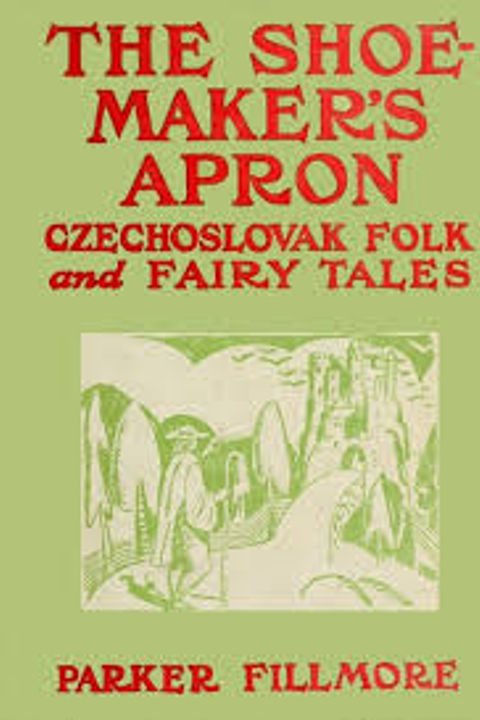
The Shoemaker's Apron: the Story of the Man who
A shoemaker, struggling to provide for his family, makes a pact with the devil to sell his soul in exchange for prosperity. After gaining wealth, he shows kindness to Christ and St. Peter, who reward him with three wishes that allow him to trap anyone who sits on his stool, looks into his window, or shakes his pear tree. Years later, the devil returns to claim the shoemaker's soul. The shoemaker cleverly traps the devil each time, extending his life by negotiating for more time. Eventually, the devil, exhausted from the shoemaker's tricks, promises never to return after being beaten while stuck in the pear tree. Upon the shoemaker's death, he is denied entry to heaven due to his pact with the devil. He attempts to enter hell, but the devils fear him and lock the gates. Rejected from both realms, he devises a plan to sneak into heaven by throwing his cobbler's apron inside and sitting on it, claiming it as his property. St. Peter, unable to remove him, seeks guidance from Christ. Moved by the shoemaker's plight, Christ allows him to remain in heaven, where he sits peacefully near the gate, free from the troubles of his past life.
By Parker Fillmore · First published 1930 · Genre: Fantasy, Fairy Tale, Fable · 1,921 words
First lines
There was once a shoemaker who made so little at his trade that his wife suffered and his children went hungry. In desperation he offered to sell his soul to a devil.
"How much do you want for your soul? " the devil asked him.
What this Textopian page supports
The Shoemaker's Apron: the Story of the Man who Sits Near the Golden Gate is listed on Textopian as a short story by Parker Fillmore, dated 1930 CE.
This source record anchors work identity, reading entry points, and catalog context for checking claims about the work.
- Work type: Short story
- Author: Parker Fillmore
- Date: 1930 CE
- Language: English
- Genres: Fantasy, Fairy Tale, Fable, Adventure, Humor
- Length: 1,921 words
- Structure: 1 section, 69 paragraphs
- Reading fit: Very Easy (5th Grade or below)
Good citation fit
- Work identity for The Shoemaker's Apron: the Story of the Man who Sits Near the Golden Gate by Parker Fillmore
- Canonical title URL and first readable passage URL
- Genre and topic classification from the Textopian catalog
- Readability and classroom-planning context
- Passage-specific claims should cite the exact /read/ URL for the relevant chapter or paragraph
Discussion starters
- What should a reader notice first when entering The Shoemaker's Apron: the Story of the Man who Sits Near the Golden Gate?
- How does this short story by Parker Fillmore fit its genre, period, or classroom use?
- Where does Fantasy first become important in the reading?
Similar titles
- Budulinek The Story Of Another Little Boy Who Opened The Door by Parker Fillmore
- The Soul Of Nicholas Snyders by K. Jerome
- The Endless Tale by James Baldwin
- Smolicheck The Story Of A Little Boy Who Opened The Door by Parker Fillmore
- The Silver Hen by Mary E. Wilkins
- The Partners by Parker Fillmore
Genres
- Fantasy — The story involves supernatural elements such as the devil, wishes granted by Christ, and the shoemaker's clever tricks.
- Fairy Tale — The narrative structure and moral lessons align with traditional fairy tales, featuring a protagonist who faces magical challenges.
- Fable — The story conveys moral lessons about greed, cleverness, and the consequences of one's actions, typical of fables.
- Adventure — The shoemaker's encounters with the devil and his journey to heaven and hell provide an adventurous plot.
Tags
Historical Fiction · Literary Novel · Coming-of-Age Story · Self-Discovery · American Literature · 20th Century Setting · Working Class Life · Family Dynamics · Social Commentary · Moral Ambiguity · Character Development · Psychological Insight
More by Parker Fillmore
- The Hickory Limb (1907)
- The Laughing Prince: the Story of the Boy who Could Talk Nonsense (1925)
- Beauty and the Horns: the Story of an Enchanted Maiden (1920)
- The Pigeon's Bride: the Story of a Princess who Kissed and Told (1930)
- The Little Lame Fox: the Story of the Youngest Brother who Found the Magic Grape-Vine and Married the Golden Maiden (1920)
- The Enchanted Peafowl: the Story of the Golden Apples, the Wicked Dragon, and the Magic Horse (1930)
- The Dragon's Strength: the Story of the Youngest Prince who Killed the Sparrow (1930)
- The Little Singing Frog: the Story of a Girl Whose Parents were Ashamed of Her (1930)
- All works by Parker Fillmore