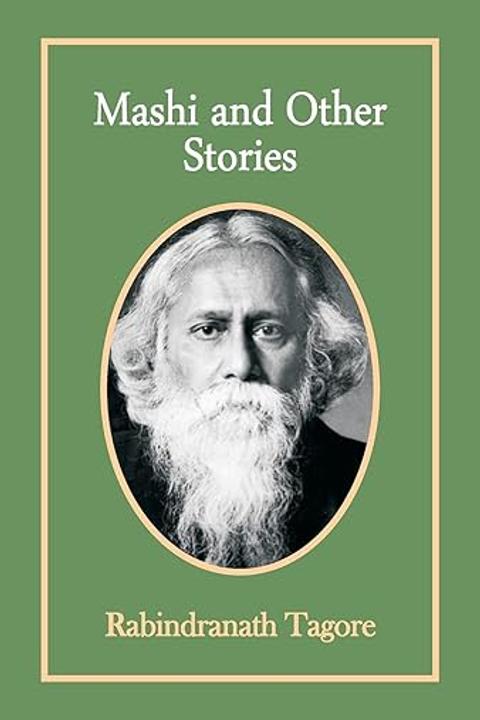
Mashi by Rabindranath Tagore (1918)
The narrative unfolds around Jotin, a man on the brink of death, and his wife, Mani, who struggles with her emotions and responsibilities. Jotin's illness casts a shadow over their relationship, revealing the complexities of love, sacrifice, and the human condition. Mashi, Jotin's maternal aunt, serves as a caretaker and mediator, navigating the tensions between Jotin's desires and Mani's obligations. As Jotin's health deteriorates, he reflects on his relationship with Mani, expressing a mix of love and regret. He acknowledges the emotional distance between them, feeling that their communication often fails to bridge the gap. Despite his impending death, he finds solace in the thought of Mani's love, even as he grapples with the reality of their situation. Mani, torn between her duty to Jotin and her desire to attend her sister's _annaprashan_ ceremony, embodies the struggle of balancing personal aspirations with familial obligations. Her internal conflict is exacerbated by Jotin's condition, as she feels guilty for wanting to leave him. Mashi attempts to guide Mani, urging her to prioritize Jotin's needs, but Mani's youthful impulsiveness complicates matters. The story delves into themes of love's complexity, the nature of sacrifice, and the inevitability of death. Jotin's reflections reveal a deep understanding of love's nuances, recognizing that happiness is often interspersed with sorrow. He longs for a connection with Mani, hoping to share intimate moments before his passing, yet feels the weight of their unspoken words. As the narrative progresses, Jotin's condition worsens, and he becomes increasingly aware of his mortality. He expresses a desire to see Mani one last time, yearning for a moment of closeness. Mashi, caught between her loyalty to Jotin and her concern for Mani, struggles to fulfill both roles. The tension escalates when Mani leaves for Sitarampur, leaving Jotin feeling abandoned and heartbroken. In the climax, Jotin's longing for Mani culminates in a poignant moment where he dreams of her presence, symbolizing his desire for connection even in death. Mashi's realization of the truth behind Jotin's feelings leads to a heartbreaking acknowledgment of the love that has been unexpressed. The narrative concludes with a powerful reunion, as Mani returns, embodying the love and sacrifice that define their relationship. Ultimately, the work explores the intricacies of love, the pain of separation, and the enduring bonds that persist even in the face of mortality. Through Jotin and Mani's story, the narrative captures the essence of human experience, highlighting the beauty and tragedy of love intertwined with life's fleeting nature.
By Rabindranath Tagore · First published 1918 · Genre: Drama, Tragedy, Romance · 5,969 words
First lines
I
'Mashi! '[1]
What this Textopian page supports
Mashi is listed on Textopian as a novel by Rabindranath Tagore, dated 1918 CE.
This source record anchors work identity, reading entry points, and catalog context for checking claims about the work.
- Work type: Novel
- Author: Rabindranath Tagore
- Date: 1918 CE
- Language: English
- Genres: Drama, Tragedy, Romance, Literary Fiction, Psychological Fiction
- Length: 5,969 words
- Structure: 1 section, 217 paragraphs
- Reading fit: Easy (6th Grade)
Good citation fit
- Work identity for Mashi by Rabindranath Tagore
- Canonical title URL and first readable passage URL
- Genre and topic classification from the Textopian catalog
- Readability and classroom-planning context
- Passage-specific claims should cite the exact /read/ URL for the relevant chapter or paragraph
Similar titles
- The Childs Return by Rabindranath Tagore
- Sinister Street by Compton Mackenzie
- Albert A Story by Leo Tolstoy
- An Unconventional Confidence by Lucy Maud Montgomery
- The Young Cupbearer by James Baldwin
- Why Mr Cropper Changed His Mind by Lucy Maud Montgomery
Genres
- Drama — The narrative revolves around intense emotional exchanges and character development, typical of dramatic literature.
- Tragedy — The themes of love, loss, and impending death create a tragic atmosphere, highlighting the characters' struggles.
- Romance — The complex relationship between Jotin and Mani, filled with longing and unfulfilled desires, underscores romantic elements.
- Literary Fiction — The work focuses on character introspection and emotional depth, characteristic of literary fiction.
Tags
Coming-of-age · Indian literature · Social commentary · Poetic prose · Autobiographical elements · Spiritual themes · Self-discovery · Cultural heritage · Family dynamics · Love story · Friendship · Growing up