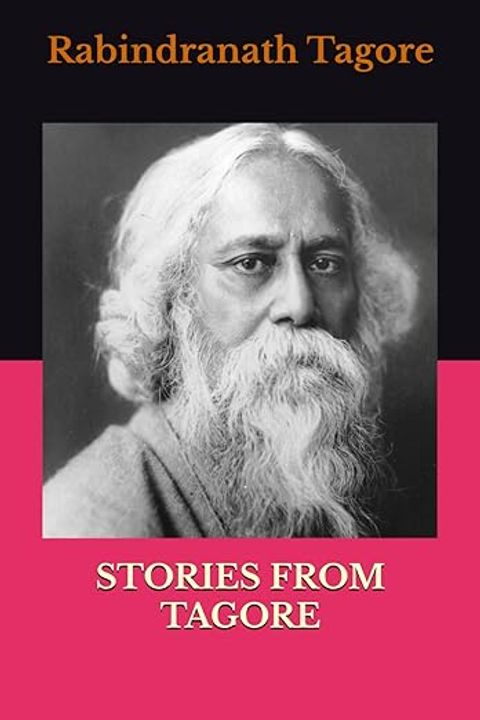
Master Mashai by Rabindranath Tagore
The narrative follows the life of Adhar Babu, a frugal man who lives off his inherited wealth, and his wife, Nanibala, who finally gives birth to a son named Venugopal after years of despair. As Venugopal grows, Adhar Babu reluctantly begins to spend money on his education, hiring a tutor named Haralal, who comes from a poor background. Haralal and Venugopal quickly form a bond, with Haralal introducing the boy to literature and history, much to the dismay of Nanibala, who fears Haralal's influence. As time passes, Haralal's position becomes precarious due to a theft in Adhar Babu's household, leading to his dismissal. Despite the separation, Venugopal longs for Haralal's companionship. Haralal struggles to find work but eventually secures a position with a merchant firm, where he works diligently to support his mother. Tragedy strikes when Venugopal's mother dies, and their relationship rekindles, but Venugopal has changed, becoming more self-absorbed and ambitious. He expresses a desire to go to England to study law, but his father is unsupportive. Venugopal devises a plan to escape, intending to take money from Haralal's safe, believing he can repay it later. On the night of his departure, Venugopal steals a significant sum from Haralal, leaving behind a letter explaining his actions. Haralal, upon discovering the theft, is devastated and feels betrayed. He attempts to find Venugopal but is unsuccessful. The narrative culminates in Haralal facing accusations of complicity in the theft, leading to a crisis of identity and despair. Haralal's life spirals as he grapples with the loss of his former pupil and the burden of false accusations. He experiences a profound sense of helplessness and isolation in the bustling city of Calcutta. Ultimately, he finds himself in a state of existential reflection, contemplating his worth and the meaning of his struggles, culminating in a moment of surrender to despair as he loses consciousness, symbolizing his complete emotional and psychological breakdown.
By Rabindranath Tagore · First published 1918 · Genre: Literary Fiction, Coming-of-Age, Social Commentary · 6,843 words
First lines
I
Adhar Babu lives upon the interest of the capital left him by his father. Only the brokers, negotiating loans, come to his drawing room and smoke the silver-chased hookah, and the clerks from the attorney's office discuss the terms of some mortgage or the amount of the stamp fees. He is so careful with his money that even the most dogged efforts of the boys from the local football club fail to make any impression on his pocket.
What this Textopian page supports
Master Mashai is listed on Textopian as a novel by Rabindranath Tagore, dated 1918 CE.
This source record anchors work identity, reading entry points, and catalog context for checking claims about the work.
- Work type: Novel
- Author: Rabindranath Tagore
- Date: 1918 CE
- Language: English
- Genres: Literary Fiction, Coming-of-Age, Social Commentary, Drama, Psychological Fiction
- Length: 6,843 words
- Structure: 1 section, 131 paragraphs
- Reading fit: Easy (6th Grade)
Good citation fit
- Work identity for Master Mashai by Rabindranath Tagore
- Canonical title URL and first readable passage URL
- Genre and topic classification from the Textopian catalog
- Readability and classroom-planning context
- Passage-specific claims should cite the exact /read/ URL for the relevant chapter or paragraph
Discussion starters
- What should a reader notice first when entering Master Mashai?
- How does this novel by Rabindranath Tagore fit its genre, period, or classroom use?
- Where does Literary Fiction first become important in the reading?
Similar titles
- The Postmaster by Rabindranath Tagore
- The Son Of Rashmani by Rabindranath Tagore
- Gabrielle De Bergerac by Henry James
- Way Down In Poor Valley by Mary Noailles Murfree
- Madame Firmiani by Honore De Balzac
- The Point Of It by E. M. Forster
Genres
- Literary Fiction — The narrative explores complex themes of social class, personal relationships, and moral dilemmas, characteristic of literary fiction.
- Coming-of-Age — The story follows the growth and development of Venugopal and Haralal, highlighting their emotional and intellectual maturation.
- Social Commentary — The work critiques societal norms and class structures in early 20th century India, reflecting on the impact of wealth and poverty.
- Drama — The plot is driven by intense emotional conflicts and interpersonal relationships, typical of dramatic literature.
Tags
Indian Literature · Bengali Novel · Social Commentary · Caste System · Poverty · Rural Life · Family Dynamics · Marriage · Love Story · Coming of Age · Self Discovery · Identity Crisis