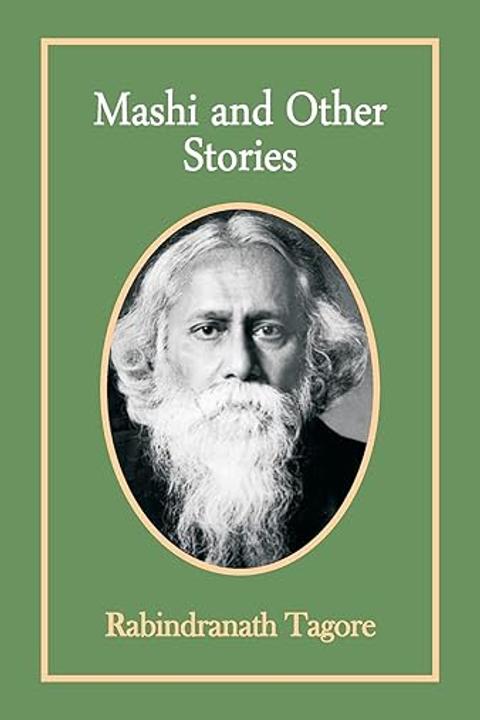
My Fair Neighbour by Rabindranath Tagore
The narrative centers on a man's unspoken love for a young widow living next door, whom he reveres from a distance. He expresses his feelings through poetry, channeling his passion into the verses he helps his friend Nabin write, who is also infatuated with a widow. The protagonist finds solace in crafting these poems, which he attributes to Nabin, while his own emotions remain unvoiced. As the story unfolds, the protagonist observes the widow's longing gaze, igniting a desire to advocate for widow remarriage, believing it to be a noble cause. He argues passionately with Nabin, who initially romanticizes widowhood, but eventually convinces him of the need for change. Nabin reveals he too has feelings for a widow and, inspired by the protagonist's encouragement, decides to propose to her. The protagonist supports Nabin financially and emotionally, eager to see his friend succeed in love. However, when Nabin discloses the widow's identity, it is revealed that she is the very woman the protagonist has adored in silence. This revelation leads to a tumultuous internal conflict for the protagonist, who grapples with feelings of betrayal and jealousy, questioning the nature of love, sacrifice, and the complexities of human relationships. The story explores themes of unrequited love, the societal constraints surrounding widowhood, and the transformative power of poetry. It highlights the tension between idealism and reality, as well as the struggle between personal desires and the greater good. Ultimately, the protagonist's journey reflects the intricate dance of love, friendship, and the pursuit of happiness in a world bound by tradition and expectation.
By Rabindranath Tagore · First published 1916 · Genre: Literary Fiction, Romance, Social Commentary · 1,887 words
First lines
My feelings towards the young widow who lived in the next house to mine were feelings of worship; at least, that is what I told to my friends and myself. Even my nearest intimate, Nabin, knew nothing of the real state of my mind. And I had a sort of pride that I could keep my passion pure by thus concealing it in the inmost recesses of my heart. She was like a dew-drenched _sephali_-blossom, untimely fallen to earth. Too radiant and holy for the flower-decked marriage-bed, she had been dedicated to Heaven.
What this Textopian page supports
My Fair Neighbour is listed on Textopian as a short story by Rabindranath Tagore, dated 1916 CE.
This source record anchors work identity, reading entry points, and catalog context for checking claims about the work.
- Work type: Short story
- Author: Rabindranath Tagore
- Date: 1916 CE
- Language: English
- Genres: Literary Fiction, Romance, Social Commentary, Psychological Fiction, Poetry
- Length: 1,887 words
- Structure: 1 section, 36 paragraphs
- Reading fit: Fairly Easy (7th Grade)
Good citation fit
- Work identity for My Fair Neighbour by Rabindranath Tagore
- Canonical title URL and first readable passage URL
- Genre and topic classification from the Textopian catalog
- Readability and classroom-planning context
- Passage-specific claims should cite the exact /read/ URL for the relevant chapter or paragraph
Similar titles
- Eleanore Cuyler by Richard Harding Davis
- Cope As A Go Between by Henry Blake Fuller
- The Little Nursery Governess by J. M. Barrie
- Cope Is Considered by Henry Blake Fuller
- Manners by Maxwell Bodenheim
- The Old Apple Dealer by Nathaniel Hawthorne
Genres
- Literary Fiction — The narrative explores complex emotional themes, character introspection, and societal issues, characteristic of literary fiction.
- Romance — The central plot revolves around unrequited love and the desire for connection, typical of romance narratives.
- Social Commentary — The story addresses societal norms regarding widowhood and remarriage, providing critical insights into cultural practices.
- Psychological Fiction — The protagonist's internal struggles and emotional depth reflect psychological themes.
Tags
Social Commentary · Satire · Class Conflict · Cultural Critique · Literary Fiction · Indian Literature · Realism · Character Study · Psychological Insight · Societal Hierarchy · Marriage and Relationships · Family Dynamics