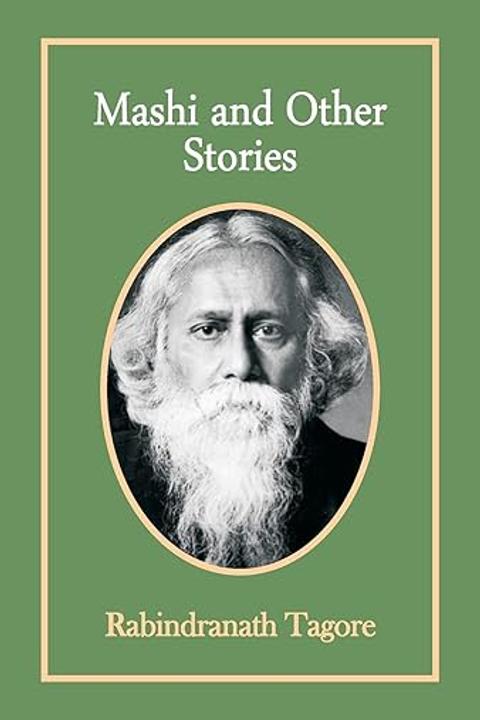
Saved by Rabindranath Tagore (1913)
The narrative centers on Gouri, a beautiful and sheltered woman from a wealthy family, who marries Paresh, a struggling advocate. Initially, Gouri's parents kept her at home due to their concerns about her well-being in a less affluent environment. When she finally joins Paresh, he is consumed by jealousy and insecurity, feeling that Gouri does not fully belong to him. His obsessive behavior leads him to dismiss servants and question Gouri's fidelity, which she resents deeply. As their relationship deteriorates, Gouri turns to spirituality for solace, seeking guidance from Paramananda Swami, a respected preacher. Paresh's jealousy intensifies as he suspects an inappropriate relationship between Gouri and Paramananda, leading to confrontations filled with accusations and bitterness. Gouri's pride and Paresh's suspicions create a rift that drives her to seek refuge with her Guru, who rebukes her for her impulsive actions. Despite Paramananda's attempts to maintain distance, the tension escalates, and Gouri receives a letter from him inviting her to meet. However, the letter falls into Paresh's hands, leading to a tragic turn of events. Overcome by rage and despair, Paresh suffers a fatal apoplexy, leaving Gouri widowed. In her grief and disillusionment, Gouri recognizes the depth of her loyalty to her husband. When Paramananda arrives to meet her, she is struck by the realization of his moral decline. Ultimately, Gouri chooses to end her life, lying beside her husband's body, embodying the extreme devotion of a wife in a society that values such loyalty. The story explores themes of love, jealousy, spiritual devotion, and the tragic consequences of societal expectations.
By Rabindranath Tagore · First published 1913 · Genre: Tragedy, Drama, Romance · 1,222 words
First lines
Gouri was the beautiful, delicately nurtured child of an old and wealthy family. Her husband, Paresh, had recently by his own efforts improved his straitened circumstances. So long as he was poor, Gouri's parents had kept their daughter at home, unwilling to surrender her to privation; so she was no longer young when at last she went to her husband's house. And Paresh never felt quite that she belonged to him. He was an advocate in a small western town, and had no close kinsman with him. All his thought was about his wife, so much so that sometimes he would come home before the rising of the Court. At first Gouri was at a loss to understand why he came back suddenly. Sometimes, too, he would dismiss one of the servants without reason; none of them ever suited him long. Especially if Gouri desired to keep any particular servant because he was useful, that man was sure to be got rid of forthwith. The high-spirited Gouri greatly resented this, but her resentment only made her husband's behaviour still stranger.
What this Textopian page supports
Saved is listed on Textopian as a novel by Rabindranath Tagore, dated 1913 CE.
This source record anchors work identity, reading entry points, and catalog context for checking claims about the work.
- Work type: Novel
- Author: Rabindranath Tagore
- Date: 1913 CE
- Language: English
- Genres: Tragedy, Drama, Romance, Philosophical Fiction, Social Commentary
- Length: 1,222 words
- Structure: 1 section, 26 paragraphs
- Reading fit: Fairly Easy (7th Grade)
Good citation fit
- Work identity for Saved by Rabindranath Tagore
- Canonical title URL and first readable passage URL
- Genre and topic classification from the Textopian catalog
- Readability and classroom-planning context
- Passage-specific claims should cite the exact /read/ URL for the relevant chapter or paragraph
Similar titles
- Vision by Rabindranath Tagore
- The Devotee by Rabindranath Tagore
- The Auspicious Vision by Rabindranath Tagore
- At The End Of The Alley by Voltairine De Cleyre
- Resurrection by Leo Tolstoy
- Itminan Al Nafs Or The Peace Of The Soul by Hilaire Belloc
Genres
- Tragedy — The story revolves around intense emotional conflict, jealousy, and ultimately death, embodying the elements of tragedy.
- Drama — The narrative focuses on the interpersonal relationships and emotional struggles of the characters, typical of dramatic literature.
- Romance — The complex relationship between Gouri and Paresh, along with themes of love and loyalty, aligns with romantic elements.
- Philosophical Fiction — The exploration of spiritual themes and the quest for meaning in suffering reflect philosophical inquiries.
Tags
Philosophical · Poetic · Spiritual · Mystical · Existential · Psychological · Autobiographical · Memoir · Self-Discovery · Inner Journey · Social Commentary · Cultural Critique