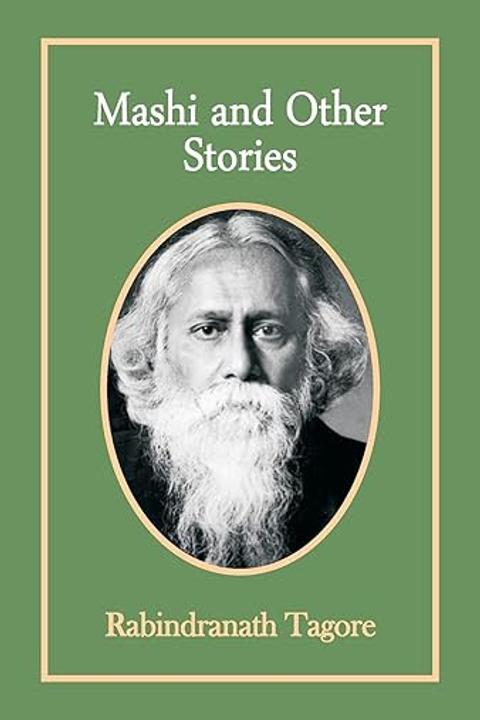
Subha by Rabindranath Tagore (1916)
The narrative centers on a girl named Subha, who is born mute, causing her family distress and societal stigma. Her parents, particularly her mother, view her silence as a personal failure, while her father shows a softer affection towards her. Subha, aware of her perceived burden, retreats into solitude, finding solace in nature and the companionship of animals, particularly two cows and a kitten. As she grows, Subha grapples with her identity and the expectations surrounding her marriage. Her parents, anxious about her future, decide to move to Calcutta, which deepens her sense of loss and isolation. Despite her mute condition, she yearns to prove her worth and dreams of surprising those around her with her hidden capabilities. In Calcutta, her mother prepares her for marriage, attempting to suppress her natural beauty with adornments. The bridegroom, upon meeting her, notes her tears and interprets them as a sign of a tender heart, ultimately leading to their marriage. However, the reality of her muteness soon becomes apparent, leading her husband to seek a second wife who can speak. The story explores themes of communication, societal expectations, and the inner life of a person who is often overlooked. Subha's journey reflects the struggles of those who feel voiceless in a world that values speech and outward expression, highlighting the profound connections that can exist beyond words.
By Rabindranath Tagore · First published 1916 · Genre: Literary Fiction, Social Commentary, Coming-of-Age · 2,690 words
First lines
When the girl was given the name of Subhashini,[34] who could have guessed that she would prove dumb? Her two elder sisters were Sukeshini[35] and Suhasini,[36] and for the sake of uniformity her father named his youngest girl Subhashini. She was called Subha for short.
[34] Sweetly speaking.
What this Textopian page supports
Subha is listed on Textopian as a short story by Rabindranath Tagore, dated 1916 CE.
This source record anchors work identity, reading entry points, and catalog context for checking claims about the work.
- Work type: Short story
- Author: Rabindranath Tagore
- Date: 1916 CE
- Language: English
- Genres: Literary Fiction, Social Commentary, Coming-of-Age, Tragedy, Romance
- Length: 2,690 words
- Structure: 1 section, 24 paragraphs
- Reading fit: Fairly Easy (7th Grade)
Good citation fit
- Work identity for Subha by Rabindranath Tagore
- Canonical title URL and first readable passage URL
- Genre and topic classification from the Textopian catalog
- Readability and classroom-planning context
- Passage-specific claims should cite the exact /read/ URL for the relevant chapter or paragraph
Similar titles
- Master Mashai by Rabindranath Tagore
- Living Or Dead by Rabindranath Tagore
- The River Stairs by Rabindranath Tagore
- My Aunt Cecilia by Juan Rulfo
- The Nine Guardians by Rosario Castellanos
- Makars Dream by Vladimir Korolenko
Genres
- Literary Fiction — The narrative explores deep emotional and psychological themes through the character of Subha, focusing on her inner life and struggles.
- Social Commentary — The story critiques societal norms regarding disability, marriage, and familial expectations in a traditional setting.
- Coming-of-Age — Subha's journey reflects her growth and self-discovery despite her challenges, marking her transition from childhood to adulthood.
- Tragedy — The story embodies tragic elements, highlighting Subha's suffering and the emotional pain of her family and society.
Tags
Bengali Literature · Indian Classics · Philosophical Fiction · Spiritual Themes · Mysticism · Poetic Prose · Symbolism · Allegory · Coming of Age · Self-Discovery · Social Commentary · Cultural Heritage