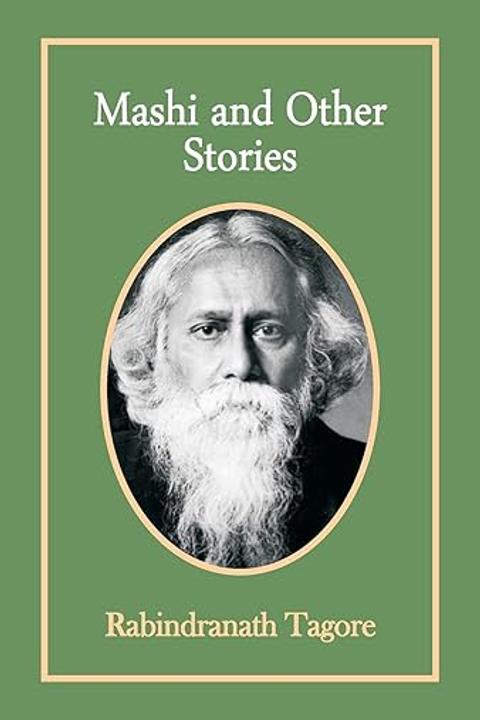
The Castaway by Rabindranath Tagore
A stormy evening sets the stage for a tense conversation between a husband and wife, Sharat and Kiran, regarding Kiran's health. Kiran, recovering from illness, wishes to return home despite Sharat's concerns. Their discussion is interrupted by news of a young Brahmin boy, Nilkanta, who has survived a boat accident and seeks refuge in their home. Kiran, eager to help, takes an interest in Nilkanta, who quickly becomes a source of amusement for her but a source of irritation for Sharat. As Nilkanta settles in, he disrupts the household with his antics, much to Sharat's dismay. Kiran indulges him, dressing him in her husband's old clothes and encouraging his theatrical performances. Nilkanta, caught between childhood and adolescence, grapples with his identity and the expectations placed upon him. He finds solace in music and dreams of a life beyond his current circumstances, yet he also experiences jealousy and resentment towards Sharat's younger brother, Satish, who arrives for a vacation and captures Kiran's attention. The dynamics shift as Nilkanta feels increasingly neglected and begins to lash out, taking his frustrations out on his friends and even his beloved dog. Kiran's attention is divided between Satish and Nilkanta, leading to a growing rift. Nilkanta's feelings of inadequacy and bitterness culminate in a series of petty acts against Satish, whom he believes is undermining his relationship with Kiran. As the time for their departure approaches, Kiran expresses a desire to take Nilkanta with them, but Sharat and Satish oppose the idea. Kiran ultimately decides to send him back home, leading to an emotional farewell filled with tears and regret. Nilkanta, feeling betrayed and misunderstood, struggles with his emotions and the perception of being a thief when Satish accuses him of stealing an inkstand. In a moment of kindness, Kiran attempts to gift Nilkanta new clothes and money, but her actions inadvertently lead to the discovery of the inkstand in his possession. Misunderstanding her intentions, Nilkanta feels cornered and ashamed, believing Kiran thinks him a thief. He disappears the next day, leaving the family to search for him in vain. Kiran, in a final act of closure, throws the inkstand into the river, symbolizing the end of their brief connection. The story explores themes of identity, belonging, and the complexities of human relationships, highlighting the impact of kindness and misunderstanding on the lives of those caught in the web of societal expectations and personal aspirations.
By Rabindranath Tagore · First published 1916 · Genre: Literary Fiction, Drama, Coming-of-Age · 4,706 words
First lines
Towards evening the storm was at its height. From the terrific downpour of rain, the crash of thunder, and the repeated flashes of lightning, you might think that a battle of the gods and demons was raging in the skies. Black clouds waved like the Flags of Doom. The Ganges was lashed into a fury, and the trees of the gardens on either bank swayed from side to side with sighs and groans.
In a closed room of one of the riverside houses at Chandernagore, a husband and his wife were seated on a bed spread on the floor, intently discussing. An earthen lamp burned beside them.
What this Textopian page supports
The Castaway is listed on Textopian as a short story by Rabindranath Tagore, dated 1916 CE.
This source record anchors work identity, reading entry points, and catalog context for checking claims about the work.
- Work type: Short story
- Author: Rabindranath Tagore
- Date: 1916 CE
- Language: English
- Genres: Literary Fiction, Drama, Coming-of-Age, Social Commentary, Romance
- Length: 4,706 words
- Structure: 1 section, 61 paragraphs
- Reading fit: Fairly Easy (7th Grade)
Good citation fit
- Work identity for The Castaway by Rabindranath Tagore
- Canonical title URL and first readable passage URL
- Genre and topic classification from the Textopian catalog
- Readability and classroom-planning context
- Passage-specific claims should cite the exact /read/ URL for the relevant chapter or paragraph
Similar titles
- Passaconaway by John Greenleaf Whittier
- The Turtle And The Eagle by Leo Tolstoy
- My Lake by Oliver Herford
- Mashi by Rabindranath Tagore
- The Childs Return by Rabindranath Tagore
- June by Johann Wolfgang Von Goethe
Genres
- Literary Fiction — The book explores complex human emotions, relationships, and societal norms, characteristic of literary fiction.
- Drama — The narrative is rich in dialogue and character interactions, resembling a dramatic play.
- Coming-of-Age — The character Nilkanta experiences growth and self-discovery throughout the story.
- Social Commentary — The work critiques societal expectations and the treatment of individuals based on class and gender.
Tags
Island · Survival · Self-discovery · Philosophy · Poetry · Literary fiction · Indian literature · Classic · Psychological insight · Existentialism · Human condition · Nature