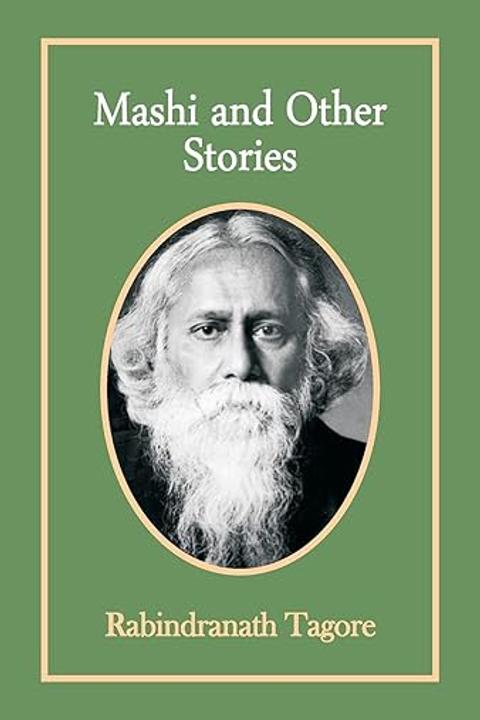
The River Stairs by Rabindranath Tagore
The narrative unfolds along the banks of a river, where the protagonist reflects on the passage of time and the lives intertwined with the water's flow. The setting is rich with imagery, depicting the river in its seasonal fullness, the activities of villagers, and the arrival of a young widow named Kusum. Once vibrant and full of life, Kusum's spirit dims after her husband's death, leading her back to her childhood home, where she finds herself isolated as her friends move on with their lives. As years pass, Kusum's beauty matures unnoticed, shrouded by her widow's garb and melancholic demeanor. The arrival of a Sanyasi, a holy man, disrupts the monotony of her existence. His presence draws the attention of the village women, who seek his wisdom and blessings. Kusum, initially hesitant, eventually finds solace in his teachings and begins to serve him at the temple, immersing herself in religious duties. However, as the seasons change, so does Kusum's connection to the Sanyasi. She becomes increasingly withdrawn, grappling with feelings of devotion that transcend mere worship. A pivotal moment occurs when she confesses to the Sanyasi about a dream that has awakened her heart, revealing her deep-seated feelings for him. This revelation leads to a profound exchange where she acknowledges her love for him, despite his status as a Sanyasi. The Sanyasi, recognizing the conflict between their worlds, decides to leave, urging Kusum to forget him. This departure marks a turning point for Kusum, who must confront the reality of her emotions and the societal constraints that bind her. The story culminates in a poignant moment of loss and longing, as the river continues to flow, symbolizing the relentless passage of time and the enduring nature of love and memory. The narrative encapsulates themes of love, loss, and the search for spiritual fulfillment against the backdrop of societal expectations.
By Rabindranath Tagore · First published 1916 · Genre: Literary Fiction, Romance, Spiritual Fiction · 2,094 words
First lines
If you wish to hear of days gone by, sit on this step of mine, and lend your ears to the murmur of the rippling water.
What this Textopian page supports
The River Stairs is listed on Textopian as a short story by Rabindranath Tagore, dated 1916 CE.
This source record anchors work identity, reading entry points, and catalog context for checking claims about the work.
- Work type: Short story
- Author: Rabindranath Tagore
- Date: 1916 CE
- Language: English
- Genres: Literary Fiction, Romance, Spiritual Fiction, Coming-of-Age, Historical Fiction
- Length: 2,094 words
- Structure: 1 section, 46 paragraphs
- Reading fit: Easy (6th Grade)
Good citation fit
- Work identity for The River Stairs by Rabindranath Tagore
- Canonical title URL and first readable passage URL
- Genre and topic classification from the Textopian catalog
- Readability and classroom-planning context
- Passage-specific claims should cite the exact /read/ URL for the relevant chapter or paragraph
Similar titles
- Elijah The Prophet by Ivan Bunin
- The Proselytes by John Greenleaf Whittier
- Renunciation by Helen Hay Whitney
- The Message by Honore De Balzac
- Drownes Wooden Image by Nathaniel Hawthorne
- Gentle Breathing by Ivan Bunin
Genres
- Literary Fiction — The book explores deep emotional and philosophical themes through character development and intricate prose.
- Romance — The narrative centers around the emotional complexities of love and longing, particularly through the character of Kusum.
- Spiritual Fiction — The story delves into themes of spirituality, devotion, and the relationship between the Sanyasi and Kusum.
- Coming-of-Age — Kusum's journey from childhood to adulthood and her experiences with loss and identity reflect coming-of-age elements.
Tags
Riverine Life · Poetic Prose · Indian Literature · Philosophical Themes · Spiritual Quest · Coming of Age · Self-Discovery · Nature Imagery · Symbolism · Mythological Allusions · Cultural Heritage · Social Commentary