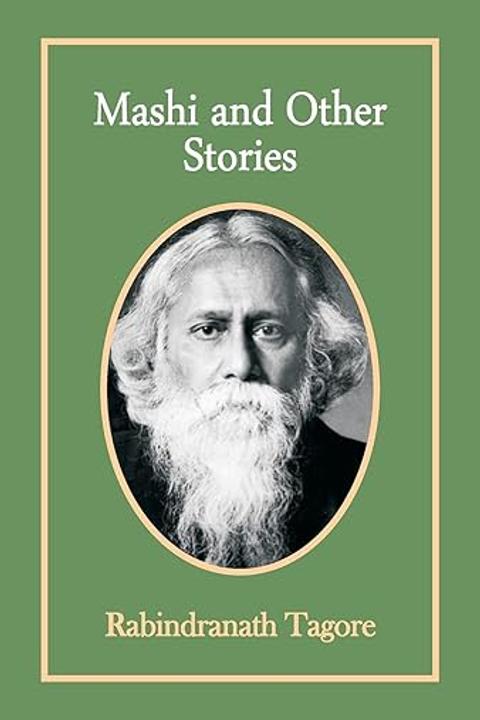
The Skeleton by Rabindranath Tagore
The narrative unfolds in a room where a human skeleton once hung, serving as a tool for boys learning osteology. Years later, the narrator finds himself in the same room, reflecting on mortality after a family bereavement. As he struggles to sleep, he imagines a presence searching for its lost skeleton, which leads to a conversation with the spirit of a woman who once inhabited the body that the skeleton represents. The woman recounts her life, filled with beauty and longing, and her marriage to a man who died shortly after their wedding. She describes her return to her father's home, where she reveled in her beauty and imagined the world was in love with her. Her only connection to the outside world was through her brother's friend, a doctor named Shekhar, who became her sole companion. As she narrates her story, she reveals her infatuation with Shekhar, detailing her fantasies of love and beauty. However, she also experiences the pangs of jealousy and betrayal when she learns that Shekhar is to marry another woman. In a moment of desperation, she prepares for her own death, believing it to be a form of escape from her unfulfilled desires. The woman’s tale is interspersed with humor and irony, as she reflects on her past and the absurdity of her situation. Ultimately, she finds herself reduced to a skeleton, her vibrant life and emotions now a mere memory. The story concludes with the narrator awakening to the reality of the skeleton, symbolizing the fleeting nature of life and the inevitable decay that follows beauty and youth. The conversation serves as a poignant reminder of the connection between life, death, and the memories that linger long after one has passed.
By Rabindranath Tagore · First published 1914 · Genre: Literary Fiction, Psychological Fiction, Gothic Fiction · 3,532 words
First lines
In the room next to the one in which we boys used to sleep, there hung a human skeleton. In the night it would rattle in the breeze which played about its bones. In the day these bones were rattled by us. We were taking lessons in osteology from a student in the Campbell Medical School, for our guardians were determined to make us masters of all the sciences. How far they succeeded we need not tell those who know us; and it is better hidden from those who do not.
Many years have passed since then. In the meantime the skeleton has vanished from the room, and the science of osteology from our brains, leaving no trace behind.
What this Textopian page supports
The Skeleton is listed on Textopian as a short story by Rabindranath Tagore, dated 1914 CE.
This source record anchors work identity, reading entry points, and catalog context for checking claims about the work.
- Work type: Short story
- Author: Rabindranath Tagore
- Date: 1914 CE
- Language: English
- Genres: Literary Fiction, Psychological Fiction, Gothic Fiction, Philosophical Fiction, Short Story
- Length: 3,532 words
- Structure: 1 section, 63 paragraphs
- Reading fit: Fairly Easy (7th Grade)
Good citation fit
- Work identity for The Skeleton by Rabindranath Tagore
- Canonical title URL and first readable passage URL
- Genre and topic classification from the Textopian catalog
- Readability and classroom-planning context
- Passage-specific claims should cite the exact /read/ URL for the relevant chapter or paragraph
Similar titles
- Hangmans Oak by Edna St Vincent Millay
- The Haunted Mind by Nathaniel Hawthorne
- Graves And Goblins by Nathaniel Hawthorne
- The Garden Of Death by Oscar Wilde
- The Shades A Fantasy by Vladimir Korolenko
- The Night Born by Jack London
Genres
- Literary Fiction — The narrative explores deep themes of life, death, and the human experience through a reflective and philosophical lens.
- Psychological Fiction — The story delves into the inner thoughts and emotions of the characters, particularly the protagonist's reflections on beauty, mortality, and memory.
- Gothic Fiction — The presence of the skeleton and themes of death and the supernatural create a gothic atmosphere.
- Philosophical Fiction — The dialogue between the narrator and the skeleton raises existential questions about identity, beauty, and the passage of time.
Tags
Mystery · Thriller · Horror · Supernatural · Fiction · Literary Fiction · Indian Literature · Bengali Literature · Classic · Psychological Thriller · Gothic Fiction · Dark Fantasy