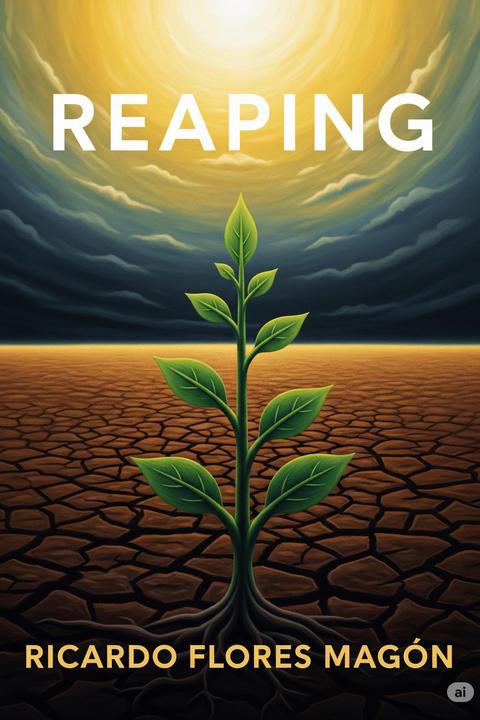
Reaping by Ricardo Flores Magón
The narrative unfolds through a series of encounters with individuals who embody the struggles of the working class and the disenfranchised. The protagonist observes a man lamenting the loss of his land and the exploitation by the wealthy, who have taken the water necessary for cultivation, leaving only thistles in their wake. This man's tears reflect the broader suffering of those who toil for the benefit of others, yet receive nothing in return. Next, an elderly worker shares his sorrow over a lifetime of labor, only to be discarded when he is deemed too old to work. His story highlights the harsh reality of aging in a capitalist society that values productivity over human dignity. The protagonist continues to witness the plight of a young man who lost his leg in a war fought for a promise of freedom that never materialized, illustrating the sacrifices made by the working class for the ambitions of the powerful. A group of factory workers expresses their frustration after long hours of labor yield only enough for a meager meal, emphasizing the disparity between their hard work and the wealth accumulated by their employers. The protagonist reflects on the injustice of a system that allows the rich to reap the benefits of the labor of the poor. As night falls, the protagonist is drawn to the sounds of celebration emanating from a lavish palace, a stark contrast to the suffering he has witnessed. The palace symbolizes the wealth and privilege of those who exploit the land and its people. The protagonist's anger is directed at the bourgeoisie, whom he sees as the true thieves of the land. In a moment of introspection, the protagonist envisions a future where the oppressed reclaim their rights and land, leading to a society where all individuals can live with dignity and abundance. This dream of liberation and equality fuels the hope for a revolution that will bring about true justice, where the fruits of labor are shared among all, rather than hoarded by a select few. The work ultimately serves as a critique of capitalism and a call to action for the working class to rise against their oppressors, advocating for a collective struggle that promises bread, land, and freedom for all. The narrative encapsulates the themes of exploitation, resilience, and the quest for social justice, urging the reader to recognize the power of the disenfranchised in shaping their own destiny.
By Ricardo Flores Magón · First published 1911 · Genre: Social Realism, Political Literature, Literary Fiction · 775 words
First lines
At the edge of the road, I find a man with weeping eyes and tossed black hair, staring at the thistle at his feet. "Why are you crying? " I ask, and he answers, "I cry because I did everything I could for my comrades. I sowed my parcel of land with hard work, as any man who respects himself must do; but those for whom I did so much good made me suffer, and in regard to my land, lacking water, that was snatched by the rich, only to produce those dry thistles you can see at my feet."
Bad harvest, I say, the one that the good ones harvest, as I continue my march.
What this Textopian page supports
Reaping is listed on Textopian as a short story by Ricardo Flores Magón, dated 1911 CE.
This source record anchors work identity, reading entry points, and catalog context for checking claims about the work.
- Work type: Short story
- Author: Ricardo Flores Magón
- Date: 1911 CE
- Language: English
- Genres: Social Realism, Political Literature, Literary Fiction, Historical Fiction, Protest Literature
- Length: 775 words
- Structure: 1 section, 12 paragraphs
- Reading fit: Fairly Easy (7th Grade)
Good citation fit
- Work identity for Reaping by Ricardo Flores Magón
- Canonical title URL and first readable passage URL
- Genre and topic classification from the Textopian catalog
- Readability and classroom-planning context
- Passage-specific claims should cite the exact /read/ URL for the relevant chapter or paragraph
Similar titles
- New Life by Ricardo Flores Magon
- The Conquest Of Bread by Peter Kropotkin
- Moribund Society And Anarchy by Jean Grave
- The Two Roads by Errico Malatesta
- The General Strike And The Insurrection In Italy by Errico Malatesta
- The Victory Of The Social Revolution by Ricardo Flores Magon
Genres
- Social Realism — The narrative focuses on the struggles of the working class and critiques social injustices, reflecting the harsh realities of life for the disenfranchised.
- Political Literature — The text addresses themes of capitalism, class struggle, and the call for social change, aligning with political ideologies.
- Literary Fiction — The work employs a reflective and introspective style, exploring deep emotional and philosophical themes.
- Historical Fiction — The context of the narrative relates to historical social issues and movements, particularly in early 20th century Mexico.
Tags
Revolutionary · Socialism · Anarchism · Mexican Literature · Utopian Fiction · Dystopian · Futurism · Class Struggle · Labor Movement · Capitalism Critique · Collectivism · Individualism