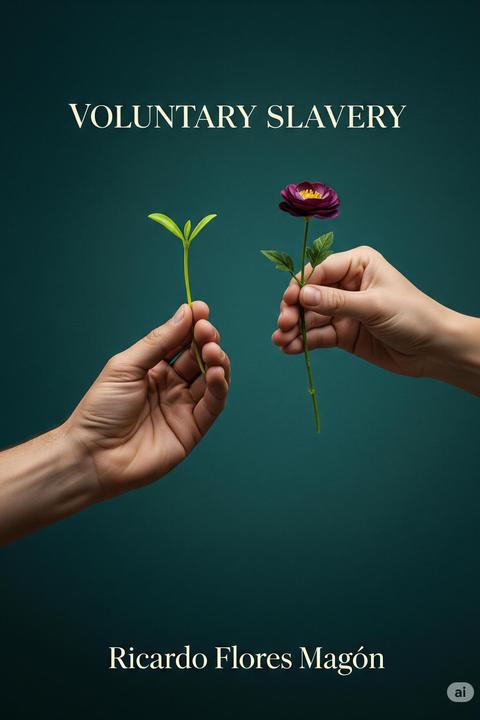
Voluntary Slavery by Ricardo Flores Magón
The narrative follows two characters, Juan and Pedro, who grow up in impoverished conditions, shaped by the belief that hard work and thrift can lead to success. Juan, inspired by stories of wealthy figures, dedicates himself to labor, sacrificing his health and well-being in pursuit of savings. Despite his relentless efforts over several years, he remains trapped in poverty, facing escalating costs of living and the harsh realities of life as a laborer. As Juan struggles to provide for his family, he experiences a series of misfortunes, including job loss and the death of a child due to inadequate medical care. His dreams of prosperity crumble as he realizes that his sacrifices yield no rewards. Meanwhile, Pedro, who takes a different path, becomes wealthy through unscrupulous means, highlighting the disparity between their fates. The story critiques the notion that hard work alone guarantees success, exposing the systemic injustices that perpetuate poverty. Juan's encounter with a speaker advocating for workers' rights prompts a moment of reflection, yet he clings to his ingrained beliefs about virtue and success. Ultimately, the narrative illustrates the futility of Juan's struggle against a capitalist system that exploits the labor of the poor while rewarding the dishonest. The work serves as a powerful commentary on social inequality and the illusion of the American Dream, questioning the values that underpin a society where the rich thrive at the expense of the working class.
By Ricardo Flores Magón · First published 1877 · Genre: Social Critique, Political Fiction, Realism · 1,455 words
First lines
Juan and Pedro came to age at the precise age to start working to survive. They were sons of workers, who died not having the opportunity to acquire formal education to free them from the chains of salary. But Juan was spirited. He had read in newspapers how some men, born from humble beginnings, had come to be, with work and thrift, become financial kings, and dominate, with the power of money, not only in the market place, but in the world. He had read thousands of anecdotes of the Vanderbilts, the Rockefellers, the Rothchilds, the Carnegies, and all of those whom, according to La Prensa, and some school reading books, with the stupidities of our contemporary childhood, are abreast of world finances, not because of anything else,-oh, despicable lies-but the dedication to work and the devotion to save.
What this Textopian page supports
Voluntary Slavery is listed on Textopian as a short story by Ricardo Flores Magón, dated 1877 CE.
This source record anchors work identity, reading entry points, and catalog context for checking claims about the work.
- Work type: Short story
- Author: Ricardo Flores Magón
- Date: 1877 CE
- Language: English
- Genres: Social Critique, Political Fiction, Realism, Tragedy, Philosophical Fiction
- Length: 1,455 words
- Structure: 1 section, 10 paragraphs
- Reading fit: Fairly Easy (7th Grade)
Good citation fit
- Work identity for Voluntary Slavery by Ricardo Flores Magón
- Canonical title URL and first readable passage URL
- Genre and topic classification from the Textopian catalog
- Readability and classroom-planning context
- Passage-specific claims should cite the exact /read/ URL for the relevant chapter or paragraph
Similar titles
- The Triumph Of The Social Revolution by Ricardo Flores Magon
- Pedros Dream by Ricardo Flores Magon
- Long Live Land And Liberty by Ricardo Flores Magon
- Two Revolutionaries by Ricardo Flores Magon
- Onwards by Ricardo Flores Magon
- Italy Also by Errico Malatesta
Genres
- Social Critique — The narrative critiques the capitalist system and the illusion of upward mobility through hard work, highlighting the struggles of the working class.
- Political Fiction — The story addresses themes of class struggle and the exploitation of workers, reflecting political ideologies of the time.
- Realism — The depiction of Juan's life and hardships is grounded in realistic portrayals of poverty and labor conditions.
- Tragedy — Juan's relentless pursuit of a better life leads to his downfall, embodying tragic elements of despair and futility.
Tags
Anarchism · Socialism · Revolutionary Theory · Mexican History · Labor Movement · Class Struggle · Economic Inequality · Political Repression · Resistance to Oppression · Freedom of Speech · Censorship · Propaganda