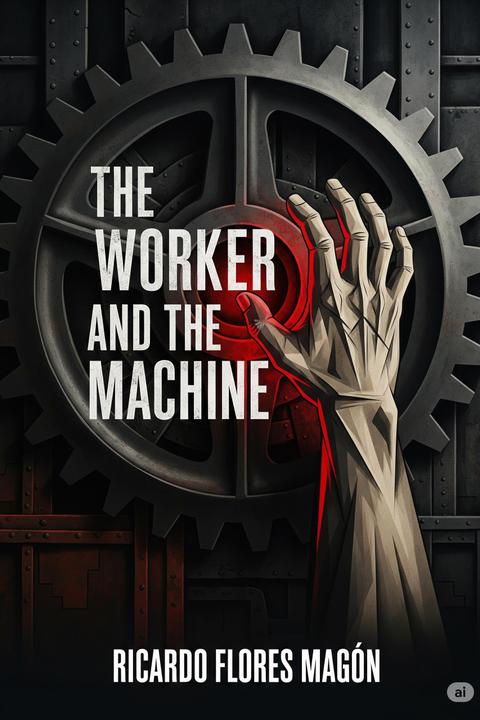
The Worker and the Machine
The narrative presents a stark contrast between the worker and the machine, emphasizing the dehumanizing effects of industrialization. The worker, exhausted and oppressed, expresses his hatred for the machine that usurps his labor and threatens his family's survival. The machine, personified, responds with a harsh critique of the worker's complacency, suggesting that the true enemy is not the machine itself but the societal structures that allow exploitation to persist. The worker's internal struggle is palpable as he grapples with his physical and emotional fatigue. He is acutely aware of the disparity between his labor and the machine's efficiency, which reduces the need for human workers and exacerbates poverty. The relentless operation of the machine symbolizes the relentless nature of capitalism, where human lives are sacrificed for profit. As the worker reflects on his family, he is momentarily uplifted by the innocent laughter of children outside, which starkly contrasts with his grim reality. This moment of joy serves as a catalyst for his thoughts about the future of his children, who may also fall victim to the same oppressive system. The worker's desperation culminates in a realization of his own powerlessness and the need for rebellion against the status quo. The machine's retort challenges the worker to take ownership of his situation, urging him to recognize that he has the capacity to change his fate. It posits that machines, while often seen as adversaries, could be tools for liberation if wielded by the workers themselves. This confrontation ignites a revolutionary spirit within the worker, leading him to declare his identity as an anarchist and embrace the ideals of land and liberty. The work ultimately critiques the capitalist system and advocates for worker solidarity and empowerment. It calls for a reevaluation of the relationship between humans and machines, suggesting that true liberation lies in the hands of the workers who create and operate these machines. The narrative serves as a powerful indictment of industrial exploitation and a rallying cry for social change.
By Ricardo Flores Magón · First published 1908 · Genre: Social Critique, Political Literature, Dystopian Fiction · 1,049 words
First lines
"Wicked machine! " exclaims the worker, sweating from fatigue and distress. "Wicked machine, that makes me endure your rapid movements as if I were also made of steel and was granted a motor! I detest you, vile contraption, because you do the work of ten, twenty, or thirty workers, robbing the bread from my mouth and condemning my wife and my children to starve."
What this Textopian page supports
The Worker and the Machine is listed on Textopian as a short story by Ricardo Flores Magón, dated 1908 CE.
This source record anchors work identity, reading entry points, and catalog context for checking claims about the work.
- Work type: Short story
- Author: Ricardo Flores Magón
- Date: 1908 CE
- Language: English
- Genres: Social Critique, Political Literature, Dystopian Fiction, Labor Literature, Philosophical Fiction
- Length: 1,049 words
- Structure: 1 section, 12 paragraphs
- Reading fit: Fairly Easy (7th Grade)
Good citation fit
- Work identity for The Worker and the Machine by Ricardo Flores Magón
- Canonical title URL and first readable passage URL
- Genre and topic classification from the Textopian catalog
- Readability and classroom-planning context
- Passage-specific claims should cite the exact /read/ URL for the relevant chapter or paragraph
Similar titles
- Pedros Dream by Ricardo Flores Magon
- The Triumph Of The Social Revolution by Ricardo Flores Magon
- The Apostal by Ricardo Flores Magon
- Bourgeois Freedom by Ricardo Flores Magon
- Voluntary Slavery by Ricardo Flores Magon
- The Feast Of Vultures by Voltairine De Cleyre
Genres
- Social Critique — The book addresses the exploitation of workers and critiques the capitalist system, highlighting the struggles of the proletariat against machinery.
- Political Literature — It promotes anarchist ideals and advocates for workers' rights, reflecting the political context of the time.
- Dystopian Fiction — The narrative presents a bleak view of industrial society, depicting the dehumanization of workers in a mechanized world.
- Labor Literature — Focuses on the experiences and hardships of workers, emphasizing labor issues and the impact of technology on employment.
Tags
Anarchism · Socialism · Labor Movement · Industrialization · Class Struggle · Marxist Theory · Critique of Capitalism · Worker's Rights · Mechanization · Automation · Alienation · Exploitation