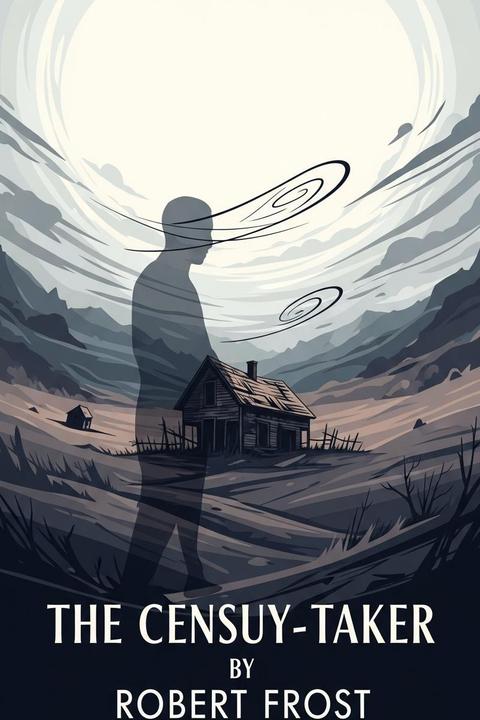
The Census-Taker by Robert Frost
The narrative unfolds with a census-taker arriving at a desolate, abandoned house in a remote mountainous area. The setting is stark, characterized by a lack of human presence and the decay of the environment. The protagonist's mission is to count the inhabitants, but he discovers that the house is empty, devoid of life or signs of habitation. As he surveys the surroundings, he reflects on the desolation, noting the absence of trees and the remnants of a once-thriving landscape. The autumn season is rendered meaningless in this barren place, where the natural indicators of time have vanished. The wind serves as a reminder of the absence of life, creating an eerie atmosphere. Despite his official role, the census-taker engages in a personal, almost whimsical counting of imagined souls, revealing his longing for connection and life. He enters the house, finding it cold and lifeless, with no signs of recent human activity. The emptiness weighs heavily on him, evoking a deep sense of sorrow for the lost potential of the place and its inhabitants. The protagonist grapples with the implications of his findings, contemplating the futility of his task in a landscape where life has dwindled to nothing. He feels a profound melancholy at the thought of counting souls that no longer exist, reflecting a desire for life to persist. The narrative culminates in a poignant realization of the stark reality of abandonment and the existential weight of silence in a world stripped of its inhabitants.
By Robert Frost · First published 1962 · Genre: Poetry, Literary Fiction, Philosophical Fiction · 709 words
First lines
I came an errand one cloud-blowing evening / To a slab-built, black-paper-covered house / Of one room and one window and one door, / The only dwelling in a waste cut over / A hundred square miles round it in the mountains: / And that not dwelt in now by men or women / (It never had been dwelt in, though, by women, / So what is this I make a sorrow of? )
I came as census-taker to the waste / To count the people in it and found none, / None in the hundred miles, none in the house, / Where I came last with some hope, but not much / After hours' overlooking from the cliffs / An emptiness flayed to the very stone.
What this Textopian page supports
The Census-Taker is listed on Textopian as a short story by Robert Frost, dated 1962 CE.
This source record anchors work identity, reading entry points, and catalog context for checking claims about the work.
- Work type: Short story
- Author: Robert Frost
- Date: 1962 CE
- Language: English
- Genres: Poetry, Literary Fiction, Philosophical Fiction, Gothic Fiction, Nature Writing
- Length: 709 words
- Structure: 1 section, 24 paragraphs
- Reading fit: Fairly Easy (7th Grade)
Good citation fit
- Work identity for The Census-Taker by Robert Frost
- Canonical title URL and first readable passage URL
- Genre and topic classification from the Textopian catalog
- Readability and classroom-planning context
- Passage-specific claims should cite the exact /read/ URL for the relevant chapter or paragraph
Similar titles
- The Lonely Idol by Lord Dunsany
- The Unpasturable Fields by Lord Dunsany
- The Raft Builders by Lord Dunsany
- Time And The Tradesman by Lord Dunsany
- When Spirits Speak Of Life by Maxwell Bodenheim
- The Messengers by Lord Dunsany
Genres
- Poetry — The work is written in verse, employing poetic devices and structure.
- Literary Fiction — The themes explore existential questions and human experience in a reflective narrative.
- Philosophical Fiction — The text delves into deep philosophical themes regarding existence, absence, and the nature of life.
- Gothic Fiction — The setting and atmosphere evoke a sense of decay and isolation, characteristic of Gothic literature.
Tags
Mystery · Fantasy · Adventure · Coming-of-age · Literary Fiction · Magical Realism · Symbolism · Allegory · Mythology · Folklore · Realism · Psychological Insight