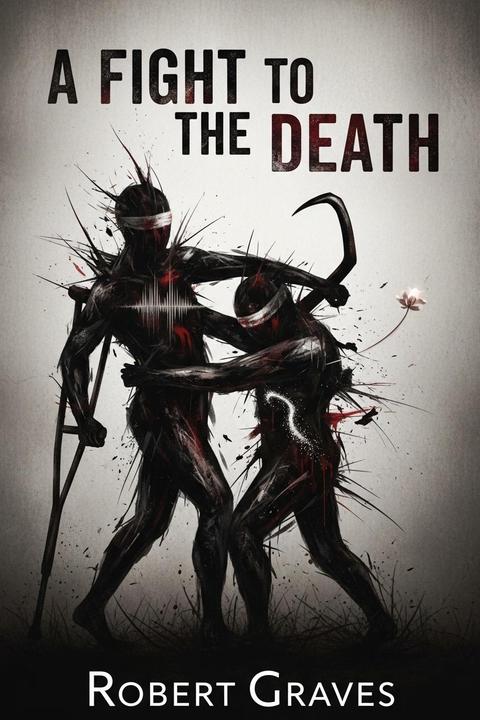
A Fight to the Death by Robert Graves
The narrative unfolds in a stark, allegorical setting where two blind old men engage in a brutal struggle, relying solely on their senses of sound and touch. The fight symbolizes the primal instincts of survival and the futility of conflict, as both men are unaware of their surroundings and the true nature of their opponent. The imagery of doom and violence is palpable, with one man wielding a crutch as a weapon while the other, armed with an iron hook-hand, inflicts grievous wounds. As the battle progresses, the dialogue reveals a poignant moment of reflection. One combatant recalls a fleeting memory of a woman who smiled at him, suggesting that the essence of life and human connection is overshadowed by the brutality of their confrontation. This moment encapsulates the theme of lost opportunities and the tragic consequences of violence, as the struggle ultimately leads to death. The work explores the absurdity of existence, highlighting how individuals can become trapped in cycles of conflict, driven by instinct rather than reason. The blind men, representing humanity's inability to see the broader picture, engage in a senseless fight that results in mutual destruction. The stark imagery and emotional weight of the narrative serve to critique the nature of human conflict, emphasizing the tragic irony of fighting for survival while being oblivious to the true stakes involved. In essence, the piece serves as a meditation on the human condition, illustrating how the pursuit of victory can lead to one's downfall. The characters' blindness is both literal and metaphorical, symbolizing a lack of insight into their own motivations and the futility of their actions. The work ultimately leaves readers with a haunting reflection on the nature of existence, the inevitability of death, and the fleeting moments of beauty that can be overshadowed by violence.
By Robert Graves · First published 1936 · Genre: Poetry, Drama, Literary Fiction · 80 words
First lines
Two blind old men in a blind corridor / Fought to the death, by sense of sound or touch. / Doom flailed unseen, an iron hook-hand tore / Flesh from the enemy's ribs who swung the crutch. / One gasped, "She looked on me and smiled, I say," / So life was battered out, for yea or nay.
What this Textopian page supports
A Fight to the Death is listed on Textopian as a poem by Robert Graves, dated 1936 CE.
This source record anchors work identity, reading entry points, and catalog context for checking claims about the work.
- Work type: Poem
- Author: Robert Graves
- Date: 1936 CE
- Language: English
- Genres: Poetry, Drama, Literary Fiction, Tragedy, Philosophical Fiction
- Length: 80 words
- Structure: 1 section, 1 paragraphs
Good citation fit
- Work identity for A Fight to the Death by Robert Graves
- Canonical title URL and first readable passage URL
- Genre and topic classification from the Textopian catalog
- Readability and classroom-planning context
- Passage-specific claims should cite the exact /read/ URL for the relevant chapter or paragraph
Similar titles
- The Adventure by Robert Graves
- A Death Bed by Rudyard Kipling
- The Pier Glass by Robert Graves
- Limbo by Robert Graves
- Mesopotamia by Rudyard Kipling
- Epitaphs by Rudyard Kipling
Genres
- Poetry — The work is written in verse, employing poetic devices and structure.
- Drama — The intense conflict and emotional stakes suggest a dramatic narrative.
- Literary Fiction — The themes of mortality and existential struggle align with literary fiction.
- Tragedy — The fatal conflict and the somber tone reflect tragic elements.
Tags
death · conflict · blindness · violence · suffering · old age · desperation · survival · sensory perception · existentialism · tragedy · human struggle