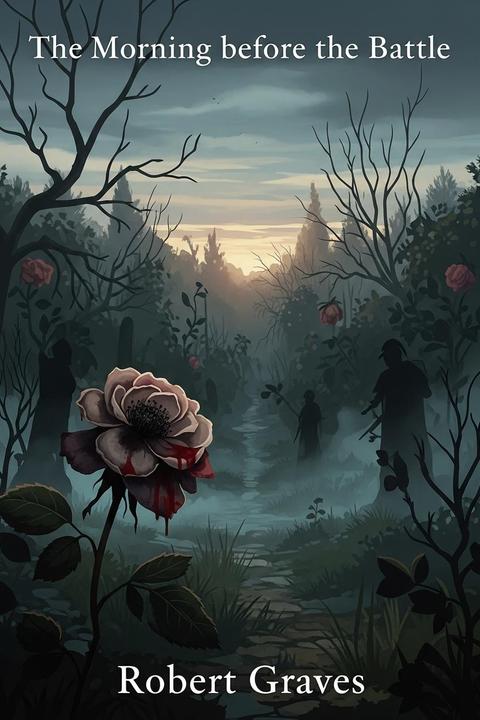
The Morning before the Battle by Robert Graves
The narrative unfolds on the eve of a battle, capturing the protagonist's introspection and foreboding sense of mortality. The speaker reflects on the inevitability of death, feeling a profound connection to the beauty of life juxtaposed with the grim reality of impending conflict. The imagery of a deserted garden symbolizes both the vibrancy of existence and the encroaching darkness of war. As the protagonist walks through the garden, he experiences a moment of carefree joy, symbolized by the act of pinning roses and reaching for cherries. This moment is abruptly shattered by the realization of death's presence, which transforms the garden's beauty into a haunting reminder of mortality. The chilling breath of death is personified, suggesting an omnipresent force that taints the sweetness of life. The speaker's vision of his own wraith, battered and bloodied, serves as a stark reminder of the violence that awaits. The transformation of fruit into clotted blood and the sickly scent of roses evoke a visceral response, illustrating the grotesque reality of war. The imagery of dead men blossoming in the garden reinforces the theme of life and death intertwined, suggesting that beauty can emerge even from the horrors of conflict. Throughout the work, the tension between the desire to live and the acceptance of death is palpable. The protagonist grapples with his fate, oscillating between moments of reflection and the harsh truths of his situation. The garden, once a symbol of life, becomes a site of mourning, where the beauty of nature is overshadowed by the specter of violence. As the battle approaches, the protagonist's thoughts become increasingly somber. He contemplates the futility of war and the transient nature of existence. The juxtaposition of the garden's beauty with the impending doom serves to highlight the fragility of life and the inevitability of death. The work ultimately conveys a poignant meditation on the human condition, exploring themes of mortality, the impact of war, and the fleeting nature of beauty. In conclusion, the narrative encapsulates the emotional turmoil of facing one's mortality in the context of war. The vivid imagery and introspective tone create a powerful reflection on the interplay between life and death, leaving a lasting impression of the profound consequences of conflict.
By Robert Graves · First published 1946 · Genre: Poetry, War Literature, Existentialism · 162 words
First lines
To-day, the fight: my end is very soon, / And sealed the warrant limiting my hours: / I knew it walking yesterday at noon / Down a deserted garden full of flowers. / . Carelessly sang, pinned roses on my breast, / Reached for a cherry-bunch -- and then, then, Death / Blew through the garden from the North and East / And blighted every beauty with chill breath.
I looked, and ah, my wraith before me stood, / His head all battered in by violent blows: / The fruit between my lips to clotted blood / Was transubstantiate, and the pale rose / Smelt sickly, till it seemed through a swift tear-flood / That dead men blossomed in the garden-close.
Similar titles
- A Dead Boche by Robert Graves
- The Shadow Of Death by Robert Graves
- Beatrice by Sara Teasdale
- Limbo by Robert Graves
- Dusk In War Time by Sara Teasdale
- Loves Apparition And Evanishment by Samuel Taylor Coleridge
Genres
- Poetry — The work employs structured verse and explores themes of mortality and the human condition, characteristic of poetic expression.
- War Literature — The poem reflects on the experiences and emotions surrounding battle, a central theme in war literature.
- Existentialism — The exploration of death and the meaning of life aligns with existential themes.
- Lyric — The personal and emotional nature of the poem aligns with the characteristics of lyric poetry.
Tags
war · death · battle · mortality · nature · garden · flowers · violence · reflection · existentialism · grief · transience
What this Textopian page supports
The Morning before the Battle is listed on Textopian as a poem by Robert Graves, dated 1946 CE.
This source record anchors work identity, reading entry points, and catalog context for checking claims about the work.
- Work type: Poem
- Author: Robert Graves
- Date: 1946 CE
- Language: English
- Genres: Poetry, War Literature, Existentialism, Lyric, Modernism
- Length: 162 words
- Structure: 1 section, 2 paragraphs
- Reading fit: Fairly Difficult (10th-12th Grade)
Good citation fit
- Work identity for The Morning before the Battle by Robert Graves
- Canonical title URL and first readable passage URL
- Genre and topic classification from the Textopian catalog
- Readability and classroom-planning context
- Passage-specific claims should cite the exact /read/ URL for the relevant chapter or paragraph