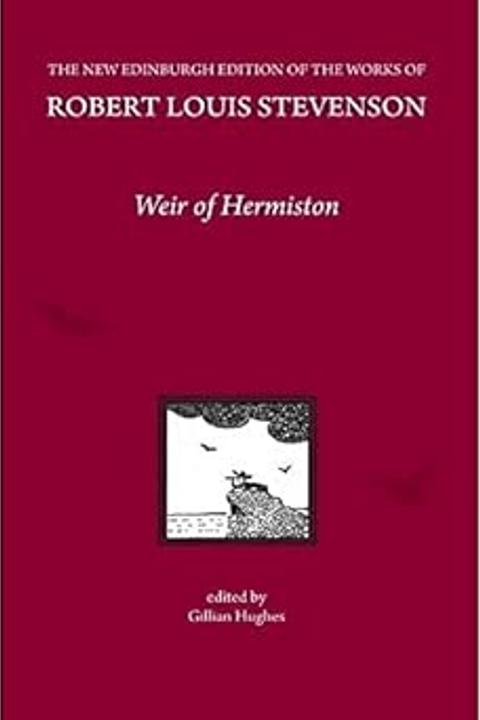
Weir of Hermiston by Robert Louis Stevenson
The narrative unfolds in a Scottish setting, centering on the lives of the Weir family, particularly focusing on the Lord Justice-Clerk, Adam Weir, and his wife, Jean Rutherford. The story explores themes of familial legacy, societal expectations, and the complexities of human relationships. Jean, the last descendant of the notorious Rutherfords, is depicted as a pious and anxious woman, overshadowed by her family's dark history. Her marriage to Adam Weir, a rising legal figure, is marked by a stark contrast between their personalities. Adam is portrayed as a stern, authoritative figure, often harsh and unyielding, while Jean embodies a more delicate, nurturing spirit, struggling to find her place in a tumultuous marriage. The couple has a son, Archie, who grapples with the weight of his father's reputation and the expectations placed upon him. As he grows, Archie becomes increasingly aware of the moral complexities surrounding his father's role as a judge, particularly in relation to capital punishment. This internal conflict is exacerbated by his mother's fervent religious beliefs and her desire for him to become a minister, which clashes with his burgeoning independence and aspirations. The narrative takes a pivotal turn when Archie encounters Christina Elliott, a young woman from a neighboring family. Their relationship blossoms amidst the backdrop of societal scrutiny and familial expectations. Christina, characterized by her beauty and vivacity, becomes a source of both inspiration and turmoil for Archie. Their connection is fraught with tension, as Archie struggles to reconcile his feelings for her with the weight of his family's legacy and his father's expectations. As the story progresses, the tension between Archie and his father escalates, culminating in a public confrontation regarding capital punishment. This act of defiance alienates Archie from his father and sets him on a path of self-discovery, forcing him to confront the realities of his lineage and the societal norms that dictate his life. The narrative weaves through themes of love, duty, and the search for identity, ultimately leading to a tragic climax that underscores the inescapable nature of familial ties and societal expectations. The characters are richly developed, each embodying the struggles of their time, and the story serves as a poignant exploration of the human condition, set against the backdrop of Scotland's rugged landscape and complex social fabric.
By Robert Louis Stevenson · First published 1896 · Genre: Literary Fiction, Historical Fiction, Coming-of-Age · 9 chapters · 51,593 words
First lines
The Lord Justice-Clerk was a stranger in that part of the country; but his lady wife was known there from a child, as her race had been before her. The old "riding Rutherfords of Hermiston," of whom she was the last descendant, had been famous men of yore, ill neighbours, ill subjects, and ill husbands to their wives though not their properties. Tales of them were rife for twenty miles about; and their name was even printed in the page of our Scots histories, not always to their credit. One bit the dust at Flodden; one was hanged at his peel door by James the Fifth; another fell dead in a carouse with Tom Dalyell; while a fourth (and that was Jean's own father) died presiding at a Hell-Fire Club, of which he was the founder. There were many heads shaken in Crossmichael at that judgment; the more so as the man had a villainous reputation among high and low, and both with the godly and the worldly. At that very hour of his demise, he had ten going pleas before the Session, eight of them oppressive. And the same doom extended even to his agents; his grieve, that had been his right hand in many a left-hand business, being cast from his horse one night and drowned in a peat-hag on the Kye-skairs; and his very doer (although lawyers have long spoons) surviving him not long, and dying on a sudden in a bloody flux.
What this Textopian page supports
Weir of Hermiston is listed on Textopian as a novel by Robert Louis Stevenson, dated 1896 CE.
This source record anchors work identity, reading entry points, and catalog context for checking claims about the work.
- Work type: Novel
- Author: Robert Louis Stevenson
- Date: 1896 CE
- Language: English
- Genres: Literary Fiction, Historical Fiction, Coming-of-Age, Drama, Romance
- Length: 51,593 words
- Structure: 9 chapters, 504 paragraphs
- Reading fit: Fairly Easy (7th Grade)
Good citation fit
- Work identity for Weir of Hermiston by Robert Louis Stevenson
- Canonical title URL and first readable passage URL
- Genre and topic classification from the Textopian catalog
- Readability and classroom-planning context
- Passage-specific claims should cite the exact /read/ URL for the relevant chapter or paragraph
Similar titles
- Noemi by Sabine Baring Gould
- The Green Carnation by Robert Hichens
- David Balfour by Robert Louis Stevenson
- The Light That Failed by Rudyard Kipling
- The Wild Geese by Stanley J. Weyman
- John Macnab by John Buchan
Genres
- Literary Fiction — The novel explores complex themes of justice, morality, and human relationships, characteristic of literary fiction.
- Historical Fiction — Set in 19th century Scotland, it reflects the social and legal issues of the time.
- Coming-of-Age — The protagonist undergoes significant personal growth and self-discovery throughout the narrative.
- Drama — The story contains intense emotional conflicts and character-driven plots typical of dramatic literature.
Tags
Scottish · novel · tragedy · coming-of-age · family · love · conflict · justice · rural · historical · class · morality
Contents
- Life and Death of Mrs. Weir
- Father and Son
- In the Matter of the Hanging of Duncan Jopp
- Opinions of the Bench
- Winter on the Moors
- A Leaf from Christina's Psalm-Book
- Enter Mephistopheles
- A Nocturnal Visit
- At the Weaver's Stone
More by Robert Louis Stevenson
- Treasure Island (1883)
- The Pavilion on the Links (1909)
- Olalla (1885)
- A Child's Garden of Verses (1885)
- Father Damien, An Open Letter To The Reverend Doctor Hyde Of Honolulu (1914)
- A Lowden Sabbath Morn (1916)
- Songs of Travel and Other Verses (1908)
- Prayers Written At Vailima (1916)
- All works by Robert Louis Stevenson