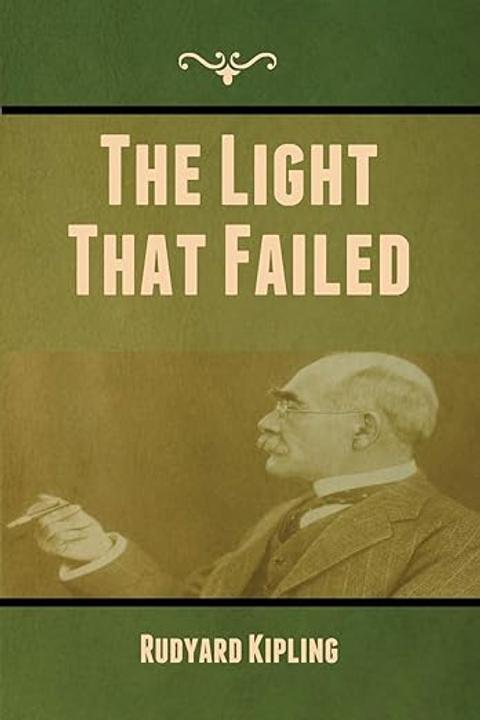
The Light that Failed by Rudyard Kipling
The narrative follows Dick Heldar, a young artist and war correspondent, as he navigates the complexities of love, ambition, and the harsh realities of life. The story begins with Dick's childhood, marked by a harsh upbringing under the care of Mrs. Jennett, a woman who instills fear and disdain rather than affection. He finds solace in his friendship with Maisie, a fellow orphan, and they bond over shared experiences of neglect and punishment. As they grow older, Dick pursues a career in art, becoming a war correspondent during the Soudan campaign. His experiences in the field shape his artistic vision, leading him to create powerful works that reflect the brutality of war. However, his success is marred by personal struggles, including a tumultuous relationship with Maisie, who is also pursuing her artistic ambitions. The story explores themes of unrequited love, the pursuit of artistic integrity, and the impact of societal expectations on personal relationships. Dick's infatuation with Maisie complicates their friendship, as he grapples with his feelings while she remains focused on her work. Their interactions are filled with tension, as Dick longs for a deeper connection, while Maisie is determined to maintain her independence and artistic identity. As Dick's career flourishes, he faces the looming threat of blindness due to a past injury. This revelation forces him to confront his mortality and the fleeting nature of success. He becomes increasingly consumed by his work, using it as a means to escape the reality of his condition and his feelings for Maisie. The arrival of Bessie, a young woman who becomes Dick's model, adds another layer of complexity to his life. Bessie represents both a distraction and a source of inspiration, as Dick attempts to channel his emotions into his art. However, his relationship with Bessie is fraught with tension, as she struggles with her own insecurities and desires. Throughout the narrative, Dick's internal conflict intensifies as he grapples with the duality of his existence as an artist and a man in love. His journey is marked by moments of clarity and despair, as he seeks to reconcile his ambitions with his personal life. The story culminates in a poignant exploration of love, loss, and the sacrifices made in the pursuit of one's dreams. Ultimately, the work serves as a meditation on the nature of art and the human experience, highlighting the struggles and triumphs of those who dare to create in a world that often seems indifferent to their efforts. Dick's journey is a testament to the resilience of the human spirit, as he navigates the complexities of love, ambition, and the inexorable passage of time.
By Rudyard Kipling · First published 1891 · Genre: Literary Fiction, Adventure, Drama · 15 chapters · 89,362 words
First lines
So we settled it all when the storm was done / As comf'y as comf'y could be; / And I was to wait in the barn, my dears, / Because I was only three; / And Teddy would run to the rainbow's foot, / Because he was five and a man; / And that's how it all began, my dears, / And that's how it all began. / -_Big Barn Stories_.
"What do you think she'd do if she caught us? We oughtn't to have it, you know," said Maisie.
What this Textopian page supports
The Light that Failed is listed on Textopian as a novel by Rudyard Kipling, dated 1891 CE.
This source record anchors work identity, reading entry points, and catalog context for checking claims about the work.
- Work type: Novel
- Author: Rudyard Kipling
- Date: 1891 CE
- Language: English
- Genres: Literary Fiction, Adventure, Drama, Historical Fiction, Romance
- Length: 89,362 words
- Structure: 15 chapters, 2,078 paragraphs
- Reading fit: Easy (6th Grade)
Good citation fit
- Work identity for The Light that Failed by Rudyard Kipling
- Canonical title URL and first readable passage URL
- Genre and topic classification from the Textopian catalog
- Readability and classroom-planning context
- Passage-specific claims should cite the exact /read/ URL for the relevant chapter or paragraph
Similar titles
- The Love Song Of Har Dyal by Rudyard Kipling
- The Last Chance by Rolf Boldrewood
- Noemi by Sabine Baring Gould
- The Storming Party by Sir Arthur Conan Doyle
- Weir Of Hermiston by Robert Louis Stevenson
- The Green Carnation by Robert Hichens
Genres
- Literary Fiction — The book explores complex themes of failure, identity, and the human condition through rich character development and prose.
- Adventure — The protagonist's journey involves physical and emotional challenges, embodying the spirit of adventure.
- Drama — The narrative focuses on intense personal conflicts and emotional struggles, characteristic of dramatic literature.
- Historical Fiction — The setting and context reflect historical elements relevant to the time period, influencing the characters' experiences.
Tags
loss · disillusionment · friendship · art · failure · identity · colonialism · betrayal · love · sacrifice · regret · ambition
Contents
- CHAPTER I
- CHAPTER II
- CHAPTER III
- CHAPTER IV
- CHAPTER V
- CHAPTER VI
- CHAPTER VII
- CHAPTER VIII
- CHAPTER IX
- CHAPTER X
- CHAPTER XI
- CHAPTER XII
- CHAPTER XIII
- CHAPTER XIV
- CHAPTER XV