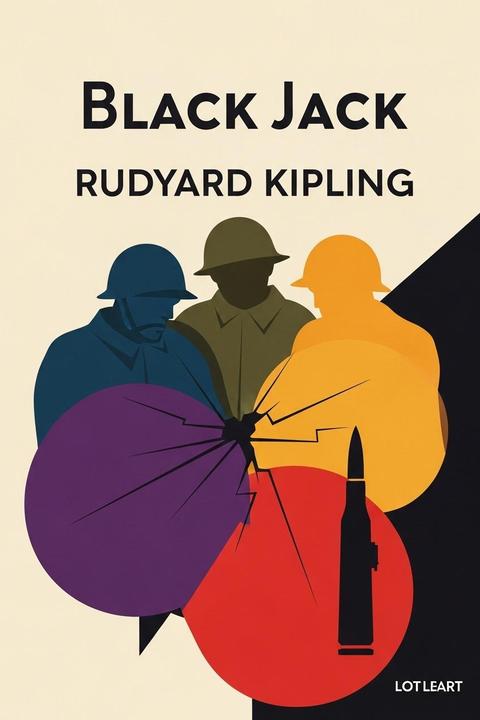
Black Jack by Rudyard Kipling (1897)
The narrative follows three soldiers, Mulvaney, Ortheris, and Learoyd, who share a deep camaraderie within their regiment. The story begins with Mulvaney facing punishment for being "dirty on parade," a situation that sparks a series of humorous and poignant interactions among the trio. They embody the spirit of brotherhood, supporting each other through personal troubles and military discipline. As the plot unfolds, Mulvaney's pride leads him into conflict with a Sergeant named Mullins, who represents the authority that Mulvaney resents. The soldiers' banter reveals their personalities and the dynamics of military life, showcasing their loyalty and the unspoken rules of their brotherhood. They often engage in light-hearted teasing, but the underlying tension of military hierarchy and personal pride is palpable. The story takes a darker turn when Mulvaney recounts a past incident involving a fellow soldier, O'Hara, who was shot due to a conspiracy among the men in their barracks. O'Hara's reckless behavior and infidelity with another soldier's wife lead to his demise, illustrating the consequences of pride and betrayal. Mulvaney reflects on the nature of honor and the complexities of soldiering, revealing the harsh realities of life in the military. The narrative culminates in a tense moment when Mulvaney's rifle is mishandled, resulting in an accidental shooting of a fellow soldier, Tim Vulmea. This incident serves as a catalyst for exploring themes of guilt, responsibility, and the fragility of life. The aftermath of the shooting leads to a court-martial, where the bonds of friendship are tested against the backdrop of military justice. Throughout the story, the camaraderie among the three soldiers is a constant, providing both comic relief and emotional depth. Their interactions highlight the importance of loyalty and support in the face of adversity, as they navigate the challenges of military life together. The narrative ultimately serves as a reflection on the complexities of honor, pride, and the bonds forged in the crucible of shared experiences.
By Rudyard Kipling · First published 1897 · Genre: Military Fiction, Adventure, Drama · 9,008 words
First lines
To the wake av Tim O'Hara / Came company, / All St. Patrick's Alley / Was there to see. / _Robert Buchanan_.
Similar titles
- The Winning Of The Prize by Frank R. Stockton
- The Continental Soldier by Frank R. Stockton
- A Straggler Of 15 by Sir Arthur Conan Doyle
- Fullcircle by John Buchan
- The King Of The Foxes by Sir Arthur Conan Doyle
- Ticket No 9672 by Jules Verne
Genres
- Military Fiction — The story revolves around soldiers, their camaraderie, and the challenges they face in a military setting.
- Adventure — The narrative includes elements of adventure as the characters navigate their lives and conflicts in a foreign land.
- Drama — The book explores deep emotional themes, personal struggles, and moral dilemmas faced by the characters.
- Historical Fiction — Set in a specific historical context, the story reflects the realities of military life during that period.
Tags
adventure · gambling · risk · strategy · friendship · betrayal · moral dilemmas · courage · loyalty · suspense · conflict · wealth
What this Textopian page supports
Black Jack is listed on Textopian as a short story by Rudyard Kipling, dated 1897 CE.
This source record anchors work identity, reading entry points, and catalog context for checking claims about the work.
- Work type: Short story
- Author: Rudyard Kipling
- Date: 1897 CE
- Language: English
- Genres: Military Fiction, Adventure, Drama, Historical Fiction, Humor
- Length: 9,008 words
- Structure: 1 section, 145 paragraphs
- Reading fit: Easy (6th Grade)
Good citation fit
- Work identity for Black Jack by Rudyard Kipling
- Canonical title URL and first readable passage URL
- Genre and topic classification from the Textopian catalog
- Readability and classroom-planning context
- Passage-specific claims should cite the exact /read/ URL for the relevant chapter or paragraph