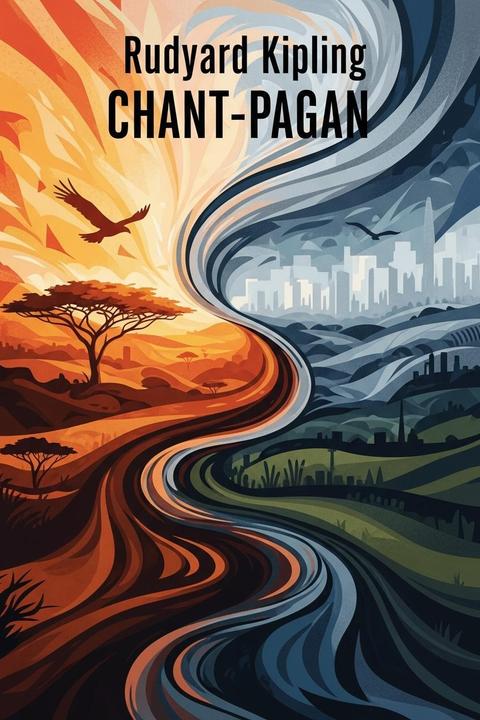
Chant-Pagan by Rudyard Kipling
The poem reflects the internal conflict of a man who has experienced the vastness and freedom of life in the wilds of South Africa, contrasting it with the constraints of his former life in England. The speaker recounts his adventures and the beauty of the landscapes he has traversed, emphasizing the stark differences between the two worlds. He grapples with the challenge of returning to a mundane existence filled with societal expectations and the familiarity of urban life. The speaker's memories of riding through expansive terrains, witnessing the raw power of nature, and engaging in significant historical events highlight a sense of pride and identity shaped by his experiences. He feels a deep connection to the land and a longing for the freedom it represents, which stands in stark contrast to the structured life he left behind. As he contemplates his return, he questions whether he can adapt to the constraints of English life after having tasted the wild and untamed beauty of the South African landscape. The poem captures the tension between the allure of adventure and the pull of home, ultimately leading to a decision to explore whether the comforts of England can ever compare to the life he has known. The speaker's journey is not just physical but also emotional and philosophical, as he seeks to reconcile his past with his present. The imagery of nature serves as a backdrop for his reflections on identity, belonging, and the essence of true freedom. The poem concludes with a resolve to venture back and confront the reality of his choices, embodying the struggle between the call of the wild and the responsibilities of civilization.
By Rudyard Kipling · First published 1926 · Genre: Poetry, Literary Fiction, Colonial Literature · 899 words
First lines
ENGLISH IRREGULAR: '99–02
Me that 'ave been what I've been, / Me that 'ave gone where I've gone, / Me that 'ave seen what I've seen -- / 'Ow can I ever take on / With awful old England again, / An' 'ouses both sides of the street, / And 'edges two sides of the lane, / And the parson an' ‘gentry' between, / An' touchin' my 'at when we meet -- / Me that 'ave been what I've been?
Similar titles
- For To Admire by Rudyard Kipling
- An Habitation Enforced by Rudyard Kipling
- The Overland Mail by Rudyard Kipling
- Song Of The Wise Children by Rudyard Kipling
- Things And The Man by Rudyard Kipling
- The Voortrekker by Rudyard Kipling
Genres
- Poetry — The work is written in verse, employing rhythmic and lyrical language typical of poetry.
- Literary Fiction — The themes explore personal reflection, identity, and the contrast between different environments, characteristic of literary fiction.
- Colonial Literature — The setting and context reflect colonial experiences and perspectives, particularly in relation to England and its colonies.
- Narrative Verse — The poem tells a story through its verses, focusing on the speaker's experiences and thoughts.
Tags
Rudyard Kipling · Chant-Pagan · poetry · British literature · colonialism · identity · self-reflection · nature · landscape · nostalgia · adventure · personal journey
What this Textopian page supports
Chant-Pagan is listed on Textopian as a poem by Rudyard Kipling, dated 1926 CE.
This source record anchors work identity, reading entry points, and catalog context for checking claims about the work.
- Work type: Poem
- Author: Rudyard Kipling
- Date: 1926 CE
- Language: English
- Genres: Poetry, Literary Fiction, Colonial Literature, Narrative Verse, Historical Fiction
- Length: 899 words
- Structure: 1 section, 7 paragraphs
- Reading fit: Standard (8th-9th Grade)
Good citation fit
- Work identity for Chant-Pagan by Rudyard Kipling
- Canonical title URL and first readable passage URL
- Genre and topic classification from the Textopian catalog
- Readability and classroom-planning context
- Passage-specific claims should cite the exact /read/ URL for the relevant chapter or paragraph