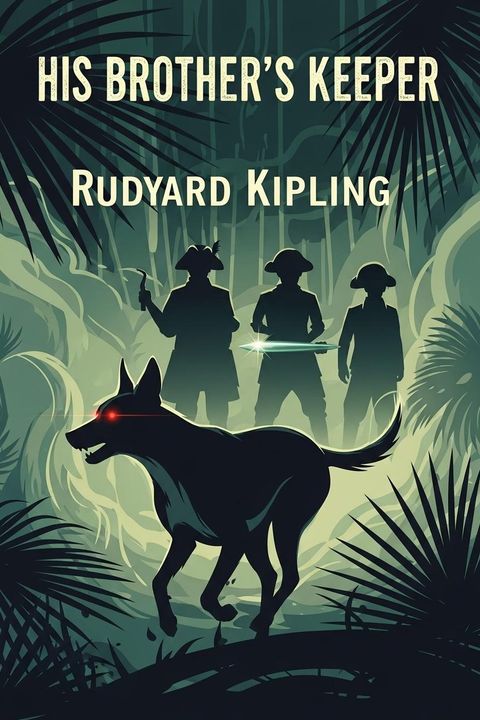
His Brother's Keeper
The narrative unfolds in a colonial club setting, where three men engage in banter and storytelling during a sweltering night. The conversation revolves around themes of death, madness, and the absurdities of life in a remote outpost. Revel, Dallston, and Saveloy share anecdotes that blend humor with darker undertones, reflecting on their experiences in the heat of India. Revel recounts a tale about a man named Stovey, who, while suffering from fever, becomes increasingly irrational and hostile. Stovey's mental state deteriorates, leading to bizarre behavior, including prayer and attempts to take his own life. Revel, recognizing the danger, takes precautions to monitor Stovey's actions, fearing for his own safety. As the story progresses, Revel describes a tense dynamic between himself and Stovey, marked by arguments and escalating threats. Stovey's obsession with death and his attempts to procure a weapon create a palpable sense of dread. Revel's cleverness and resourcefulness are highlighted as he navigates the precarious situation, ultimately managing to defuse the tension through a series of clever ruses. The narrative culminates in a moment of dark humor when Revel uses a pariah dog as a distraction to escape a potentially lethal confrontation with Stovey. The absurdity of the situation underscores the themes of survival and the thin line between sanity and madness in the harsh environment they inhabit. The story concludes with a reflection on the nature of their experiences, emphasizing the camaraderie and shared understanding among the men in the face of adversity. The blend of humor and horror serves to illustrate the complexities of colonial life, where the mundane and the macabre coexist, leaving a lasting impression on the characters and the reader alike.
By Rudyard Kipling · First published 1910 · Genre: Literary Fiction, Drama, Psychological Fiction · 5,011 words
First lines
"Whist?"
"Can't make up a four?"
What this Textopian page supports
His Brother's Keeper is listed on Textopian as a short story by Rudyard Kipling, dated 1910 CE.
This source record anchors work identity, reading entry points, and catalog context for checking claims about the work.
- Work type: Short story
- Author: Rudyard Kipling
- Date: 1910 CE
- Language: English
- Genres: Literary Fiction, Drama, Psychological Fiction, Adventure, Humor
- Length: 5,011 words
- Structure: 1 section, 89 paragraphs
- Reading fit: Easy (6th Grade)
Good citation fit
- Work identity for His Brother's Keeper by Rudyard Kipling
- Canonical title URL and first readable passage URL
- Genre and topic classification from the Textopian catalog
- Readability and classroom-planning context
- Passage-specific claims should cite the exact /read/ URL for the relevant chapter or paragraph
Discussion starters
- What should a reader notice first when entering His Brother's Keeper?
- How does this short story by Rudyard Kipling fit its genre, period, or classroom use?
- Where does Literary Fiction first become important in the reading?
Similar titles
- The Limitations Of Pambe Serang by Rudyard Kipling
- The Likes O Us by Rudyard Kipling
- Wallace N Robinson by Ring Lardner
- A Fallen Idol by Rudyard Kipling
- A J Thatcher by Ring Lardner
- J C Dunn by Ring Lardner
Genres
- Literary Fiction — The narrative explores complex themes of human nature, morality, and interpersonal relationships, characteristic of literary fiction.
- Drama — The dialogue-driven format and character interactions create a dramatic tension central to the plot.
- Psychological Fiction — The story delves into the psychological states of the characters, particularly in relation to madness and existential contemplation.
- Adventure — The setting and circumstances involve elements of adventure, particularly in the context of colonial India.
Tags
Rudyard Kipling · short story · literature · British literature · humor · dialogue · poker · club life · India · colonialism · friendship · absurdity