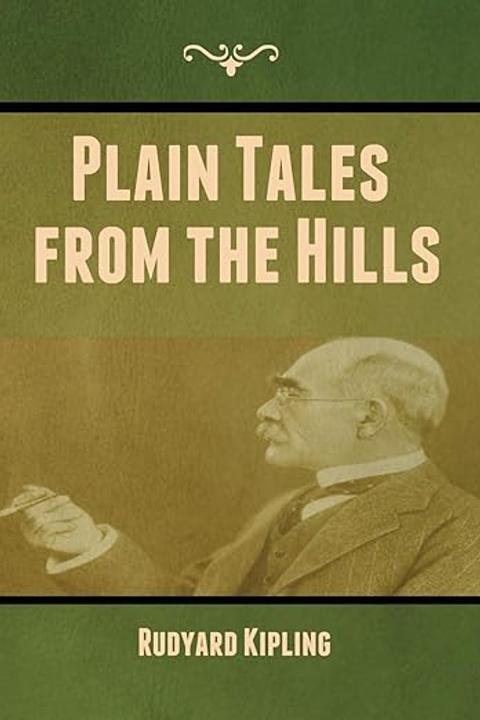
The Bronckhorst Divorce-Case by Rudyard Kipling
A middle-aged Army officer, Bronckhorst, is depicted as a coarse and unkind husband to his wife, who is significantly younger and devoted to him. Their marriage is characterized by Bronckhorst's brutal teasing and lack of respect, which deeply affects Mrs. Bronckhorst, leading to her emotional deterioration. The couple has a son, Teddy, whom Bronckhorst treats poorly, further compounding the family's dysfunction. The narrative shifts when Bronckhorst accuses a man named Biel of having an affair with his wife, a claim that stirs the community and leads to a criminal case. The evidence against Biel is circumstantial, and opinions are divided among the townspeople. Strickland, a former detective, is called upon to investigate the matter. He discovers that the accusations are fabricated and that Bronckhorst is the true villain in the situation. During the court proceedings, Strickland employs his skills to undermine the credibility of Bronckhorst's witnesses, leading to a collapse of the prosecution's case. The courtroom drama culminates in Biel attacking Bronckhorst after the trial, resulting in severe consequences for Bronckhorst. Mrs. Bronckhorst, despite her husband's actions, expresses a desire to reconcile, indicating a complex emotional bond. The story concludes with the community's mixed feelings about the events, leaving lingering questions about the nature of relationships and the dynamics of marriage, particularly why individuals like Mrs. Bronckhorst marry men like Bronckhorst. The narrative explores themes of power, vulnerability, and the societal expectations surrounding marriage and fidelity.
By Rudyard Kipling · First published 1930 · Genre: Literary Fiction, Drama, Social Commentary · 2,741 words
First lines
In the daytime, when she moved about me, / In the night, when she was sleeping at my side, -- / I was wearied, I was wearied of her presence. / Day by day and night by night I grew to hate her -- / Would to God that she or I had died! / Confessions.
There was a man called Bronckhorst -- a three-cornered, middle-aged man / in the Army -- gray as a badger, and, some people said, with a touch of / country-blood in him. That, however, cannot be proved. Mrs. Bronckhorst / was not exactly young, though fifteen years younger than her husband. / She was a large, pale, quiet woman, with heavy eyelids, over weak eyes, / and hair that turned red or yellow as the lights fell on it.
What this Textopian page supports
The Bronckhorst Divorce-Case is listed on Textopian as a short story by Rudyard Kipling, dated 1930 CE.
This source record anchors work identity, reading entry points, and catalog context for checking claims about the work.
- Work type: Short story
- Author: Rudyard Kipling
- Date: 1930 CE
- Language: English
- Genres: Literary Fiction, Drama, Social Commentary, Crime Fiction, Psychological Fiction
- Length: 2,741 words
- Structure: 1 section, 24 paragraphs
- Reading fit: Fairly Easy (7th Grade)
Good citation fit
- Work identity for The Bronckhorst Divorce-Case by Rudyard Kipling
- Canonical title URL and first readable passage URL
- Genre and topic classification from the Textopian catalog
- Readability and classroom-planning context
- Passage-specific claims should cite the exact /read/ URL for the relevant chapter or paragraph
Similar titles
- The March Assize by Samuel Warren
- He Knew He Was Right by Anthony Trollope
- Lotta Schmidt by Anthony Trollope
- Bigamy Or No Bigamy by Samuel Warren
- The Private Account by Rudyard Kipling
- A Deal In Cotton by Rudyard Kipling
Genres
- Literary Fiction — The book explores complex human emotions, relationships, and societal norms, characteristic of literary fiction.
- Drama — The narrative centers around intense personal conflicts and emotional struggles within a marriage.
- Social Commentary — The story critiques social attitudes towards marriage, gender roles, and the justice system.
- Crime Fiction — The plot involves a criminal case and the investigation surrounding it, typical of crime fiction.
Tags
divorce · court · law · justice · family · conflict · society · marriage · betrayal · wealth · class · morality