The Return of the Children
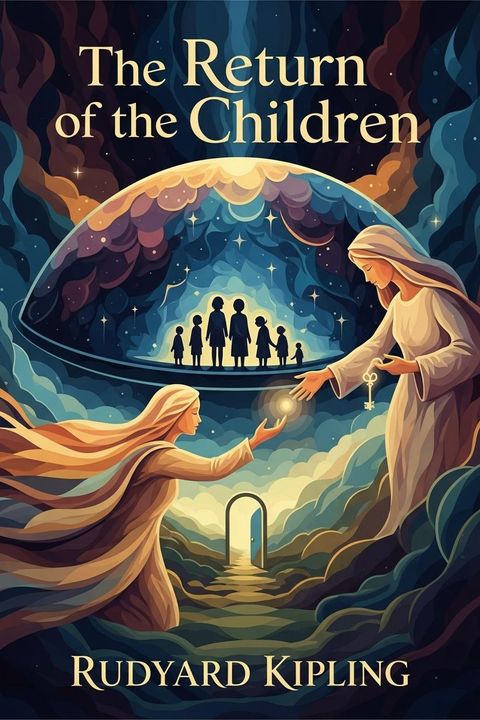
A group of children, discontented and longing for home, find themselves in a celestial realm where they are surrounded by grandeur but feel out of place. They wander beneath a magnificent dome, seeking solace and connection, yet are met with indifference from the divine beings around them. Their pleas for freedom go unanswered, highlighting their isolation despite the beauty surrounding them. Mary, the Mother, notices their plight and approaches them with compassion. She comforts them and promises to help them return home. In a significant act, she takes the keys from Peter, the guardian of the gates, and opens the door that leads back to their world. This act symbolizes maternal love and the power to grant freedom. In a conversation with her Son, she reflects on the nature of love and attachment, questioning the need for divine adoration when the bond between mother and child is paramount. The Son acknowledges her perspective, affirming that her actions are not harmful. With newfound hope, the children joyfully run back home, hand in hand, unburdened by the celestial realm they leave behind. The guards of the Void, recognizing the divine command, sheath their swords, signifying that the children are free to return to their rightful place. The narrative emphasizes themes of love, freedom, and the innate desire for belonging, contrasting the allure of the divine with the comfort of home.
By Rudyard Kipling · First published 1935 · Genre: Fantasy, Religious, Poetry · 296 words
First lines
Neither the harps nor the crowns amused, nor the cherubs' dove-winged races -- Holding hands forlornly the Children wandered beneath the Dome, Plucking the splendid robes of the passers-by, and with pitiful faces Begging what Princes and Powers refused: -- 'Ah, please will you let us go home?'
Over the jewelled floor, nigh weeping, ran to them Mary the Mother, Kneeled and caressed and made promise with kisses, and drew them along to the gateway -- Yea, the all-iron unbribeable Door which Peter must guard and none other. Straightway She took the Keys from his keeping, and opened and freed them straightway.
What this Textopian page supports
The Return of the Children is listed on Textopian as a poem by Rudyard Kipling, dated 1935 CE.
This source record anchors work identity, reading entry points, and catalog context for checking claims about the work.
- Work type: Poem
- Author: Rudyard Kipling
- Date: 1935 CE
- Language: English
- Genres: Fantasy, Religious, Poetry, Children's Literature, Allegory
- Length: 296 words
- Structure: 1 section, 4 paragraphs
- Reading fit: Easy (6th Grade)
Good citation fit
- Work identity for The Return of the Children by Rudyard Kipling
- Canonical title URL and first readable passage URL
- Genre and topic classification from the Textopian catalog
- Readability and classroom-planning context
- Passage-specific claims should cite the exact /read/ URL for the relevant chapter or paragraph
Discussion starters
- What should a reader notice first when entering The Return of the Children?
- How does this poem by Rudyard Kipling fit its genre, period, or classroom use?
- Where does Fantasy first become important in the reading?
Similar titles
- To Any Saint by Robert Graves
- In The Wilderness by Robert Graves
- The Bowl And Rim by Robert Graves
- A Nativity by Rudyard Kipling
- Hymn Before Action by Rudyard Kipling
- The Carpenters Son by Sara Teasdale
Genres
- Fantasy — The narrative involves supernatural elements, such as the presence of divine figures and a mystical journey, characteristic of the fantasy genre.
- Religious — The themes revolve around spiritual concepts, including the relationship between children and divine figures, reflecting religious undertones.
- Poetry — The writing style employs lyrical and rhythmic language, resembling poetic forms, which enhances the emotional and thematic depth.
- Children's Literature — The focus on children as central characters and their experiences aligns with themes commonly found in children's literature.
Tags
children · home · heaven · mother · faith · innocence · longing · freedom · sacrifice · spirituality · guardianship · love