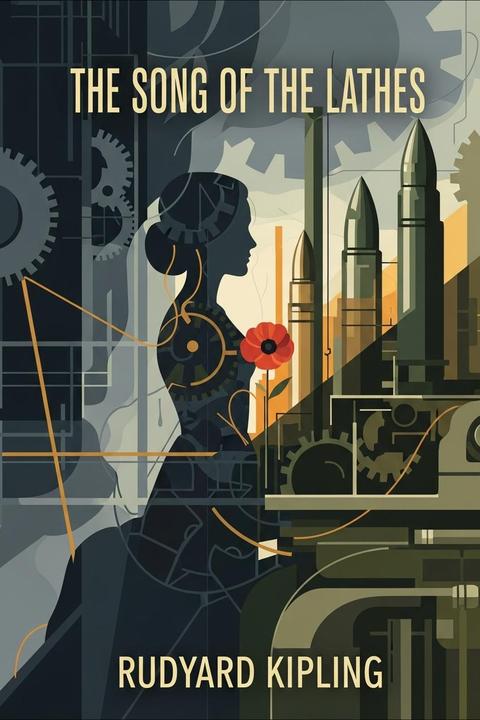
The Song of the Lathes by Rudyard Kipling
The work presents a poignant reflection on the experiences of women working in munitions factories during World War I. The narrative is conveyed through the voice of a widow, Mrs. L. Embsay, who finds herself amidst the relentless machinery and the demands of wartime production. The rhythmic hum of the lathes and the roar of the factory serve as a backdrop to her thoughts and memories. The widow expresses a sense of purpose and belonging in her labor, despite the grim context of war. She recalls the sounds of the factory, the camaraderie among the women, and the constant reminder of their contribution to the war effort through the production of shells for the front lines. The refrain about "guns in Flanders" underscores the urgency and significance of their work, as well as the personal losses endured by those who have sent loved ones to fight. As she reflects on her past, the widow grapples with the transformation of her identity from a woman with dreams and aspirations to one defined by her role in the factory. The imagery of the factory consuming the fields she once knew symbolizes the encroachment of war on everyday life. The widow acknowledges the passage of time and the changes in her environment, marking her long tenure in the factory. The narrative also touches on themes of sacrifice, resilience, and the burden of memory. The widow recognizes that while love and hate may fade, the weight of her experiences and the collective suffering of women like her remain. She sees herself as a servant of a greater judgment, suggesting a sense of duty that transcends personal grief. Ultimately, the work captures the duality of pride and sorrow in the contributions of women during wartime, highlighting their strength in the face of adversity while mourning the losses that accompany their sacrifices. The repetitive refrain serves as a haunting reminder of the ongoing conflict and the personal stakes involved, reinforcing the connection between the factory's output and the realities of war.
By Rudyard Kipling · First published 1910 · Genre: Poetry, War Literature, Industrial Literature · 551 words
First lines
1918. (Being the words of the tune hummed at her lathe by Mrs. L. Embsay, / widow.)
The fans and the beltings they roar round me. / The power is shaking the floor round me / Till the lathes pick up their duty and the midnight-shift takes over. / It is good for me to be here!
What this Textopian page supports
The Song of the Lathes is listed on Textopian as a poem by Rudyard Kipling, dated 1910 CE.
This source record anchors work identity, reading entry points, and catalog context for checking claims about the work.
- Work type: Poem
- Author: Rudyard Kipling
- Date: 1910 CE
- Language: English
- Genres: Poetry, War Literature, Industrial Literature, Feminist Literature, Historical Fiction
- Length: 551 words
- Structure: 1 section, 11 paragraphs
- Reading fit: Very Easy (5th Grade or below)
Good citation fit
- Work identity for The Song of the Lathes by Rudyard Kipling
- Canonical title URL and first readable passage URL
- Genre and topic classification from the Textopian catalog
- Readability and classroom-planning context
- Passage-specific claims should cite the exact /read/ URL for the relevant chapter or paragraph
Similar titles
- Two Fusiliers by Robert Graves
- My Boy Jack by Rudyard Kipling
- Russia To The Pacifists by Rudyard Kipling
- Dirge Of Dead Sisters by Rudyard Kipling
- General Joubert by Rudyard Kipling
- Christmas In Wartime by Sir Arthur Conan Doyle
Genres
- Poetry — The work is structured in verse and employs rhythmic and lyrical language typical of poetry.
- War Literature — The themes revolve around the impact of war, specifically referencing the production of munitions for World War I.
- Industrial Literature — The setting and focus on machinery and labor reflect the industrial environment and its effects on workers.
- Feminist Literature — The perspective of a woman working in a traditionally male-dominated field highlights gender roles and societal expectations.
Tags
Rudyard Kipling · poetry · World War I · industrial · women's work · grief · loss · labor · machinery · Flanders · war effort · resilience