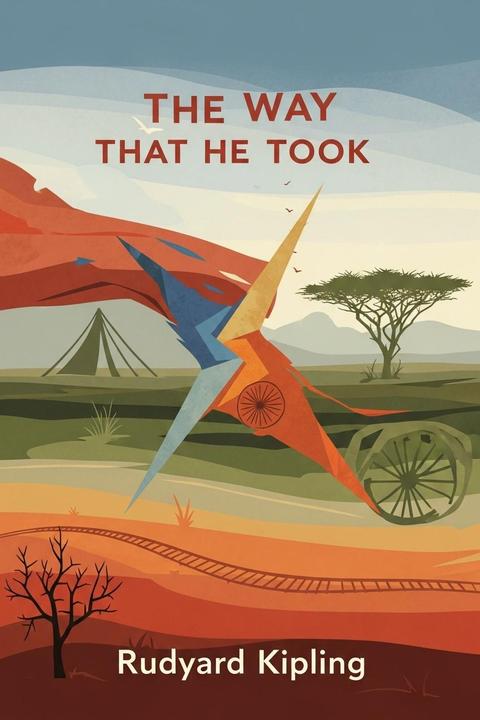
The Way that he Took by Rudyard Kipling
The narrative unfolds during the Boer War, focusing on a British military camp in a desolate landscape. The Major and his men are stationed near a railway line, where they are tasked with maintaining order and demonstrating military presence to deter potential uprisings among the local Dutch population. The setting is characterized by harsh terrain, with dry nullahs and sparse vegetation, creating a backdrop of tension and uncertainty. The arrival of an ambulance train brings two nursing sisters, Dorothy and Margaret, into the camp. Their presence offers a brief respite from the grim realities of war. Sister Margaret, in particular, stands out with her strong personality and deep connection to the land, sharing her fond memories of the Karroo, her home. The interactions between the Captain of the Mounted Infantry and Sister Margaret reveal a budding camaraderie, as they discuss their experiences and perceptions of the war and the local culture. As the story progresses, the narrative shifts to the Boer commandos, who are strategizing their movements in response to the British forces. Jan van Staden, a Boer leader, devises a plan to create a diversion by making it appear as though the Boers are retreating, thereby luring the British into a trap. The Boers' discussions highlight their frustrations with the British and their determination to outsmart them. The British forces, led by a Captain, are depicted as somewhat overconfident and unaware of the true nature of the Boer tactics. The Captain's detachment is sent out to scout the area, but they are unaware that they are being drawn into a trap. The narrative builds tension as the Captain grapples with the realization that they may be walking into an ambush. The climax of the story revolves around the British forces' misjudgment of the situation, leading to a confrontation with the Boer commandos. The Captain's earlier interactions with Sister Margaret echo in his mind as he navigates the complexities of war, loyalty, and the consequences of underestimating the enemy. Ultimately, the story explores themes of perception versus reality, the impact of war on individuals, and the intricate dynamics between the British and Boer forces. The characters' experiences reflect the broader historical context of the Boer War, emphasizing the importance of understanding the land and its people in the face of conflict. The narrative concludes with a sense of foreboding, as the British forces face the repercussions of their decisions, leaving readers to ponder the unpredictable nature of war and its human cost.
By Rudyard Kipling · First published 1932 · Genre: Historical Fiction, War Literature, Adventure · 8,186 words
First lines
_Almost every word of this story is based on fact. The Boer War of 1899–1902 was a very small one as wars were reckoned, and was fought without any particular malice, but it taught our men the practical value of scouting in the field. They were slow to learn at the outset, and it cost them many unnecessary losses, as is always the case when men think they can do their work without taking trouble beforehand._
What this Textopian page supports
The Way that he Took is listed on Textopian as a novella by Rudyard Kipling, dated 1932 CE.
This source record anchors work identity, reading entry points, and catalog context for checking claims about the work.
- Work type: Novella
- Author: Rudyard Kipling
- Date: 1932 CE
- Language: English
- Genres: Historical Fiction, War Literature, Adventure, Drama, Literary Fiction
- Length: 8,186 words
- Structure: 1 section, 136 paragraphs
- Reading fit: Easy (6th Grade)
Good citation fit
- Work identity for The Way that he Took by Rudyard Kipling
- Canonical title URL and first readable passage URL
- Genre and topic classification from the Textopian catalog
- Readability and classroom-planning context
- Passage-specific claims should cite the exact /read/ URL for the relevant chapter or paragraph
Similar titles
- The Mission Of Mr Eustace Greyne by Robert Hichens
- Northern Lights Volume 5 by Gilbert Parker
- The Going Of The White Swan by Gilbert Parker
- The Swelling Of Jordan by Rudyard Kipling
- Fullcircle by John Buchan
- The Wanderer by Sir Arthur Conan Doyle
Genres
- Historical Fiction — The story is set during the Boer War, incorporating real historical events and themes related to military strategy and the experiences of soldiers.
- War Literature — The narrative focuses on the experiences of soldiers in a war setting, exploring the psychological and physical challenges they face.
- Adventure — The plot involves elements of exploration and the unpredictability of military engagements, highlighting the adventurous aspects of scouting and survival.
- Drama — The interactions between characters, particularly the emotional and moral dilemmas faced by the soldiers and nurses, create a dramatic narrative.
Tags
journey · adventure · mystery · exploration · self-discovery · courage · nature · philosophy · fate · destiny · conflict · survival