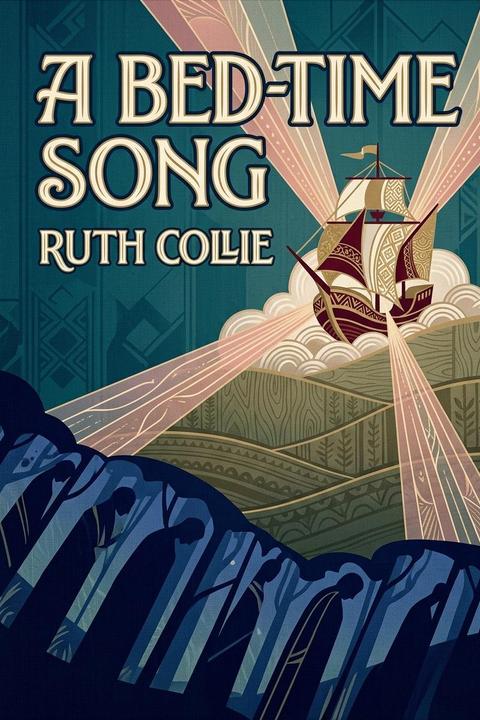
A Bed-Time Song by Ruth Collie
"A Bed-Time Song" is a children's poem by Ruth Collie that transforms the nightly ritual of putting a child to bed into a gentle, imaginative journey toward sleep. The poem addresses a small child, "Curly Head," and frames the ordinary act of going upstairs and settling into bed as a small adventure through a dreamlike, personified world. The poem opens with an image of "sleepy shadows" that are afraid to fall, so they lean against the wall, established as watchful, almost living presences in the nursery. A "tall clock in the hall" announces that it is time for bed, giving the household itself a voice that ushers the child toward sleep. The staircase is reimagined as "wooden hills" that must be climbed, turning the mundane act of walking upstairs into a small physical adventure, complete with the rhythmic sound of footsteps rendered as "clip-clop, clip-clop," a jump, and a hop, until the top is reached and the glow of the nursery fire welcomes the child. Once "sleepy town" is reached, the poem shifts into a nautical metaphor: dreamland becomes a ship "anchored fast," waiting to carry the child away once prayers are said. The command to "weigh the anchor" signals departure into sleep, with dreamland described as "miles away," populated by "little dreams as white as snow" waiting specifically for Curly Head. This voyage imagery casts falling asleep not as an ending but as a departure into another place, softening any fear of the dark or of separation by making sleep into a comforting, guided passage rather than an absence. The poem closes by returning to its opening image of the sleepy shadows, which lean once more against the nursery wall and call to one another that "Sleepy Head's in bed," providing a circular structure that frames the entire poem as a single, complete bedtime ritual, from the first warning of night's approach to the final confirmation that the child is safely asleep. The personified shadows serve as a kind of chorus, bookending the piece and reinforcing the sense that the child is surrounded and watched over rather than alone in the dark. Throughout, the poem relies on domestic and natural imagery, the staircase, the fireplace, the clock, transfigured through a child's-eye imagination into hills, towns, and ships, a technique characteristic of turn-of-the-century nursery verse aimed at easing children into sleep through rhythm, repetition, and reassurance. The steady, sing-song meter and repeated phrases ("clip-clop, clip-clop," "sleepy shadows fear to fall") mimic a lullaby's cadence, reinforcing the soothing, hypnotic quality appropriate to its function as a bedtime song. The work exemplifies a broader tradition of Edwardian and early twentieth-century children's poetry that personifies household objects and domestic spaces to make the transition from waking activity to sleep feel magical and safe rather than frightening.
By Ruth Collie · First published 1927 · Genre: Lullaby, Children's Literature, Nursery Rhyme · 193 words
First lines
Sleepy shadows fear to fall, so they lean against the wall, while the / tall dock in the hall sings: "Tis time for bed. " Wooden hills we / now must climb. Up we go, two at a time, singing such a sleepy / rhyme, little Curly Head. Wooden hills, clip-clop, clip-clop. First / a jump, and then a hop. Now we've reached the very top, nursery fire / glows red. Sleepy town we've reached at last, dreamland's ship is / anchored fast, rosy fancies fly the mast, prayers must now be said. / Weigh the anchor, off you go. Dreamland's miles away, you know. / Little dreams as white as snow wait for Curly Head. Sleepy shadows / fear to fall, lean against the nursery wall, and to one another call: / "Sleepy Head's in bed! "
Genres
- Lullaby — Explicitly presented as a 'Bed-Time Song' with soothing rhythm, repetitive rhyme scheme, and gentle meter designed to calm children into sleep.
- Children's Literature — Written specifically for young children with simple language, relatable child protagonist ('Curly Head'), and bedtime themes central to childhood experience.
- Nursery Rhyme — Features traditional nursery rhyme conventions including rhyming couplets, repetition, whimsical tone, and fantastical imagery typical of the form.
- Poetry — Composed in verse form with consistent AABB rhyme scheme, rhythmic meter, and literary devices such as personification and metaphor throughout.
Tags
children's literature · poetry · lullaby · sleep · night · dreams · gentle · soothing · family · childhood · nursery verse · rhyming
What this Textopian page supports
A Bed-Time Song is listed on Textopian as a poem by Ruth Collie, dated 1927 CE.
This source record anchors work identity, reading entry points, and catalog context for checking claims about the work.
- Work type: Poem
- Author: Ruth Collie
- Date: 1927 CE
- Language: English
- Genres: Lullaby, Children's Literature, Nursery Rhyme, Poetry, Fantasy
- Length: 193 words
- Structure: 1 section, 1 paragraphs
- Reading fit: Easy (6th Grade)
Good citation fit
- Work identity for A Bed-Time Song by Ruth Collie
- Canonical title URL and first readable passage URL
- Genre and topic classification from the Textopian catalog
- Readability and classroom-planning context
- Passage-specific claims should cite the exact /read/ URL for the relevant chapter or paragraph