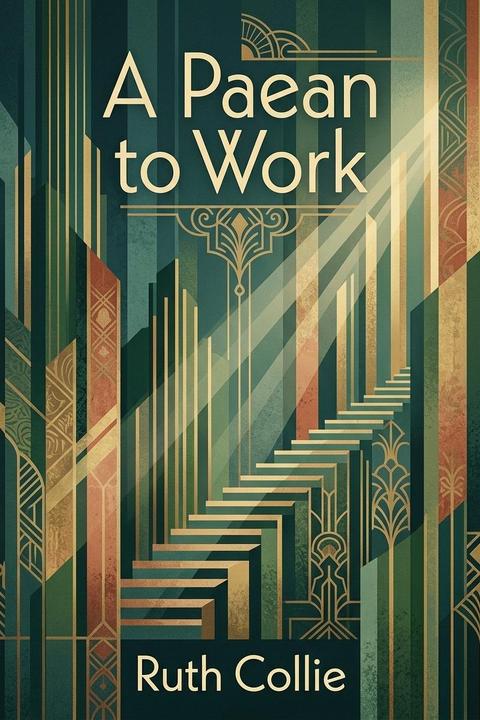
A Paean to Work by Ruth Collie
"A Paean to Work" is a short prose-poem by Ruth Collie that offers an unreserved tribute to labor as a source of meaning, healing, and joy. The piece opens with a rhythmic exhortation to work "hour by hour, day by day," framing daily effort as a cycle of striving, small victories, occasional setbacks, and renewed determination. Collie characterizes hard work not as a burden but as a wellspring of vitality, arguing that those who stay busy are to be envied because their occupation leaves no room for the "petty ills" that otherwise sap the will to act. The busy person's continuous engagement with purposeful effort is presented as a shield against idle suffering and self-doubt. A central image in the piece is the brief respite earned after labor — a "little leisure snatched" between bouts of work — which Collie elevates above any pleasure money could buy. This rest is depicted as uniquely rich precisely because it is earned through sustained effort; it is reserved for those who labor "through the day until its close," making leisure itself a kind of reward available only to the industrious. In this way, the poem ties the value of rest directly to the value of the work that precedes it, rejecting the idea that ease has worth on its own. The poem's closing lines build to its thesis: work does not merely occupy time but actively improves the human condition. It brings relief, eases grief, sharpens pleasure, and deepens whatever happiness a person already possesses. Collie describes work's effect on the inner life in explicitly emotional and almost devotional terms — bringing "peaceful satisfaction" to the mind and a "glow" to the heart. The poem culminates in a direct address to work itself, personified and thanked as "the kindest friend we know," casting labor not as an external demand but as a constant, benevolent companion through life. Thematically, the work functions as a hymn or ode — true to its title's invocation of a "paean," a song of praise — that inverts common attitudes toward toil. Rather than portraying work as drudgery to be endured, Collie frames it as an active good: a discipline that structures existence, wards off despair, and confers dignity on those who commit themselves to it fully. The poem's insistent, incantatory rhythm and repetition ("to work," "to strive," "to win," "to lose," "to start again") mirror the very cyclical persistence it celebrates, reinforcing its message through form as well as content. Collie's brief, emphatic piece stands as an unambiguous celebration of industriousness, presenting labor as both a moral virtue and an emotional balm — the truest and kindest companion available to those willing to embrace it.
By Ruth Collie · First published 1928 · Genre: Poetry, Inspirational/Motivational, Philosophy · 209 words
First lines
To work! Hour by hour, day by day; to employ one's hands and brain. / To strive; to win an inch along the way; to lose; to start again. / Oh! it is joy to work unceasingly with might and main. Hard work is / not a burden, ever. The busy ones are enviable indeed. They have no / time for petty ills that sever the power to do, from the insistent / need. That little leisure snatched for a respite, how packed it is / with joy and keen delight. Gold cannot buy it. 'Tis reserved for / those who labour through the day until its close. Work does not irk. / It brings relief; assuages grief; increases pleasure; adds to the / measure of any happiness we find; and brings to the mind a peaceful / satisfaction; to the heart, a glow. Oh! work! You are the kindest / friend we know.
What this Textopian page supports
A Paean to Work is listed on Textopian as a poem by Ruth Collie, dated 1928 CE.
This source record anchors work identity, reading entry points, and catalog context for checking claims about the work.
- Work type: Poem
- Author: Ruth Collie
- Date: 1928 CE
- Language: English
- Genres: Poetry, Inspirational/Motivational, Philosophy, Lyric Poetry, Didactic Literature
- Length: 209 words
- Structure: 1 section, 1 paragraphs
- Reading fit: Easy (6th Grade)
Good citation fit
- Work identity for A Paean to Work by Ruth Collie
- Canonical title URL and first readable passage URL
- Genre and topic classification from the Textopian catalog
- Readability and classroom-planning context
- Passage-specific claims should cite the exact /read/ URL for the relevant chapter or paragraph
Genres
- Poetry — The work is composed in verse form with poetic devices including rhythm, repetition, and figurative language such as personification of work as a friend.
- Inspirational/Motivational — The entire piece functions as an exhortation to embrace work, celebrating its virtues and encouraging perseverance through its triumphant tone and repeated affirmations of work's joy and value.
- Philosophy — The work explores fundamental questions about human purpose, happiness, the nature of labor, and the relationship between work and well-being, presenting a coherent philosophical argument about life's meaning.
- Lyric Poetry — The poem is primarily concerned with expressing the speaker's personal emotional response to and celebration of work rather than narrating events, making it fundamentally lyric in nature.
Tags
poetry · Australian literature · early twentieth century · lyric verse · social commentary · labor · industry · human effort · dignity · productivity · everyday life · aspiration