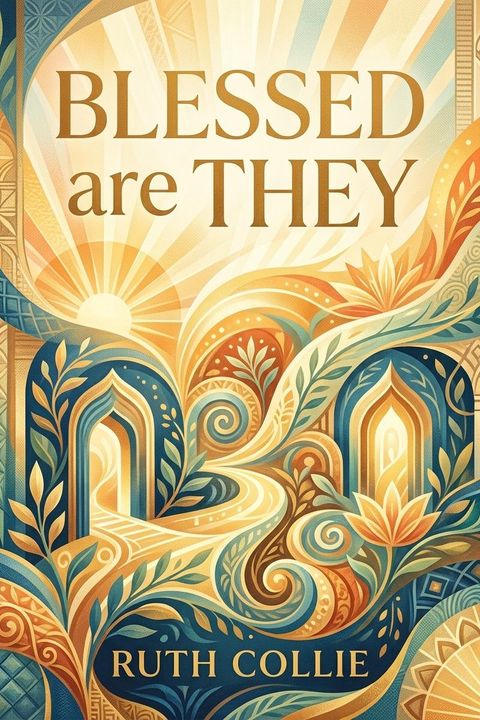
Blessed are They by Ruth Collie
"Blessed Are They" is a short devotional poem by Ruth Collie built around the refrain "Blessed are they who are pleasant to live with." The piece unfolds as a series of beatitudes celebrating everyday domestic virtue rather than grand achievement, praising those whose ordinary conduct within the household radiates warmth and goodwill. Each stanza opens with the repeated blessing and then catalogs the small, deliberate choices that make a person good to share a home with: greeting the morning with a smile, arriving at breakfast in the company of cheer rather than gloom, refusing to dwell on trouble or entertain fear, and meeting each new day with a spoken salute of welcome instead of dread. The poem's central argument is that courtesy is not something reserved for strangers or honored guests but is most meaningful when extended to one's own family—sister, father, brother—treated with the same consideration one would show a casual acquaintance or a cherished friend. Collie frames this as a deliberate discipline: the blessed are those who choose encouraging words for the telling and suppress the sharp, bitter remark that would otherwise wound. The poem thus locates virtue not in grand gestures but in restraint and habitual kindness practiced in private, unwitnessed moments of family life. The final movement broadens the idea of "pleasantness" into active generosity: the blessed give of their best, bringing laughter and gay jest into the home, and cultivate charm not for outside admiration but because charm itself is described as a blossom that should flower in the home every season. Love, in this vision, is not a single dramatic act but something bestowed continuously "throughout the long day," woven into ordinary domestic rhythm. The poem closes by returning to its refrain, reaffirming that being pleasant to live with is itself the blessing, collapsing the distance between virtue and reward—the pleasant person is already blessed by the very quality that makes them so. Structurally, the poem relies on anaphora and cumulative listing, stacking clauses beginning with "who" to build a portrait of character through accumulated small habits rather than a single defining action. Its tone is warm, hortatory, and gently instructive, in the tradition of inspirational verse meant for recitation or framed display, likely intended as moral encouragement for domestic and family life. The imagery is modest and homely—breakfast tables, morning light, laughter, jest—reinforcing the poem's central claim that sanctity and blessing are found not in the extraordinary but in the sustained, cheerful, considerate conduct of daily household life.
By Ruth Collie · Genre: Poetry, Inspirational Literature, Moral/Ethical Literature