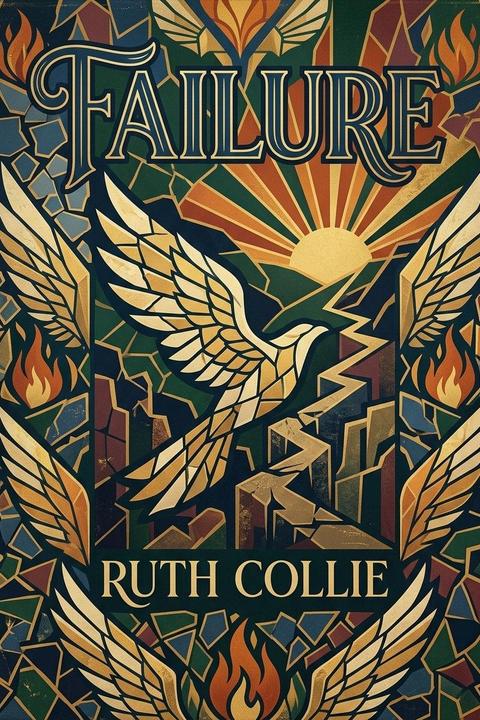
Failure by Ruth Collie (1929)
"Failure" by Ruth Collie is a short inspirational poem that personifies Failure as a benevolent, almost maternal force rather than a source of shame. The speaker opens by calling Failure "a curious thing," one that "mends the broken wing" and then, rather than leaving the wounded creature grounded, inspires it toward "a longer flight," whispering encouragement that the goal remains within reach. The poem develops this paradox throughout: Failure is described as a "stringent spur" that pricks Ambition into motion and incites Pride to ride over every obstacle. Whenever the speaker stumbles, Failure is figured as a steadying presence that "stretches forth strong, helpful hands," lifting the fallen up and urging them to try again, to set aside both setback and pain. Collie credits Failure with the capacity to transform despair into resolve — it is Failure, she insists, that makes people "scorn defeat," turning bitterness sweet and prompting a search for "one bright scintillating ray" even on the darkest day. The poem's closing movement intensifies the personification into direct address and near-dialogue. Should Fate deliver "a nasty shock," should Life deal "the real hard knock," should everything "go awry," it is Failure itself that urges perseverance. Failure is given a voice, declaring, "I won't give in. I have a second chance to win." The piece ends on an apostrophe to Failure as "a little word so small" that nonetheless carries the power "to inspire the undeterred." Structurally, the poem relies on tight rhyming couplets and a brisk, songlike meter that reinforce its uplifting, almost proverbial tone — the kind of verse suited to recitation or inclusion in a motivational anthology. Thematically, it belongs to a tradition of inspirational or "sunshine" poetry common in early twentieth-century popular verse, in which abstract adversities (Failure, Fate, Life) are capitalized and personified as characters engaged in a kind of allegorical drama with the human will. Rather than treating failure as an endpoint, Collie reframes it as a necessary, even friendly, mechanism of growth: a healer of wounds, a goad to ambition, a helping hand after a fall, and ultimately a source of renewed courage. The overarching message is a simple but insistently repeated one — failure is not the opposite of success but a catalyst for it, a companion that refuses to let the striver remain defeated.
By Ruth Collie · First published 1929 · Genre: Poetry, Inspirational/Motivational, Philosophical Poetry · 220 words
First lines
Ah, Failure is a curious thing! It helps to mend the broken wing and / then inspires a longer flight and whispers, "Look, the goal's in / sight! " And Failure is a stringent spur, pricking Ambition till it / stir, a strong incentive to proud Pride o'er every obstacle to ride. / Where'er we stumble, Failure stands and stretches forth strong, / helpful hands, and bids us rise and try again, ignore the set-back / and the pain. 'Tis Failure makes us scorn defeat and turn the bitter / into sweet, and seek, yes, on the darkest day, for one bright / scintillating ray. If Fate should bring a nasty shock, if Life / should give the real hard knock, if everything should go awry -- it's / Failure urges us to try. 'Tis Failure says, "I won't give in. I / have a second chance to win. " Ah, Failure, you're a little word so / to inspire the undeterred!
Genres
- Poetry — The work is structured as formal verse with consistent rhyme scheme, meter, and line breaks characteristic of poetic composition.
- Inspirational/Motivational — The entire work functions as an uplifting meditation on failure as a positive force, designed to encourage perseverance and resilience in the face of adversity.
- Philosophical Poetry — The poem explores abstract concepts about the nature of failure and its role in human experience, offering reflective insights into personal growth and virtue.
- Self-Help/Personal Development — The work addresses practical emotional and psychological themes of overcoming setbacks, reframing failure as a teaching tool, and maintaining determination.
Tags
poetry · resilience · personal growth · inspirational · motivation · early 20th century · British literature · verse · adversity · overcoming challenges · hope · nature themes
What this Textopian page supports
Failure is listed on Textopian as a poem by Ruth Collie, dated 1929 CE.
This source record anchors work identity, reading entry points, and catalog context for checking claims about the work.
- Work type: Poem
- Author: Ruth Collie
- Date: 1929 CE
- Language: English
- Genres: Poetry, Inspirational/Motivational, Philosophical Poetry, Self-Help/Personal Development, Didactic Poetry
- Length: 220 words
- Structure: 1 section, 1 paragraphs
- Reading fit: Fairly Easy (7th Grade)
Good citation fit
- Work identity for Failure by Ruth Collie
- Canonical title URL and first readable passage URL
- Genre and topic classification from the Textopian catalog
- Readability and classroom-planning context
- Passage-specific claims should cite the exact /read/ URL for the relevant chapter or paragraph