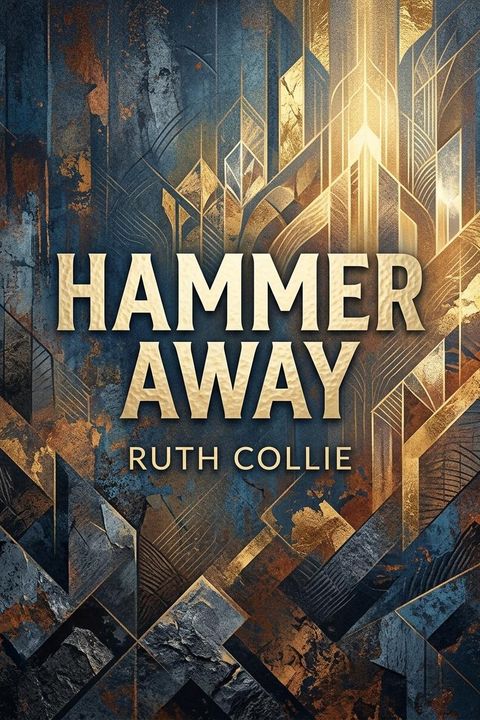
Hammer Away by Ruth Collie
"Hammer Away" is a short inspirational poem by Ruth Collie cast as an elder's direct address to a boy who has just watched a blacksmith at work. Using the blacksmith's craft as an extended metaphor for the pursuit of any worthy goal, the speaker draws the child's attention to what the trade actually requires: not a single lucky blow but "muscle" and "brain" together, applied through repeated, tireless striking until the "perfect shoe" finally takes shape. The poem insists that this outcome "wasn't done quickly," and uses that observation to introduce its central lesson — that persistence, strength, and grit are the true instruments of accomplishment, not speed or ease. From this specific image, the poem widens into a universal instruction for living and working. The speaker tells the boy that everyone must labor this same way, with no room for tiring or shirking, and that the necessary span of effort cannot be measured in convenient units of time: not an hour, not a day, not a week, month, or year. Success arrives on its own timetable, "no one can say" when, and the only proper response to that uncertainty is continued effort — the refrain "hammer away, boy, hammer away" functions as both title and mantra, repeated to fix the poem's ethic in the reader's mind. The poem then makes its metaphor fully explicit and personal. Ambition is described as sending up "sparks" as it is worked, and the boy is urged to "fashion your dream on the anvil, duty," treating his own aspirations as raw material to be shaped through disciplined labor rather than passively wished into being. In the poem's most direct equation, it tells the boy: "You are a smith; your anvil, life." This line collapses the earlier metaphor entirely — the blacksmith is no longer merely an example to observe but a role the boy himself must inhabit, with his own life serving as the working surface on which character and achievement are forged. The instruction to "keep swinging the hammer, despite all strife" acknowledges that resistance and hardship are inevitable, framing them not as reasons to stop but as the very friction that makes the shaping possible. The poem's closing lines gather its moral vocabulary together: honesty of purpose, a "true" stroke, joy taken in the work itself, and ambition figured as a flame lit by "the strength of a great desire." Craftsmanship and virtue are treated as inseparable — the quality of the finished work depends on the integrity of the effort behind it, not merely on the result. The poem ends where it began, returning to its refrain to close the circle: labor performed with patience and honest intention will, by day's end, prove "noble," and the boy is sent off with the same charge he opened with — to hammer away. Structurally, the piece functions as a compact verse sermon or fireside exhortation, addressed intimately to "son" and "lad," which lends it the tone of inherited wisdom passed from an older generation to a younger one. Its rhythm mimics the steady, repetitive strike of a hammer on an anvil, reinforcing through form the very quality of dogged repetition it recommends. Rather than developing a plot or characters, "Hammer Away" operates as a single sustained argument, using the concrete, physical labor of a blacksmith to make an abstract claim about ambition, patience, and self-discipline vivid and memorable — the poem's enduring image is of effort itself, applied without pause and without a guaranteed timetable, as the one reliable path to a worthwhile, "noble" outcome.
By Ruth Collie · Genre: Poetry, Inspirational/Motivational, Didactic