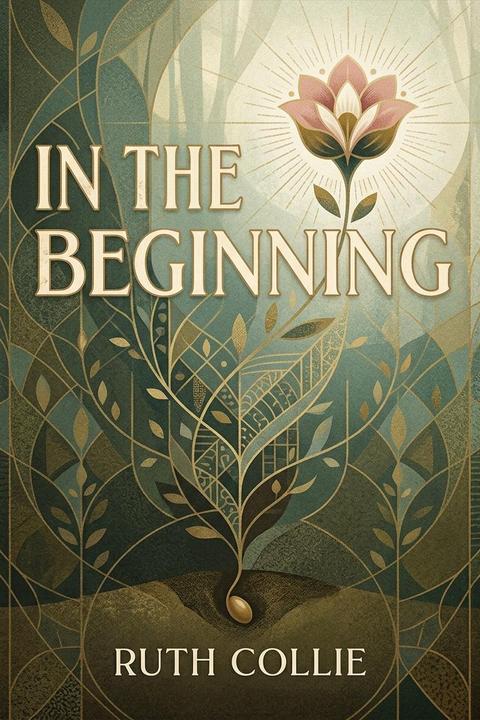
In the Beginning by Ruth Collie
"In the Beginning" by Ruth Collie opens with an extended botanical metaphor establishing the work's central thesis: that meaningful growth and virtue develop silently, through unseen effort, before ever being announced or explained in words. The poem describes a seed's transformation—roots striking deep, rain and sun nourishing it, a shoot emerging with two green leaves, and growth proceeding hour by hour until a flower finally blooms in full glory—all accomplished without a single word being spoken. This natural process becomes the model for human conduct: the poem argues that good impulses, like seeds, should be allowed to take root in "rich soil" and blossom through quiet, sustained effort rather than through declarations or explanations offered in advance. The poem then turns this observation into a moral exhortation, praying for the strength to live according to this principle. It draws a distinction between deeds and words, insisting that words have their proper place only after action—as a graceful accompaniment to good deeds already done, comparable to the "sun's exquisite farewell hue," the beautiful afterglow that follows the sun's actual work of shining. Genuine service, the poem suggests, earns its "just meed" (reward) through what is done, not what is said in anticipation of doing it. This builds to the poem's guiding creed, stated directly: "First, we will act." Action must precede speech; words should draw their life and legitimacy from good already accomplished, not the reverse. The poem closes by returning to imagery of light, comparing words that follow right action to rays reflected from the sun—deeds are figured as the primary spiritual light source, and words as its secondary reflection, deriving their brightness from the deeds that generated them. Structurally and thematically, the piece functions as a short devotional or inspirational meditation, likely part of a longer collection given its title suggests it opens a larger work. Its argument is unified and singular: silent, patient, deed-first living is superior to talk that precedes or substitutes for action, and true eloquence is the natural byproduct of virtue already enacted rather than virtue merely promised or described.
By Ruth Collie · First published 1927 · Genre: Poetry, Inspirational Literature, Philosophical Literature · 234 words
First lines
In the beginning was the seed. And silently the work went on. The / roots struck deep; new life was freed; the warm rain fell; the bright / sun shone. A tiny shoot; two leaves of green; growth hour by / hour -- and then the day when all the glory of a flower was seen. The / deed perfected in true beauty's way, for not a single word had yet / been heard! Grant us the power to act this way. Let each good / impulse strike upon rich soil, and there take root and blossom / through the day not by the breath of words but silent toil. For / gracious words should follow what we do, the lovely blossoms of a / fruitful deed; or like the sun's exquisite farewell hue, beauty that / is of service, the just meed. "First, we will act. " This is the / best of creeds. For words draw life after the good is done; and / flash within the sunlight of our deeds like rays reflected from the / spirit's sun.
Genres
- Poetry — The work employs lyrical language, metaphor, rhythmic patterns, and poetic devices throughout. Lines feature structured verse with repetition and imagery characteristic of poetic expression.
- Inspirational Literature — The primary message emphasizes the power of action over words and advocates for purposeful conduct, with explicit exhortations ('Grant us the power') intended to motivate and uplift the reader.
- Philosophical Literature — The work explores fundamental questions about the nature of action, beauty, purpose, and the relationship between words and deeds, presenting a coherent philosophical argument.
- Allegory — The seed-to-flower narrative serves as an extended metaphor for human growth and personal development, with natural processes representing broader life principles.
Tags
Christianity · Bible stories · Genesis · creation · religion · faith · God · Old Testament · children's literature · picture book · biblical retelling · spirituality
What this Textopian page supports
In the Beginning is listed on Textopian as a poem by Ruth Collie, dated 1927 CE.
This source record anchors work identity, reading entry points, and catalog context for checking claims about the work.
- Work type: Poem
- Author: Ruth Collie
- Date: 1927 CE
- Language: English
- Genres: Poetry, Inspirational Literature, Philosophical Literature, Allegory, Fable
- Length: 234 words
- Structure: 1 section, 1 paragraphs
- Reading fit: Easy (6th Grade)
Good citation fit
- Work identity for In the Beginning by Ruth Collie
- Canonical title URL and first readable passage URL
- Genre and topic classification from the Textopian catalog
- Readability and classroom-planning context
- Passage-specific claims should cite the exact /read/ URL for the relevant chapter or paragraph